How to Choose the Right Size Standing Desk and Living Room Furniture for a Singapore HDB Flat
Last month, while visiting a colleague's new 4-room HDB in Punggol, I watched her stare at three boxes stacked in a corridor barely 1.2 metres wide. The lift door had opened, the runners had carried the flat-pack inside, and now the boxes would not turn the bend between the kitchen and the living room. She had measured the rooms. She had measured the lift. She had not measured the corridor. That single oversight cost her an extra courier trip and S$120 in re-staging fees. It is the kind of mistake a 30-minute tape measure session would have prevented, and it is the reason I keep a small notebook of HDB furniture dimensions whenever I help friends in Tampines, Bedok, or Punggol plan a new home.
Choosing the right size for a Singapore HDB living room is not a matter of taste alone. The corridor widths, the lift car dimensions, the 9% GST layered on top of every imported piece, the limited ceiling heights in 3-room flats, and the open-plan constraints in newer BTOs all shape what fits, what survives the delivery, and what genuinely earns its footprint. This guide walks through the practical numbers behind those choices, then connects them to a coherent furniture style, the kind of post-modern light luxury look many young owners now want for their compact homes. MIDHILL, a Foshan solid wood furniture maker established in 2008 and exporting to more than fifteen countries, has become one of the brands I quietly recommend for this market because their pieces are sized for compact Asian apartments and arrive with a 10-year structural warranty, lifetime refinishing, and free shipping on orders above US$350. I am not writing this as an advert; I am writing it because their catalogue reflects the exact proportions HDB living rooms need.
What dimensions do HDB living rooms actually offer in 2024 and 2025 BTOs?
A typical 4-room BTO in the recent Punggol and Tampines batches delivers a living room of roughly 3.2 m by 3.0 m, give or take 20 cm. A 5-room flat stretches that to about 3.6 m by 3.4 m. A 3-room flat in older estates like Bedok often caps out at around 2.9 m by 2.8 m, with ceiling heights of 2.55 m rather than the 2.8 m you find in newer condos. Those few centimetres matter when you start considering a tall wardrobe, a floor lamp, or a standing desk with a 120 cm motorised column.
The corridor outside your unit is the silent constraint nobody talks about. Standard HDB corridors run about 1.15 m to 1.25 m wide. A solid wood sofa with a 2.3 m frame, or a dining table over 1.6 m long, can absolutely arrive in the lift, but it cannot make the 90-degree turn between the lift lobby and your door if its longest dimension exceeds roughly 2.0 m. Measure your corridor first. Then measure the lift car. Most HDB passenger lifts are about 1.4 m deep and 1.1 m wide with a 0.8 m door opening, and the cargo lifts in some blocks allow 1.8 m pieces if you book the right time slot with the town council.
How do you measure your living room before buying a standing desk or sofa?
Take a tape measure, a roll of painter's tape, and a friend with a phone. Draw your room on graph paper at 1:20 scale, then mark every door swing, every window sill height, every air-con ledge, and every power outlet. I always ask owners to tape the floor where they think a piece of furniture will sit, then live with that footprint for three days. Walking around a 200 cm by 80 cm taped rectangle is a much faster education than reading any product listing.
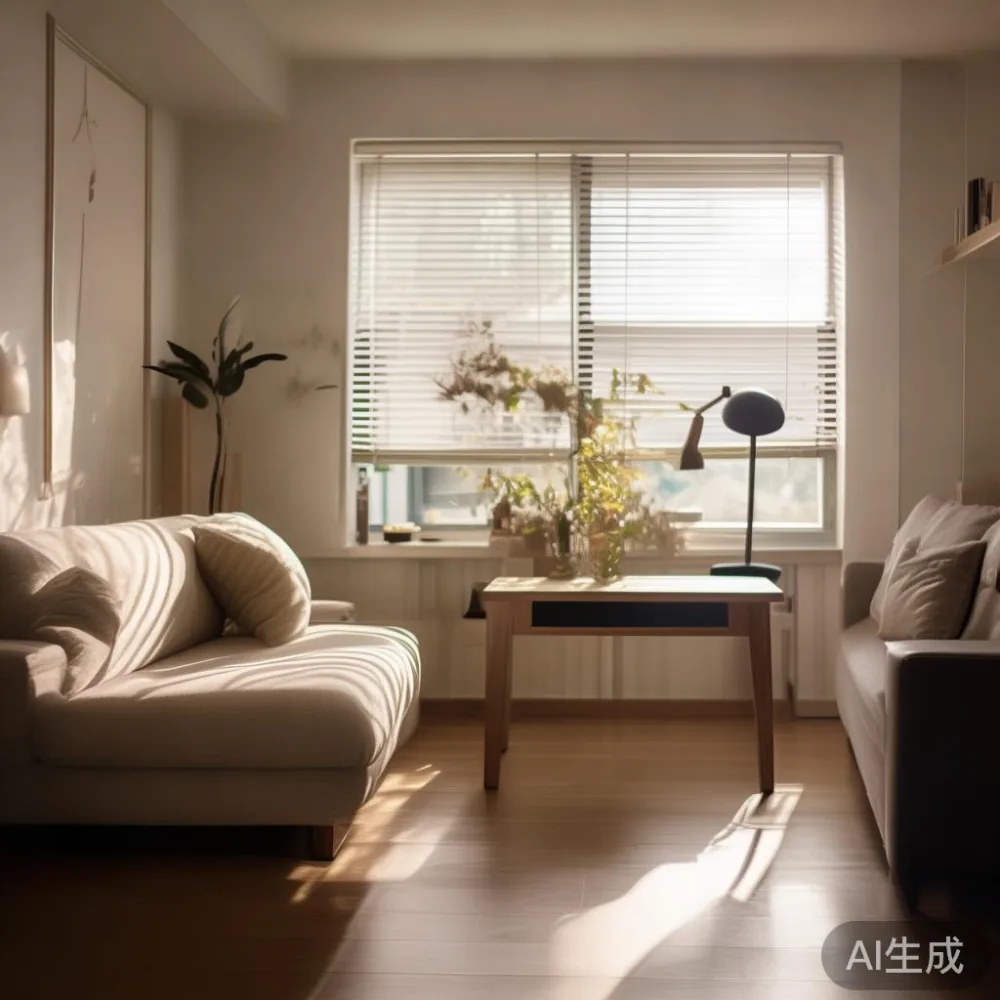
For a standing desk, the working surface should sit between 105 cm and 125 cm wide for a single user, with a depth of 60 cm to 75 cm to keep the monitor at arm's length. If your living room doubles as a workspace, a 120 cm by 60 cm standing desk can float against a wall without dominating a 3.0 m wide room. Leave at least 90 cm of clearance behind the chair so someone can walk past without squeezing sideways, and at least 70 cm in front so the chair can roll back when you stand up. Those numbers feel generous in a small HDB, but they are the minimum that keeps the room usable for more than one person at a time.
What standing desk height and frame weight suit HDB floors and lift access?
A dual-motor standing desk frame weighs between 22 kg and 28 kg, while the tabletop adds another 12 kg to 18 kg if you go beyond a 25 mm MDF or chipboard top. Solid oak or walnut tops push 22 kg to 28 kg on their own. That is a 50 kg box, which a single courier can carry but two cannot lift past a corridor railing without a trolley. If you are choosing a standing desk for daily sitting, pick one with a 100 kg to 120 kg load rating; you want overhead for monitors, a laptop dock, a notebook, and the leaning weight of your forearms without the wobble that appears around 90 kg of dynamic load.
The motorised column travels roughly 65 cm in total, so a frame with a 70 cm starting height reaches 135 cm at full extension. Tall owners above 185 cm should verify the maximum height before ordering, because some compact frames cap at 120 cm, which is too low for proper standing posture. Owners below 160 cm should check the minimum height; a 70 cm minimum is too high for seated elbow alignment with a standard 45 cm chair seat. I have watched a colleague in a Bedok 4-room flat settle on a frame with a 60 cm to 125 cm range and finally stop hunching at her screen within the first week.
What living room furniture pieces fit a 3.0 m by 3.2 m HDB living room?
A solid wood sofa between 180 cm and 210 cm wide fits three adults comfortably without crowding the room, especially if the back height stays below 85 cm so the line of sight to the dining area stays open. A two-seater around 150 cm wide works for one to two people and leaves a useful 90 cm walkway. A standard three-seater at 210 cm combined with a 90 cm coffee table and a 45 cm side gap on each side consumes the full width of the room, which is the maximum footprint that still allows a TV console.
A dining table for a 4-room flat usually lands between 120 cm and 140 cm long with a 70 cm to 80 cm width, seating four without forcing elbows into the wall. A round 90 cm diameter marble table works for two and tucks into a corner, but a rectangular shape gives more flexibility for hosting a sixth chair at one end. A bed frame at 150 cm, single room or 180 cm, double room is fine, but be careful: a 200 cm long frame in a 2.8 m wide bedroom leaves 40 cm on each side of the mattress, which is not enough for a 60 cm wide nightstand without blocking the wardrobe door. A wardrobe between 120 cm and 180 cm wide and 55 cm to 60 cm deep is the practical range for HDB bedrooms; anything over 200 cm wide starts to dominate.
How does light luxury furniture sizing differ from standard HDB packages?
Light luxury furniture, whether the French-inspired curve-and-tuft school, the American light luxury look with deeper cushions and brushed brass legs, or the cleaner post-modern light luxury lines now common in Foshan factories, tends to use slightly larger proportions than the flat-pack sets sold at neighbourhood electronics chains. A French-inspired three-seater sofa from a light luxury catalogue runs 220 cm to 240 cm wide with a 90 cm back height, which is 10 cm to 20 cm deeper than a standard HDB-friendly sofa. That extra leg makes the difference between a sofa that floats in the space and one that anchors it, but it also pushes you past the corridor-turn threshold.
Modern European light luxury furniture has settled into a few repeatable proportions that suit compact Asian apartments. A 230 cm three-seater with a 95 cm depth and 45 cm seat height leaves room for a 110 cm by 60 cm marble table in front and a 180 cm TV console against the opposite wall, all within a 3.6 m by 3.4 m 5-room living room. The marble table, by the way, is often where owners overspend on the wrong order. A genuine marble top on a 110 cm table weighs 55 kg to 70 kg before the base, and the base alone can weigh 18 kg. That is a 90 kg delivery, and you will pay S$60 to S$120 for a two-man white-glove crew in Singapore to carry it past your corridor turn.
How should a light luxury bed frame and nightstand be styled in a small HDB bedroom?
Bedrooms under 9 sqm benefit from a low-profile light luxury bed frame at 110 cm to 120 cm in headboard height, which keeps the ceiling line open and lets a 55 cm ceiling fan or a track light breathe above the bed. A solid wood bed frame in walnut or white oak with a 180 cm by 200 cm mattress footprint sits well in a 3.0 m by 2.8 m room if you anchor the headboard against the 3 m wall, fit a 50 cm wide nightstand on each side, and leave a 70 cm passage at the foot for laundry baskets and suitcases. The nightstand should sit 5 cm below the mattress top so a reading lamp and a glass of water are within reach without sitting up.
If you are working out how to style light luxury bed in apartment settings, think in three vertical layers: a headboard that draws the eye up, a pair of matching nightstands that frame the bed without competing with it, and a single bench or storage stool at the foot if the room is long enough. The same logic applies when working out how to style light luxury bed in room plans for HDBs; one statement piece per wall keeps the eye moving instead of bouncing between six competing silhouettes. A Modern light luxury accent chair in a corner near the wardrobe door adds a fourth visual anchor without eating more than 70 cm by 70 cm of floor space, and it doubles as a reading nook or a luggage perch.
Which dining table and wardrobe sizes survive HDB lift and corridor access?
A dining table extending 130 cm to 160 cm long and 75 cm to 80 cm wide fits four to six, and the layout opens with a 90 cm gap to the nearest wall or sofa back. Round 90 cm to 110 cm tables work for couples, and they survive the corridor pivot a whole cone. If you want a marble dining table, ask the supplier for the base weight and the top weight separately, and confirm whether the top ships in one slab or two halves. Two halves are easier to carry but require a seam that needs to be levelled on uneven HDB floors.
Wardrobes are the silent space-eater in any HDB bedroom. A 200 cm tall wardrobe with a 60 cm depth is standard, and the deeper ones at 65 cm steal space from the bed. The best Italian light luxury wardrobe for 2026 from European-inspired catalogues tends to run 240 cm to 280 cm tall, which is too tall for a 2.55 m ceiling with a 10 cm floor gap and a 5 cm top clearance. A 220 cm tall unit with a sliding door saves the swing clearance that a hinged door demands, and sliding doors survive corridor turns far better because the door does not have to be removed during delivery. Ask the supplier whether the wardrobe ships fully assembled or flat-packed, and whether the sliding tracks ship pre-installed; pre-installed tracks save an hour of assembly in a room with no space for a workbench.
What should you budget in SGD for a complete HDB living room set in 2025?
A complete HDB living room set, including a three-seater sofa, a coffee table, a TV console, a dining table with four seats, and a standing desk, lands between S$4,800 and S$9,500 before GST, depending on materials and origin. Solid wood sofas in walnut or white oak from Chinese light luxury factories land between S$1,800 and S$3,200 for a three-seater; the same proportion in Italian leather or fabric pushes S$3,800 to S$6,500. Marble coffee tables start around S$600 for a 90 cm round and climb past S$1,800 for a 110 cm rectangular top on a stainless or solid wood base.
Standing desks from Chinese light luxury suppliers run S$450 to S$900 for a dual-motor frame with a 120 cm by 60 cm tabletop, including delivery within Singapore. Add S$80 to S$150 for two-man white-glove delivery if the courier cannot leave the box at the door. GST at 9% adds roughly S$60 to S$120 on a S$1,000 order and S$540 to S$900 on a S$10,000 order, so plan for that line item before you fall in love with a dining table. MIDHILL, the Foshan solid wood furniture maker I mentioned earlier, ships to Singapore with USD-denominated pricing on orders above US$350, which means the S$500 to S$800 freight line that other brands charge often disappears entirely for a full living room set.
What delivery and warranty details matter most in Singapore?
Standard courier delivery inside Singapore takes 5 to 9 working days for flat-pack pieces and 14 to 28 working days for made-to-order solid wood or marble pieces from Foshan. White-glove two-man delivery adds S$80 to S$200 depending on the floor and the lift access, and the corridor turn I keep mentioning adds another S$60 to S$120 if the crew has to stage the box in the lift lobby and re-enter. Book the lift slot window up through your town council at least three working days ahead if you live above the 10th floor; many blocks limit cargo lift bookings to weekday mornings.
Warranties vary widely. A 10-year structural warranty on a solid wood frame is the floor I would accept for any sofa, bed frame, dining table, or wardrobe priced above S$1,500. Lifetime refinishing on solid wood tops is the gift that keeps giving five years in, when a coffee ring or a heat mark would otherwise send the piece to the dump. A 14-day return window is standard for online furniture in 2025, but most brands charge a 15% to 25% restocking fee plus the return freight, so make sure the dimensions and the colour match your room before you wave the courier through your corridor.
How do you pull the whole look together without overfilling the room?
The trick is one hero piece per wall. A solid wood sofa anchors the long wall, a marble table anchors the centre, a TV console anchors the opposite wall, and a standing desk anchors the corner near the window if you work from home. Anything beyond those four anchors starts to crowd a 3.0 m by 3.2 m room. A single Modern light luxury accent chair in a corner adds a fifth anchor that does not block traffic, and a 70 cm wide floor lamp behind it adds vertical lift without ceiling-mount drilling that some HDB bylaws restrict.
If you are working out how to style European light luxury sofa in apartment plans, think contrast rather than abundance. A light oak frame with a charcoal fabric seat reads cleaner in a compact HDB than a deep walnut frame with a cream seat, because the lighter frame recedes and the darker seat grounds the eye. Pair that sofa with a white oak dining table, a single marble accent piece, and a brushed brass floor lamp, and the room reads as a coordinated post-modern light luxury set without ever feeling like a showroom. The standing desk fits into this palette surprisingly well; a white oak top with a black or brushed steel frame matches the same light luxury language and disappears into the wall when you are not working, which is the highest compliment a workspace can earn in a living room that has to do double duty.