Humidity, HDB Flats, and Your Solid Wood Standing Desk: What Singapore Buyers Should Know
I keep a small hygrometer next to my standing desk at home in Tampines, and on most afternoons it reads somewhere between 72% and 82% relative humidity. That single number explains a lot of the questions I get from friends who have just moved into a new BTO flat in Punggol or a resale unit in Bedok and are wondering why their new solid wood furniture is behaving a little strangely. Wood moves. It has always moved. In a climate where the air feels like a warm towel for nine months of the year, it moves more than most catalogues admit. This guide is written for Singapore homeowners who care about the look and the lifespan of a solid wood standing desk, a solid wood sofa, a bed frame, a dining table, a wardrobe, or a nightstand — and who want practical numbers, not vague promises.
What exactly does humidity do to solid wood furniture?
Solid wood is a hygroscopic material, which is a polite way of saying it drinks and breathes with the air around it. As relative humidity rises, wood cells absorb moisture and the board swells; as relative humidity drops, the cells release moisture and the board shrinks. For most hardwoods used in furniture — oak, ash, walnut, beech, rubberwood — the practical range inside a home should sit between 40% and 60% RH. Move outside that band for long periods and the wood pushes back.
In Singapore, outdoor RH often sits at 70% to 90% for large parts of the year, especially during the monsoon transitions in April and November. Indoor RH in a non-air-conditioned HDB flat can still hover at 65% to 75% even with the windows closed, because warm air holds more water vapour. Air-conditioning pulls that down to 50% to 60% in the living room, which is good for wood but creates a daily swing of 15 to 20 percentage points every time you switch the unit off at night. That swing is what causes the small troubles Singapore owners notice: a hairline gap opening on a wardrobe door in February, a slight bow in a 180 cm dining table top in July, a faint creak from a bed frame slat in December.
If you have ever wondered how to style Japanese wardrobe in room without warping ruining the look, the answer starts with controlling the air around the piece, not with how you arrange the cushions. The wardrobe can be beautiful; the room still has to behave.
What humidity levels in Singapore really look like, month by month?
Singapore does not have a true dry season. The closest thing to one is the brief window in February when afternoon RH can drop into the high 50s for a week or two. The rest of the year follows a fairly predictable pattern that I have logged from my own hygrometer over the last 18 months.
- January to March: 60% to 75% indoors, cooler nights around 23°C.
- April to May: 70% to 85% indoors, the first wet phase, frequent thunderstorms.
- June to August: 65% to 80% indoors, warmer around 28°C to 31°C.
- September to November: 70% to 88% indoors, second wet phase, humid nights.
- December: 65% to 78% indoors, brief dip before the new year rains.
What this means for a 120 kg solid wood dining table in a 90 sqm condo is straightforward: the wood is almost always gaining moisture from the air. It will sit slightly proud of its winter dimensions for most of the year, then quietly settle when the air-con runs for four or five hours overnight. Over twelve months, that movement can add up to 3 mm to 5 mm of width change across a 180 cm top. That is normal. It is also why an experienced maker like MIDHILL builds tabletops with slotted screw holes and floating brackets, so the boards can slide instead of cracking.
Is a French bed frame or a Japanese wardrobe more sensitive to Singapore humidity?
Different pieces react in different ways, and the design matters as much as the species.
A French-style bed frame with a tall, upholstered headboard is usually less sensitive than people fear, because the structural rails are hardwood and the headboard is fabric over foam. The wood movement happens in the side rails and the slats. A slatted bed frame with 14 to 18 beech slats, each 50 mm to 60 mm wide, can develop an audible creak in a humid week because the slats swell against their holders. Keep the bedroom at 50% to 55% RH with air-con running for 6 to 8 hours a night, and the creak usually disappears within a week. If you are researching how to style French bed in apartment without the headboard fabric smelling musty, the practical answer is to leave 10 cm to 15 cm of clearance behind the headboard so air can circulate.
A Japanese wardrobe, on the other hand, is more exposed because the doors are large, flat panels, often 40 cm to 60 cm wide and 180 cm to 220 cm tall. A 45 cm wide cedar door can change width by 2 mm to 3 mm across the seasons. That sounds tiny, but it is enough to push a door past its stop and refuse to latch. If you are working out how to style Japanese wardrobe in room so that it still looks clean in a 12 sqm HDB bedroom, leave at least 5 mm of gap at the top and bottom when you measure the opening, and do not push the wardrobe flush against a plaster wall — keep 2 cm behind it so moisture can escape.
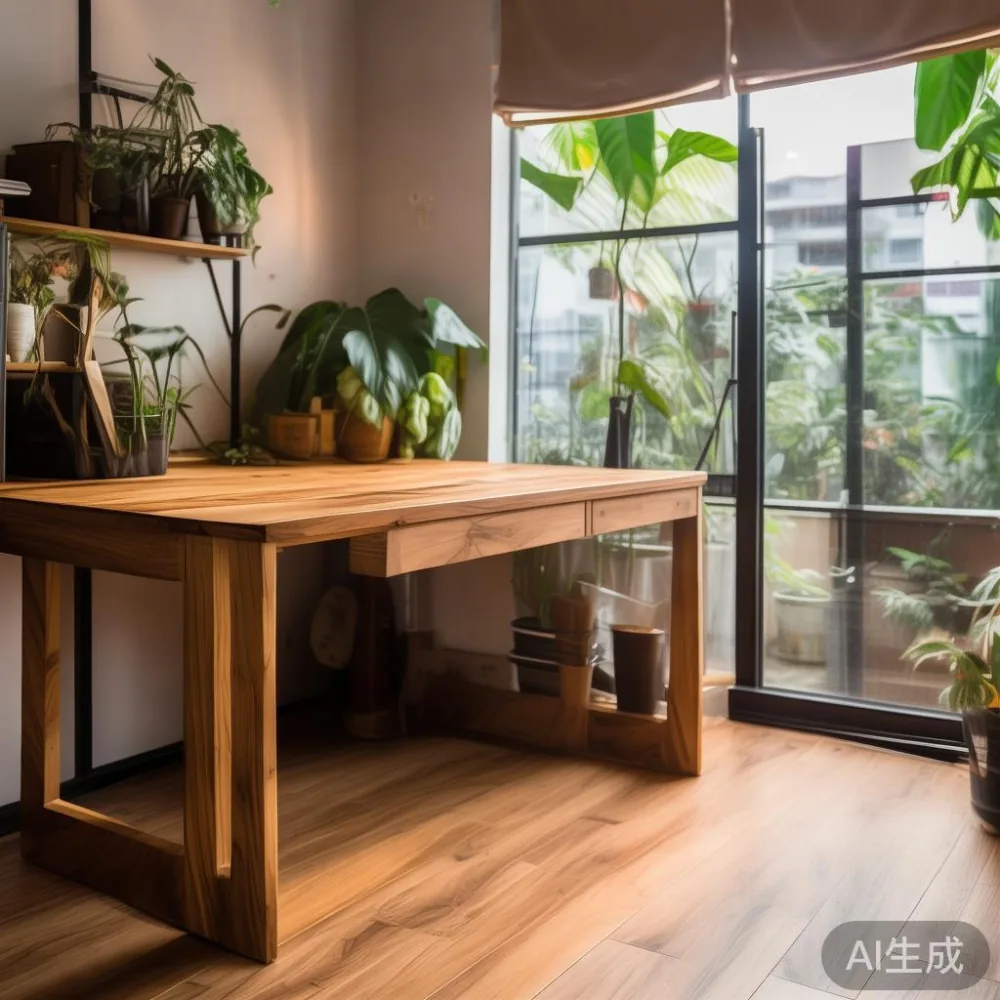
A solid wood standing desk sits in its own category. The top is usually 120 cm to 150 cm wide, 60 cm to 70 cm deep, and it is the one piece of furniture that gets daily, direct contact with humid hands, cold drinks, and the small splash from a water bottle. Treat the desktop like a kitchen counter: wipe spills within five minutes, and put a felt pad under any planter or humidifier.
How should I acclimatise a new solid wood piece before I even start using it?
Last month I visited a friend's new 4-room BTO in Punggol. The movers had just delivered a solid wood sofa, a 200 cm dining table, and a queen-size bed frame, all from the same shipment. The boxes had been opened, the wrapping stripped, and the furniture pushed into position within ninety minutes. That is the wrong way to do it in Singapore.
Acclimatisation is the quiet, unglamorous step that determines whether your piece settles in calmly or fights you for the next six months. The rule is simple: let the wood sit in the room where it will live for 7 to 14 days before you load it up. Cracks are mostly cosmetic. Open every carton, remove the foam and the plastic film, but leave the felt pads and corner protectors in place. Keep the air-con running at 24°C to 25°C so the wood sees the same conditions it will live in, and leave 15 cm to 20 cm of space on every side of a large piece so air can move around it.
For a standing desk that arrives flat-packed in a 1.6 m box, the same logic applies. Unbox the top, lean it against a wall (not flat on concrete — concrete sweats in Singapore), and let the wood equalise for at least five days. The lifting column, the crossbar, the cable tray — none of those care about humidity; the desktop absolutely does. If you have a hygrometer, watch the readings on the desktop for two or three evenings. When the surface temperature stops drifting and the RH within 5 cm of the wood sits within 3 percentage points of the room RH, the top is ready to be mounted.
Will my solid wood furniture warp, crack, or grow mould in Singapore?
It can, and pretending otherwise helps nobody. Three failure modes show up again and again in local homes.
1. Cupping on a dining table top. A 200 cm x 90 cm x 4 cm oak top can cup 2 mm to 4 mm at the edges if one face sees more humidity than the other — for example, sitting 80 cm from a window that is opened on rainy afternoons. The fix is rotation, not blame. Turn the top 180° every three months so both ends see the same conditions.
2. Hairline cracks along the grain. These usually appear in the first dry February after a wet November. A crack of 0.5 mm to 1 mm wide and 5 cm to 15 cm long on a wardrobe side panel is cosmetic, not structural, and it will often close again by April. Do not fill it with silicone; leave it open so the wood can move.
3. Surface mould on a wardrobe back panel. The back panel is usually the thinnest piece of wood in the whole unit, often 6 mm to 9 mm, and it sits against a plaster wall that sweats in May. If you can slide a piece of A4 paper between the panel and the wall, the gap is too small. Aim for 2 cm to 3 cm of rear ventilation, and wipe the back panel monthly with a cloth lightly dampened with white vinegar (one part vinegar to three parts water).
A well-made piece from a maker like MIDHILL, which has been building solid wood pieces since 2008 and now ships to more than fifteen countries, will arrive with quarter-sawn or rift-sawn boards for the widest panels, kiln-dried to 8% to 10% moisture content, and a 10-year structural warranty that covers joint failure rather than seasonal movement. The warranty is worth reading, by the way. The honest ones separate seasonal movement (which is not a defect) from joint failure (which is).
What's the best way to care for a solid wood standing desk in a humid condo?
A standing desk is the piece I get the most specific questions about, because it is used daily, gets touched constantly, and is often the most expensive single item on a work-from-home setup. Here is the routine I follow myself.
Keep the room between 22°C and 26°C, with RH between 45% and 60%. A small dehumidifier rated at 6 L to 10 L per day, sized for a 12 sqm to 15 sqm study, costs around SGD 180 to SGD 280 locally and pulls the RH down by 8 to 12 percentage points in a closed room. Run it during the wet phase from September to early December, and you will see the difference on the desk surface within a week.
Wipe the desktop with a barely damp microfibre cloth once a week. Dry it within sixty seconds. Do not use silicone polishes, lemon oil sprays sold for antique furniture, or any product that contains silicone — silicone sinks into the grain and ruins the surface for future refinishing. A paste wax applied twice a year is plenty.
Use coasters under mugs, felt pads under speakers, and a tray under any plant. If you like a glass of cold water at the desk, put it on a 6 mm cork coaster, not directly on the wood. If you have a humidifier on the same desk, move it 80 cm to 100 cm away from the wood edge so the mist does not land on one spot all day.
Sit-stand cycles are good for your back and good for the desk. Lifting a 120 cm x 65 cm top from 72 cm to 110 cm three or four times a day keeps the internal stresses moving and prevents one spot from "setting" in a bowed position. Most electric frames are rated for 80 kg to 125 kg, and a solid wood top adds 18 kg to 26 kg on top of your monitor arm and laptops, so stay within the rated load.
How do I deal with shipping, corridors, and lift access in HDB flats?
Singapore homes are not small, but the path into them often is. A standard HDB lift door opening is around 80 cm to 90 cm wide and 200 cm to 210 cm tall. A corridor turn at the lift lobby can be 150 cm to 180 cm across. A 200 cm dining table top will not fit through an 80 cm lift door standing on its side, so it almost always ships as two 100 cm halves with a bolted centre joint, or as a flat-pack that you assemble in the flat. That is also why the boxes for a queen bed frame are usually 1.7 m to 1.9 m long but only 35 cm to 45 cm wide.
Measure your lift door, your corridor turn, and your front door of every room the furniture will pass through. Add 10 cm to every measurement as a clearance buffer. If a piece will not fit, ask the seller to split it. MIDHILL's flat-pack standing desks, for example, ship in a single box under 1.6 m long and under 25 kg for the top, which fits comfortably through a standard HDB lift and down a 1.2 m wide common corridor. Free shipping on orders over US$350 is generous for a Singapore address, and 14-day returns give you a real window to inspect before committing.
What's a sensible budget for solid wood in a Singapore home right now?
Solid wood furniture is heavier to ship, slower to build, and more honest about its materials than the alternatives, so it sits at a price point above most flat-pack. As a rough guide for 2025, before the 9% GST:
- Solid wood standing desk with electric frame, 120 cm to 150 cm top: SGD 750 to SGD 1,450.
- Solid wood dining table for four, 140 cm to 180 cm: SGD 1,100 to SGD 2,400.
- Queen-size solid wood bed frame with slats: SGD 900 to SGD 1,800.
- Two-door solid wood wardrobe, 120 cm to 180 cm: SGD 1,300 to SGD 2,600.
- Solid wood nightstand, single drawer: SGD 220 to SGD 480.
- Solid wood sofa frame (3-seater, fabric upholstery separate): SGD 1,600 to SGD 3,200.
Add 9% on top, add SGD 80 to SGD 220 for delivery to a Singapore address depending on lift access and floor, and you have a realistic budget for a full bedroom set or a full study setup. Pieces built with kiln-dried hardwood, mortise-and-tenon joints, and a 10-year structural warranty will sit at the upper half of these ranges. A piece shipped from a maker with a lifetime refinishing service, like MIDHILL, will often be cheaper in the long run than a cheaper competitor, since you can refresh the surface after ten years instead of replacing the unit.
How do light-luxury styles handle humid climates?
Three styles show up again and again in local showrooms, and they behave differently.
American light luxury tends to use wide, clean planes of oak or ash, often with a 6% to 8% matte finish and brushed brass hardware. The wide planes show seasonal movement more than framed panels do, so a 180 cm dresser top can cup 1 mm to 2 mm in May. The look is honest about wood, and the small movement reads as character rather than damage.
French light luxury leans on cabriole legs, soft curves, and a warmer walnut or cherry tone. The curves hide seasonal movement well, but the joinery at the knee of a cabriole leg is the first place to watch in a humid room. Keep the room under 60% RH and the joints stay tight.
Post-modern light luxury mixes marble, brushed metal, and wood in one piece — for example, a 120 cm round dining table with a Carrara marble top on a solid wood pedestal, or a console table with a 6 mm marble inlay along the front edge. The marble does not move with humidity, the wood pedestal does, so the design must allow the marble to sit on felt pads rather than glued to the top. If you are choosing a marble table for a condo, ask the seller how the stone is fixed to the base.
If you want a single phrase to describe the mood most buyers in Tampines and Bedok are reaching for right now, it is something close to luxury Mid-century modern furniture — warm walnut, tapered legs, low profiles — softened with linen upholstery and a single marble accent. That combination is gentle on wood movement because the profiles are small and the panels are narrow.
What about a guest room or a small second bedroom?
A guest room sees humidity swings more than a primary bedroom, because the air-con only runs when guests visit. A 10 sqm to 12 sqm guest room in a Singapore condo can sit at 70% to 80% RH for weeks between visits. Pick pieces that tolerate that gracefully. A solid wood single bed frame with a slatted base, a two-drawer nightstand, and a narrow 80 cm wardrobe will all be fine. If you want a softer look, a French for guest room scheme — a small upholstered headboard, a slim console that doubles as a desk, and a single accent chair — handles the humidity cycle well because the wood components are small. Aim for Modern light luxury with storage, where the bedside table and the console both carry drawers, so the room looks complete without needing extra cabinetry that would react to the humidity cycle.
A light brown luxury sofa in the living room, paired with a pale oak coffee table and a brushed brass floor lamp, is a surprisingly forgiving combination in our climate. The light brown tone hides the faint darkening that oak develops over three to five years of indoor UV exposure, and the soft upholstery breathes.
Where can a Singapore buyer actually browse these pieces?
If you want to see the full MIDHILL standing desk, dining table, bed frame, wardrobe, and nightstand range, the Singapore catalogue and live inventory feed sit at api.midhill.co, where you can filter by wood species, top size, frame colour, and delivery lead time. Lead times to a Singapore address usually run 14 to 28 days for flat-pack pieces and 28 to 45 days for fully assembled items, with white-glove delivery to your door at SGD 120 to SGD 220 depending on the floor and the number of pieces. The 14-day return window starts on the day the piece arrives, so unpack, inspect, and acclimatise within the first week, then decide.
Will my solid wood standing desk really last ten years in Singapore?
Yes, with three caveats. Keep the room between 45% and 60% RH for most of the year. Wipe spills within five minutes. And lift the desktop through its full height range two or three times a day instead of leaving it at one height for months. Do those three things, and the desk will outlast two laptops, three monitors, and at least one renovation. A solid wood standing desk is the one piece of furniture in a Singapore home that earns its space every single workday, and it deserves a climate around it that lets the wood stay calm.