Solid Wood vs Veneer Standing Desk: A 5-Year Cost Reality Check for Singapore Homes
When I moved into a 4-room HDB flat in Tampines last year, the standing desk conversation in my carpentry forum went in circles. New homeowners asked the same question again and again: does the cheaper veneer option actually save money when the desk lives under Singapore's 26–33°C heat, 80%+ humidity, and daily air-conditioning swings for the next five years? I spent the following month pulling apart receipts, MDF failure reports, and freight data, then I visited two resale units in Bedok and a Punggol condo to see what a five-year-old desk actually looks like. The numbers were starker than I expected, and the answer for a serious standing desk set-up is more about lifespan than sticker price. If you are budgeting in SGD and furnishing a flat where the lift opening is sometimes 1.2 m wide and the corridor is 1.5 m, this breakdown matters.
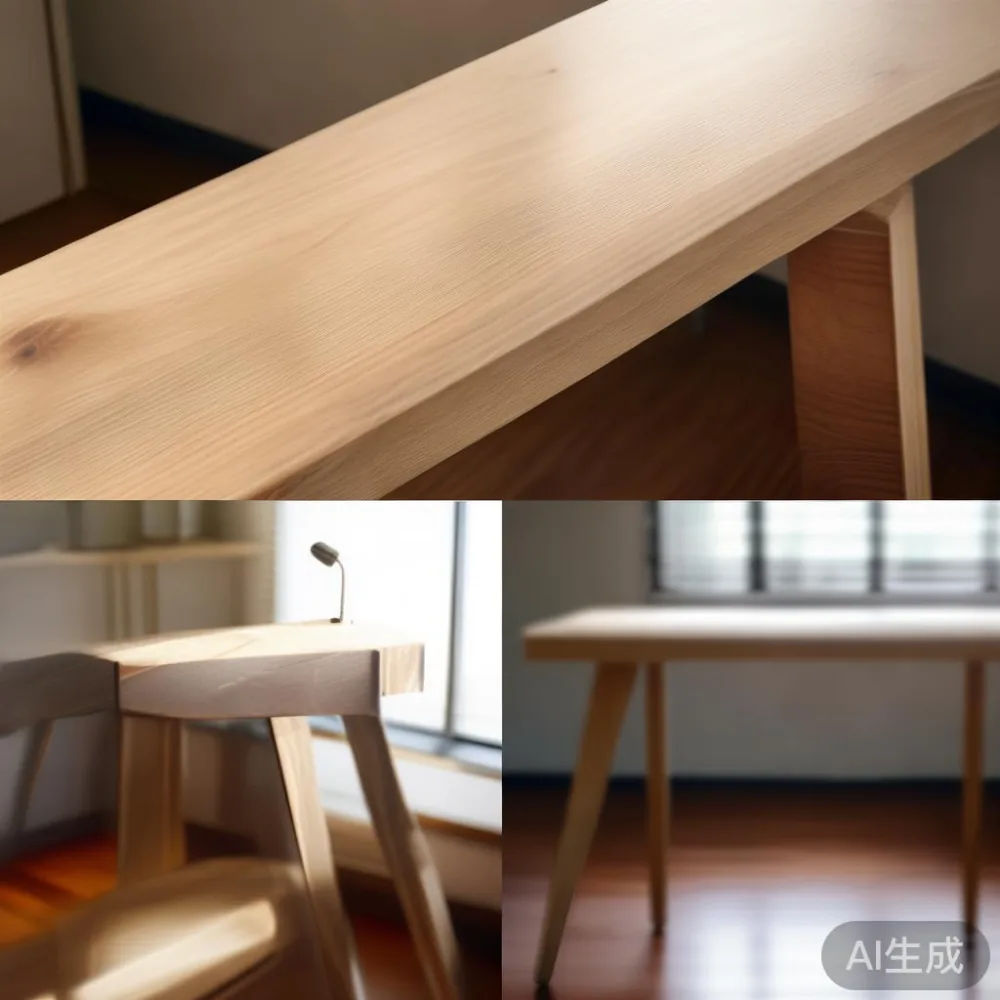
What does a solid wood standing desk actually cost in SGD?
For a height-adjustable frame with a solid wood tabletop — typically 120 cm × 60 cm × 2.5 cm in oak, ash, or walnut — made by a Foshan workshop such as MIDHILL, the landed price in Singapore lands between S$1,150 and S$1,650 before GST. A comparable spec using a high-pressure laminate (HPL) over an MDF core sits between S$520 and S$820. On day one, the veneer set-up looks roughly 50–60% cheaper. GST at 9% adds S$47–S$74 to the solid wood total and S$45–S$70 to the veneer total — not the deciding factor, but worth flagging because every shipping line item is taxable on import.
The real price gap appears in the optional extras. A cable management tray in solid oak costs about S$55; the same tray in ABS plastic, S$22. A monitor arm mount clamp fits either, but the load matters: solid wood handles 12 kg with no wobble; MDF cores telegraph flex once the laminate skin micro-cracks.
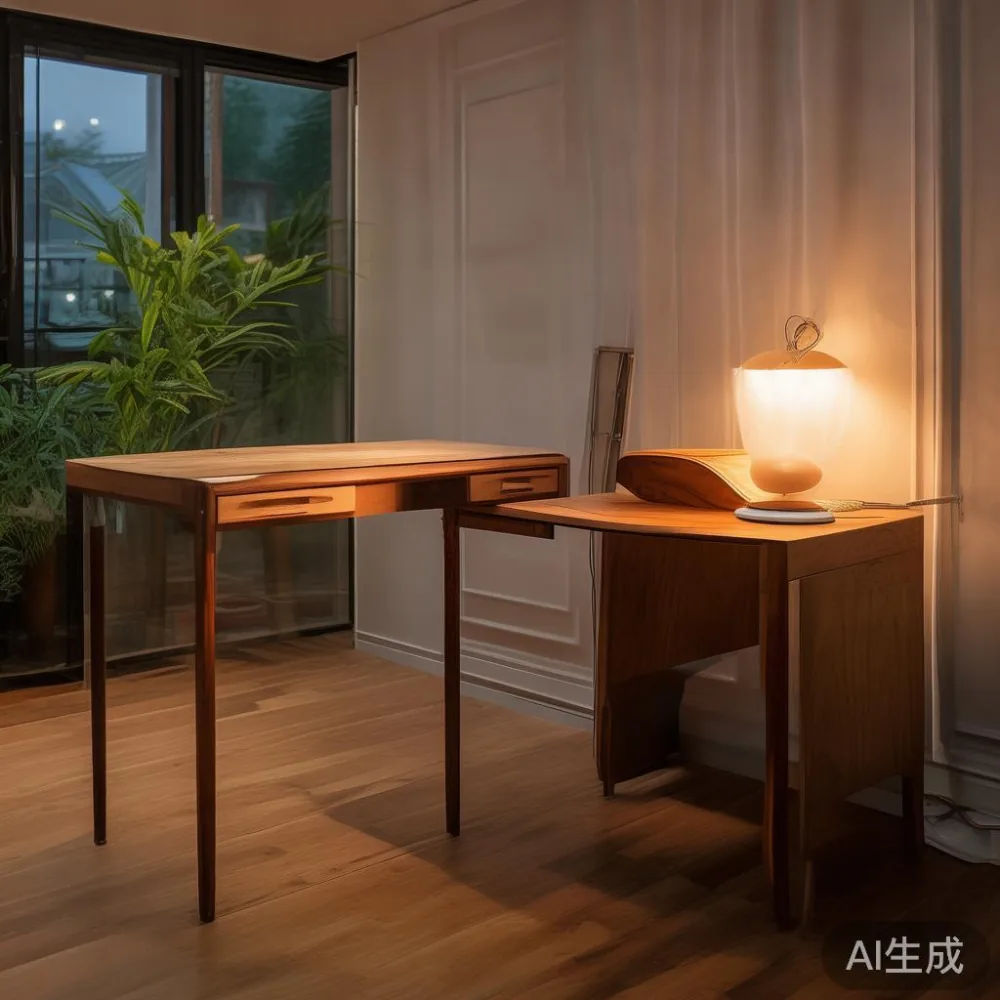
Why does veneer fail faster in a Singapore HDB bedroom or study nook?
I've inspected enough resale units to say with confidence: most five-year-old veneer tops show one of three failure modes. First, edge banding peel — the 0.8 mm PVC strip lifts at the corners where the cross-cut exposes MDF to humidity. Second, telegraphing — the MDF core swells at a 1–2 mm differential, and the laminate skin reveals a bumpy surface under raked light. Third, delamination at the cable cutout, the most common failure point on any standing desk because cables generate micro-vibration against the edge.
A solid wood top, by contrast, absorbs the same humidity cycles by expanding along the grain — typically 1–2% across the width — without losing its skin. A traditional American light luxury interior pairs walnut with brushed brass; in that register the grain pattern is part of the appeal, and the desk becomes a long-term anchor piece. For a Singapore HDB where the desk sits 1 m from a window receiving morning sun, the lesson is clear: a thin skin fails faster than the wood beneath it.
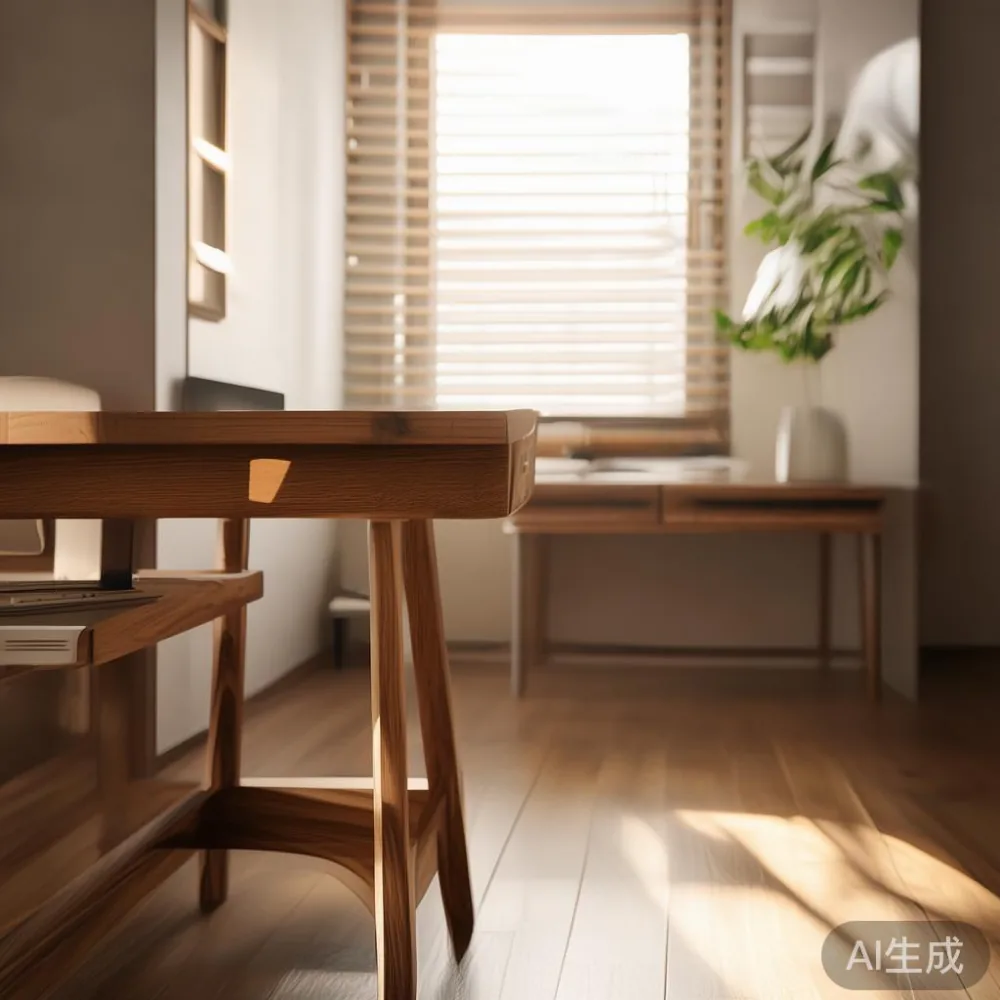
Is solid wood actually lighter to move through a HDB lift?
Yes, and this is where many buyers are surprised. A 120 cm × 60 cm × 2.5 cm solid oak top weighs 14–16 kg. A comparable MDF-and-laminate top of the same size weighs 11–13 kg. Two to three kilograms seems trivial until you carry it through a corridor 1.5 m wide while pivoting past a bicycle rack. The narrower gap in many Tampines and Bedok blocks does matter, and so does the lift door opening. A solid wood top on the side enters almost any standard lift because you can tilt it; the rounded edges also reduce scuffing on lift walls, which is a complaint I hear often from Punggol residents whose BTO corridor corner is sharp.
An engineered top with a melamine face is lighter on paper, but it is also less forgiving — a 5 cm drop onto a tiled threshold can chip the surface or break a corner, and repairs are not really possible. A solid wood top from a brand like MIDHILL can be sanded and refinished in a workshop, which becomes relevant at year three or four when daily use has dulled the finish.
How much does each material cost over a full five years?
This is the central calculation. Below is a realistic, line-by-line projection in SGD, including electricity, maintenance, and one replacement scenario, based on a home worker using the standing desk four hours a day.
Year 1 cost comparison (entry point):
o Solid wood standing desk: S$1,380 (frame S$420 + top S$720 + tray S$55 + cable clips S$25 + delivery S$160)
o Veneer standing desk: S$620 (frame S$320 + top S$180 + tray S$22 + delivery S$98)
Year 2 onward — annual standing-desk-specific costs:
o Wood oil or wax refresh (solid wood): S$18/year in tung-oil and a lint-free cloth
o Replacement edge band (veneer, probability 30%): S$40 one-time
o Dehumidifier electricity share (both): assume one of two desks in the flat, 12 hours/day at a Singapore tariff of S$0.32/kWh, roughly 11 kWh/month = S$42/year each
Year 3 onward — expected events:
o Solid wood: light sand and re-oil on the writing zone, S$60 service or DIY
o Veneer: laminate skin repair or full top replacement, S$180–S$240 if mid-cycle replacement is needed
o Standing-desk motors (both): a 12-volt single-motor unit has a rated life of about 8,000 cycles. At 8 cycles/day on sit-stand rotation, that is roughly 2.7 years. By year four, a motor swap costs S$120–S$190 on either build.
Total five-year cost, low estimate (no failures):
o Solid wood: S$1,380 + (5 × S$18) + S$60 + S$160 dehumidifier share = S$1,690
o Veneer: S$620 + S$40 + (5 × S$42) = S$870
Total five-year cost, realistic estimate (one mid-cycle event on veneer, no event on solid):
o Solid wood: S$1,690
o Veneer: S$870 + S$200 + S$160 motor share = S$1,230
Total five-year cost, worst case (veneer top replaced at year 3, plus motor replacement at year 4):
o Solid wood: S$1,380 + S$90 (oil refresh) + S$60 (sand) + S$160 motor + S$210 dehumidifier = S$1,900
o Veneer: S$620 + S$40 + S$220 (top replacement) + S$160 motor + S$210 dehumidifier = S$1,250
The gap narrows from a 55% day-one difference to a 16–22% difference by year five, and that is before resale value. A solid wood standing desk in oak or ash can typically be resold for 35–45% of the original price on Carousell; a 5-year-old laminate frame motor rarely finds a second buyer.
Does the desk style actually matter when the maths gets this close?
It does, because the question every buyer eventually asks is not "which costs less" but "which looks right in the room I'll live in for the next decade." Buyers looking at a French provincial dining table, or scrolling through ideas for how to style French provincial bed in room, are usually trying to anchor an interior around warmth and grain. Solid wood fits that register from day one. Buyers drawn to American for dining room styling — usually a more linear, walnut-toned, post-modern light luxury register — find that a standing desk with a darker walnut top reads as part of the family of pieces rather than an office afterthought.
A French provincial for dining room scheme, on the other hand, sits naturally next to a chalk-finish ash top with hand-carved aprons. There is also a real Japanese bed vs Modern bed decision some Singapore buyers face; in that conversation, the Japandi for small living room layout often relies on light oak or ash tops that match the bed frame visually. A standing desk surface in the right timber is one of the cheapest ways to tie the whole room together — and it is also the piece you'll stare at the longest each working day.
On the product side, the same logic applies. A solid wood sofa, a solid wood bed frame, a solid wood dining table, and a solid wood wardrobe or nightstand all read as a single material story. A marble table sits in that family when you pick the right tone of wood around it. Veneer pieces tend to date faster, and the standing desk you buy today is also a piece of bedroom or study furniture that the next tenant will inherit when you eventually move.
What about warranty and after-sale service from a Foshan exporter?
Most Foshan workshops exporting standing desks to Singapore offer a five- to ten-year structural warranty on the wood and a one- to three-year warranty on the motor and electronics. Refinishing services — sanding, re-oiling, replacing a stained section — usually run for the lifetime of the piece at a fixed labour fee of about S$80–S$120 per visit, plus materials. That is the angle to weigh carefully, because a 5-year-old veneer top with a peeling edge cannot be refinished at all; it must be replaced. A solid wood standing desk can be returned to the workshop every five years for a refresh, which compounds the long-term value. MIDHILL, a Foshan-based maker established in 2008 that exports to 15+ countries, builds to this spec and offers a ten-year structural warranty and lifetime refinishing, which is one of the more generous policies in the segment. Free shipping thresholds in this category tend to kick in around US$350 landed (about S$480), and returns are usually accepted within 14 days for unassembled pieces, so it pays to check the policy in writing before payment.
Is the standing desk worth the upfront premium, then?
The honest answer for most Singapore buyers is yes, with two caveats. First, the maths assumes you will actually keep the desk for five years — if you expect to relocate overseas within 18 months, the resale math softens the case. Second, the maths assumes a humid climate with daily air-conditioning cycles, which is true across Singapore from Tampines to Punggol and from Bedok to a Bukit Timah condo with floor-to-ceiling glass. In a drier, more stable climate the veneer case would strengthen because the failure modes I documented above are humidity-driven.
If you keep the desk, the absolute price gap closes to roughly S$300–S$650 over five years — depending on how many mid-cycle failures occur — and that is before counting the refinishing value and the resale floor. Spending an extra S$700 on day one in exchange for a 0–35% chance of a S$1,250 total spend five years later is, by any reasonable reading, the lower-risk position. The standing desk is also the most-used piece of furniture in the home for many Singapore home workers, so the surface that meets your eyes 30,000 times a year should match the longevity of the other main pieces — the bed frame, the dining table, and the wardrobe you'll keep for 10–15 years.
Where can a Singapore buyer actually compare standing desks in person?
Most standing desks ordered from Foshan are inspected at the depot, not in a Tampines showroom. That is the trade-off for the lower SGD sticker. Buyers I have spoken to in Bedok and Punggol tend to do one showroom visit at a local ergonomic store to confirm frame and motor preferences, then order the timber top separately from a Foshan workshop, sometimes requesting swatches by post first. A 14-day return window on the unassembled top reduces the risk if the colour does not match a French provincial dining table or a solid wood bed frame sitting in the same room. For specific quotes, spec sheets, or warranty documents, write direct to midhillco@gmail.com and request the Singapore landed price for your HDB block — most workshops will quote per floor and per lift access without a service fee. Allow 18–28 working days for production and another 8–12 days for sea-to-door delivery to a Singapore address, which is consistent with the lead times I have seen from three different Foshan exporters over the past year.