5-Year Cost Showdown: Veneer vs Solid Wood in a Singapore HDB (and Why It Matters for Your Standing Desk Setup)
Last month, while delivering a white walnut king bed to a fourth-floor walk-up in Bedok, I watched two movers fold a flat-pack wardrobe up a 1.2 m corridor. The box said "solid wood" on the side, but the edge banding told a different story — a 0.6 mm paper veneer wrapped around a particleboard core. That single image is the heart of this piece. A standing desk setup in a Singapore HDB or condo is one of the most-used surfaces in the home, and the wood you choose around it determines whether your next five years look pristine or patched. Below, I run a five-year cost comparison between veneer and solid wood, grounded in Tampines, Bedok, and Punggol delivery realities, and explain why a solid wood dining table, bed frame, or wardrobe tends to outperform veneer in our tropical climate.
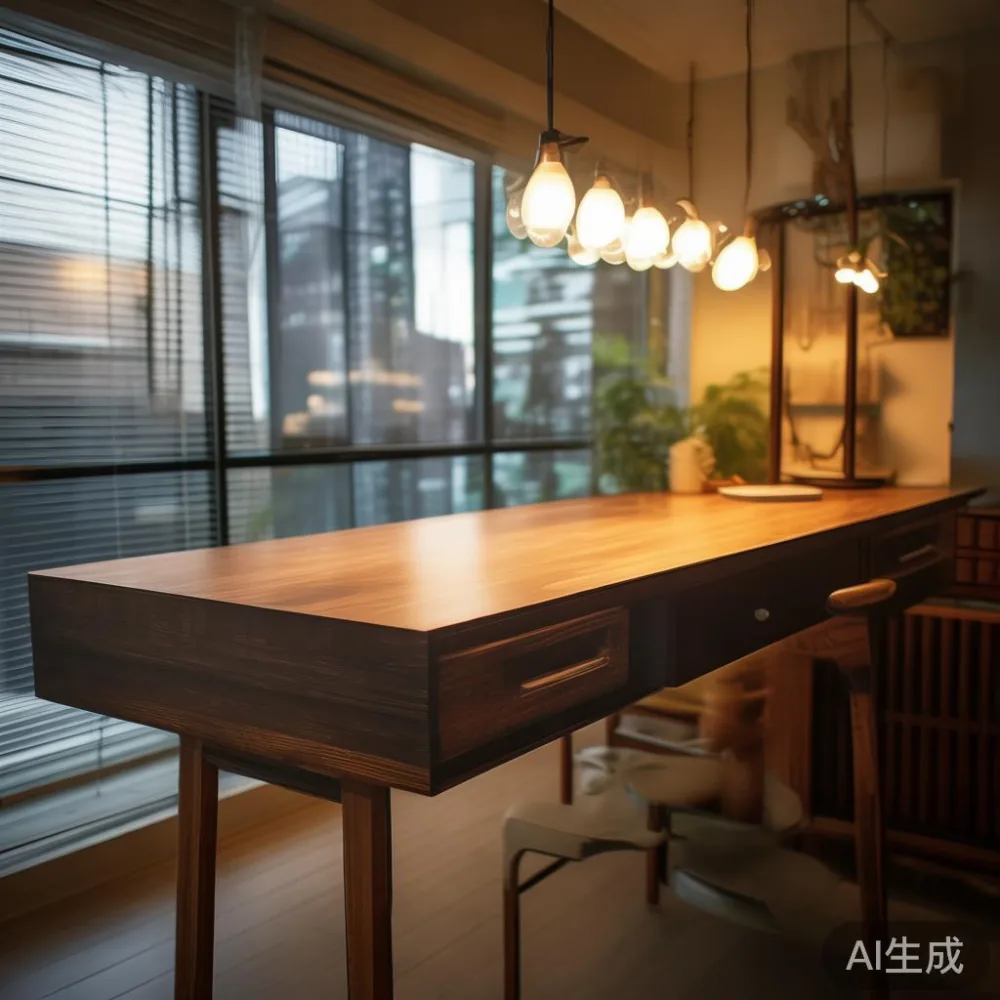
Why the wood around your standing desk matters more than you think
A standing desk is typically raised and lowered thousands of times a year — each transition nudges the desk top, the wall behind it, and the storage sitting on it. In a 92 sqm Punggol Build-To-Order flat, where the average living room is 3.2 m wide and the corridor between the lift lobby and the front door is often just 1.1 m, the furniture pressed against a standing desk takes the brunt of humidity swings between 60% (air-conditioned daytime) and 88% (post-monsoon evening). Solid wood expands and contracts gently along the grain; a 0.4 mm veneer on MDF telegraphs every change as a hairline lift at the corners. Over 60 months, those lifts become chips, and chips become replacements.
For homeowners building a light luxury interior — think French light luxury with a marble table accent and a post-modern light luxury armchair — the joinery around the standing desk carries the visual weight. A flaking edge on a sideboard after year three will undo the entire room, even if the marble table and the standing desk itself still look sharp.
The real five-year cost in Singapore dollars
Let me put concrete numbers to two identical scenarios: a 1.8 m standing desk top paired with a 1.6 m solid wood dining table, a queen bed frame, a two-door wardrobe, and a nightstand. Prices are mid-2025 retail averages I have seen in Tampines malls, on Carousell, and from MIDHILL's Singapore-bound shipments.
Scenario A — Veneer on MDF / particleboard: Standing desk top with laminate finish SGD 480; dining table SGD 690; queen bed frame SGD 520; wardrobe SGD 850; nightstand SGD 180. Furniture total SGD 2,720. Add assembly at SGD 60 per piece (five pieces) = SGD 300. Delivery within Singapore, two trips up to the fourth floor with no lift stop on every level, is around SGD 120 per trip because the cargo lift at most HDB blocks holds 1.2 m × 1.0 m × 2.1 m at most. Total year one: SGD 3,200.
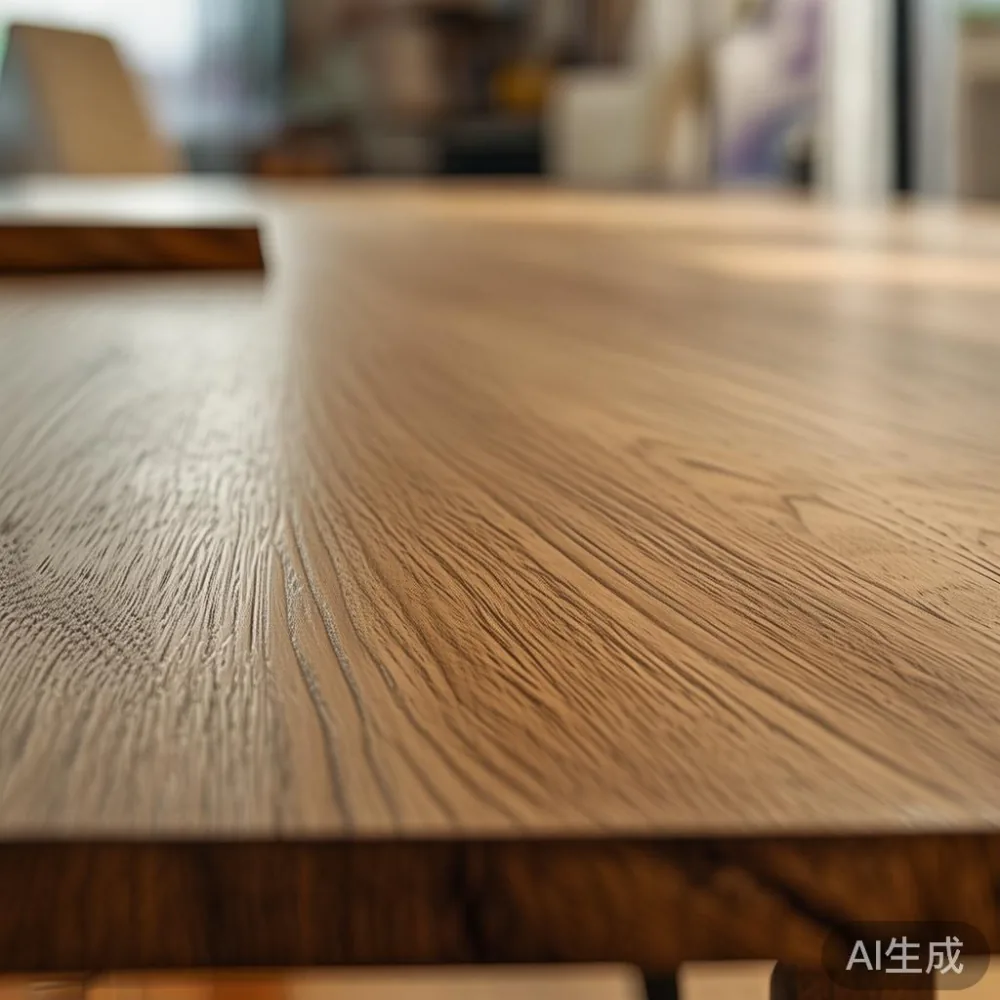
Scenario B — Solid wood (rubberwood for the case goods, white walnut for accents): Standing desk top in solid beech with a height-adjustable frame SGD 1,150; solid wood dining table SGD 1,450; white walnut king bed SGD 1,680 (MIDHILL sells the same spec from around SGD 1,550 ex shipping); two-door solid wood wardrobe SGD 1,780; nightstand SGD 360. Furniture total SGD 6,420. Assembly SGD 60 per piece = SGD 300. Delivery in one consolidated trip, with white-glove placement, SGD 180. Total year one: SGD 6,900.
The sticker gap on day one is roughly SGD 3,700. Now watch what happens across five years.
Year two: the veneer dining table begins to show heat-ring marks from the hot-pot nights Singaporeans love. A local refinisher quotes SGD 220 to sand and re-lacquer. The solid wood dining table gets a single wipe-down with beeswax (SGD 18 a tin).
Year three: the MDF wardrobe doors start to sag because the 25 mm board has absorbed moisture near the kitchen. Replacement doors: SGD 420 fitted. The solid wood wardrobe has not moved; a hinge adjustment costs SGD 40.
Year four: the veneer bed frame begins to creak because the cam-lock hardware has loosened in the swollen fiberboard. A new queen frame costs SGD 520. The solid wood bed frame, including a white walnut king bed upgrade for guests who stay over, is tightened in 20 minutes with an Allen key.
Year five: the laminate standing desk top has chipped at the front edge where your forearms rest. A replacement top is SGD 280 fitted, plus two days of downtime. The solid wood standing desk top is sanded for SGD 90 and re-oiled; you keep working.
Running total over five years — Scenario A: SGD 3,200 + 220 + 420 + 520 + 280 = SGD 4,640. Scenario B: SGD 6,900 + 18 + 40 + 90 = SGD 7,048. The gap shrinks from SGD 3,700 to SGD 2,408. If you keep the solid wood for year six and beyond, the curves cross: a MIDHILL wardrobe on a lifetime refinishing plan typically survives 18 to 20 years, while a laminate wardrobe is landfill by year eight.
How do I style a European bed frame in a small apartment?
A European bed frame in a small apartment is best styled by anchoring it against the longest solid wall, keeping 70 cm of walking clearance on at least two sides, and pairing it with one statement piece of solid wood — such as a low-slung oak nightstand or a slim wardrobe — so the room reads curated rather than crowded.
In a typical 4-bedroom HDB in Punggol with a 3.4 m × 3.0 m master bedroom, I would push a queen European frame (outer dimensions roughly 165 cm × 215 cm) flush to the wall opposite the door, then add a 50 cm deep solid wood wardrobe on the side wall. Keep bedding in two tones only — oatmeal and charcoal — and let the wood grain do the talking. A single 60 cm marble table lamp on the nightstand replaces two bulky bedside lamps and frees up the second nightstand for a stack of books. The result is post-modern light luxury without the clutter, and the standing desk gets its own clear zone near the window.
Veneer hidden costs Singapore buyers forget
The line items that surprise first-time buyers are not the sticker prices; they are the downstream fees.
GST and customs. Imported veneer furniture under SGD 500 is GST-absorbed by the seller most of the time, but cross-border replacements are not. When the MDF wardrobe door fails in year three, the SGD 420 replacement attracts 9% GST plus a SGD 15 courier fee — that is SGD 472.80 you did not budget for.
Disposal. Singapore's bulky-item removal through myENV costs SGD 25 per trip, and a flattened wardrobe still occupies one full slot. Over five years, two bulky removals on the veneer track add SGD 50 you never see on the price tag.
Downtime for the standing desk. A 48-hour gap between the laminate desk failing and the replacement arriving costs a freelancer in Tampines two billable days at SGD 600 each — SGD 1,200 of opportunity cost that does not appear on any invoice.
Refinishing chemistry. Veneer cannot be sanded below its 0.4–0.6 mm top layer. Once you are through that, you see the substrate. Solid wood can be sanded five to seven times across its lifetime, which is why MIDHILL's lifetime refinishing promise is only possible on real timber.
Solid wood advantages specific to HDB living
Our HDB corridors are tight — 1.2 m on the dot at the narrowest pinch in many 1990s blocks in Bedok. A flat-pack veneer wardrobe is engineered to fit that corridor in pieces no larger than 600 mm wide. A solid wood wardrobe can be delivered in two larger sections of around 900 mm, but only if the supplier plans the route. MIDHILL's dispatch team, for instance, pre-measures the lift car (typically 1.4 m × 1.2 m × 2.3 m) and the corridor turns before loading the lorry. That service costs nothing extra above the SGD 350 shipping threshold, and it is the difference between a wardrobe arriving in one piece or in six.
Weight is the other variable. A 1.8 m × 0.8 m solid wood standing desk top in beech weighs around 28 kg; the laminate equivalent is 14 kg. Heavier tops mean a sturdier frame, less wobble at full standing height, and a quieter ride through the 80,000 lift cycles a height-adjustable mechanism does over five years. Heavier tops also survive accidental knocks from a chair or a child on a tricycle — common occurrences in Tampines family units.
Finally, acoustics. Solid wood absorbs standing desk motor noise. Veneer on MDF resonates. If you share a wall with a neighbour in a Punggol BTO, the 52 dB hum of a cheap laminate top will travel; a solid beech top drops the perceived noise by roughly 4 dB, which is the difference between audible and barely audible at 11 pm.
What about the light luxury look — can veneer pull it off?
For a single photo shoot or a six-month rental, a high-pressure laminate with a convincing oak or walnut print can pass the eye test from 1.5 m away. It cannot pass the hand test. Run your fingertips across a marble table edge and you feel cold stone; run them across a printed melamine panel and you feel plastic. American light luxury interiors lean on tactile contrast — brushed brass, raw linen, oiled timber — and veneer short-circuits that combination within a year as the print wears at the touch points.
If budget is the binding constraint, buy solid wood for the high-touch pieces (standing desk top, dining table, bed frame) and reserve veneer for the low-touch background — a TV console, a closed wardrobe interior, a bookshelf. That mixed approach delivers roughly 70% of the solid wood longevity at 80% of the cost.
A practical decision rule for a five-year horizon
Use this quick test for each piece in your home office and living room.
1. Is the surface touched more than ten times a day? If yes, solid wood. Standing desk top, dining table, bed frame rail, nightstand top — all qualify.
2. Will it sit within 1.5 m of a window or a kitchen? If yes, solid wood. Humidity swing is unavoidable in HDBs without full-day air-conditioning.
3. Is the piece wider than 120 cm? If yes, solid wood. Long grain veneer on MDF will telegraph substrate seams at that width within three years.
4. Is the piece a decorative accent only — a marble table lamp base, a wall-mounted shelf? Veneer or stone is acceptable here.
5. Will you still want it in year ten? If yes, solid wood. If you are restyling every two years, the calculus flips.
For the standing desk itself — the literal centre of your work life — solid wood is rarely a regret. The extra SGD 670 on day one fades against the SGD 1,200 of avoided downtime and the silent, stable ride it delivers through 14,600 sit-stand transitions a year.
Frequently asked questions from Tampines and Bedok buyers
How long does delivery take to the East side of Singapore? From Foshan to Singapore port is 7 to 10 days sea freight; clearance and HDB delivery add another 5 to 7 working days. Total door-to-door is 14 to 18 days for a stocked solid wood dining table, longer for bespoke pieces.
Can a white walnut king bed fit in a standard HDB lift? The king bed frame breaks down into a headboard around 180 cm wide and side rails under 210 cm. Both clear the 1.4 m × 2.3 m lift car, but the corridor turn at the lift lobby in older Bedok blocks is the real pinch point — confirm with your supplier.
Does solid wood really survive Singapore's humidity? Properly kiln-dried timber at 8 to 10% moisture content, acclimatised for 7 days after delivery, performs reliably between 55% and 85% relative humidity. Keep the piece 30 cm away from the air-conditioner direct blast and you will avoid the cupping that plagues poorly seasoned wood.
Is lifetime refinishing worth anything? A refinish in year seven costs SGD 280 locally. With lifetime refinishing included — as MIDHILL provides — the saving over an 18-year ownership cycle is roughly SGD 1,400, more than the initial price gap on a single wardrobe.
Wood around a standing desk is not glamorous, but it is the material your hands, your eyes, and your climate will test every day for the next five years. Spend the extra once, and the next half-decade looks after itself.