Lacquered Standing Desks in the Tropics: How to Keep the Finish Looking New in Your HDB
I bought my first lacquered standing desk three years ago, and it lived in a Tampines HDB that had no window in the study room. By month four the surface had gone cloudy in two spots and the corners had started to swell a fraction of a millimetre. I rang the maker, who flew a finisher out from Foshan for a warranty visit, and what he told me in that lift lobby changed how I treat every piece of lacquered furniture I own since. The desk was an early teak-accent standing desk model from MIDHILL, a Foshan solid wood workshop that has been exporting since 2008 and offers a 10-year structural warranty plus lifetime refinishing. The finisher refinished the surface at no charge. I learnt more in that twenty-minute conversation than in any forum thread.
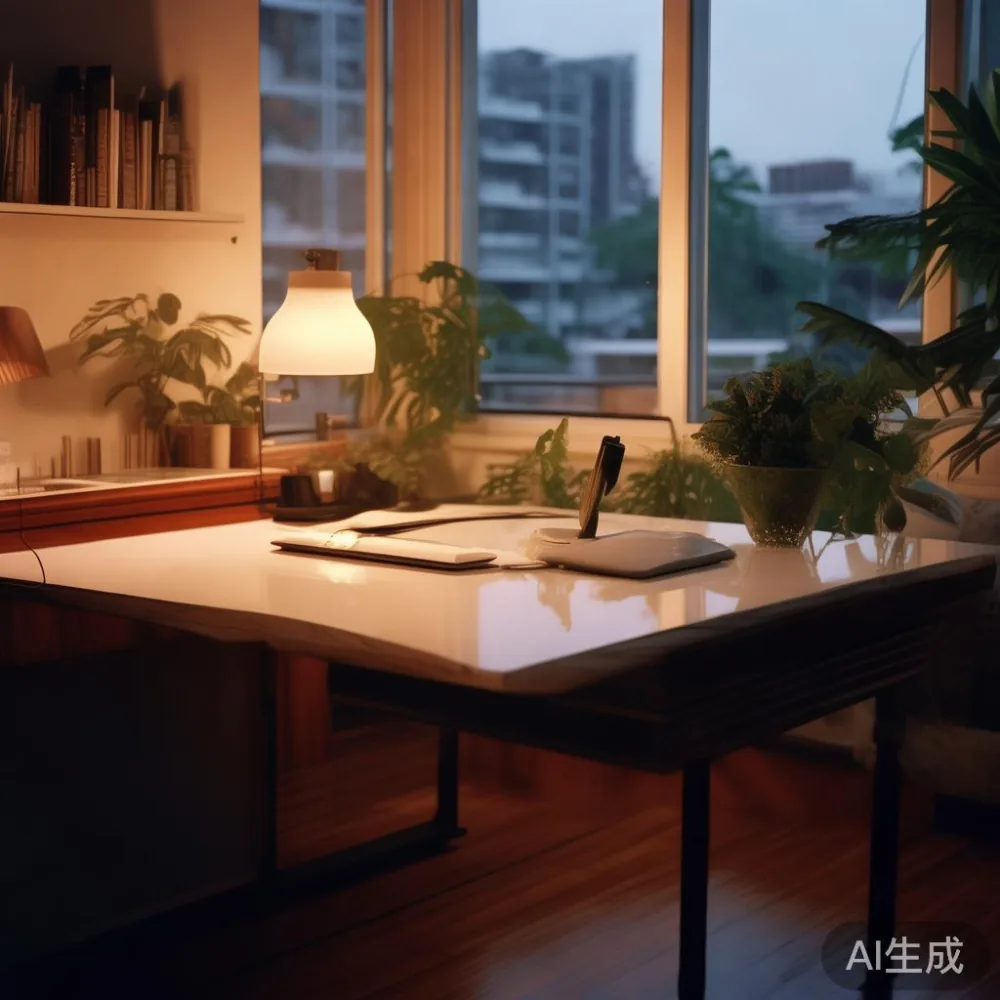
Why Singapore's Climate Is Hard on Lacquered Solid Wood
Singapore sits between 1 and 1.5 degrees north of the equator. Relative humidity runs 70 to 90 percent for most of the year, and indoor temperatures rarely drop below 24 degrees Celsius. A lacquered standing desk sitting in a Bedok resale flat corridor-facing room absorbs moisture from the air every hour of the day, and a lacquered finish, once it is closed, cannot breathe from the inside either. Over six to twelve months that mismatch shows up as three predictable things: a cloudy haze on the top, dark rings where a glass sat, and hairline cracks along the grain near the cable management slot.
The wood underneath the lacquer matters just as much as the lacquer itself. Solid oak and ash move roughly 0.3 to 0.5 percent across the grain when humidity changes by 20 percent. A standing desk top measuring 140 by 70 cm can grow or shrink by 3 to 5 mm in width between February's drier air and August's wetter air. MIDHILL builds their standing desks from solid ash with a multi-coat Italian lacquer finish, which is why the workshop specifies a 10-year structural warranty rather than a 12-month one. A warranty that long only makes sense if the joinery underneath can absorb that movement year after year.
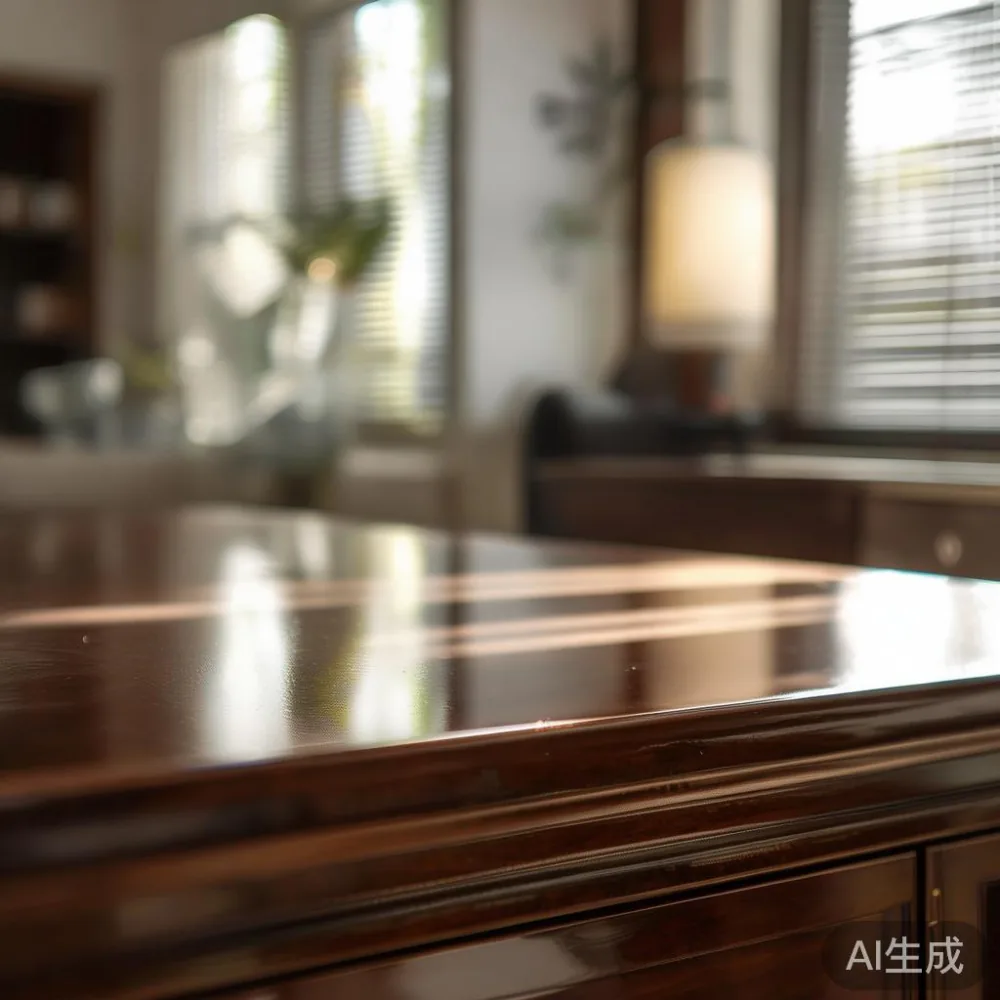
What "Lacquered" Actually Means on a Solid Wood Standing Desk
Most buyers I speak to in Punggol and Sengkang assume lacquer is one product. It is not. On a light luxury piece, lacquer falls into three families:
1. Nitrocellulose lacquer: the thinnest, most repairable, the kind that you can buff out with a fingertip. Found on French light luxury inspired dining tables and on classic solid wood bed frames from ateliers in Foshan's Lecong furniture cluster.
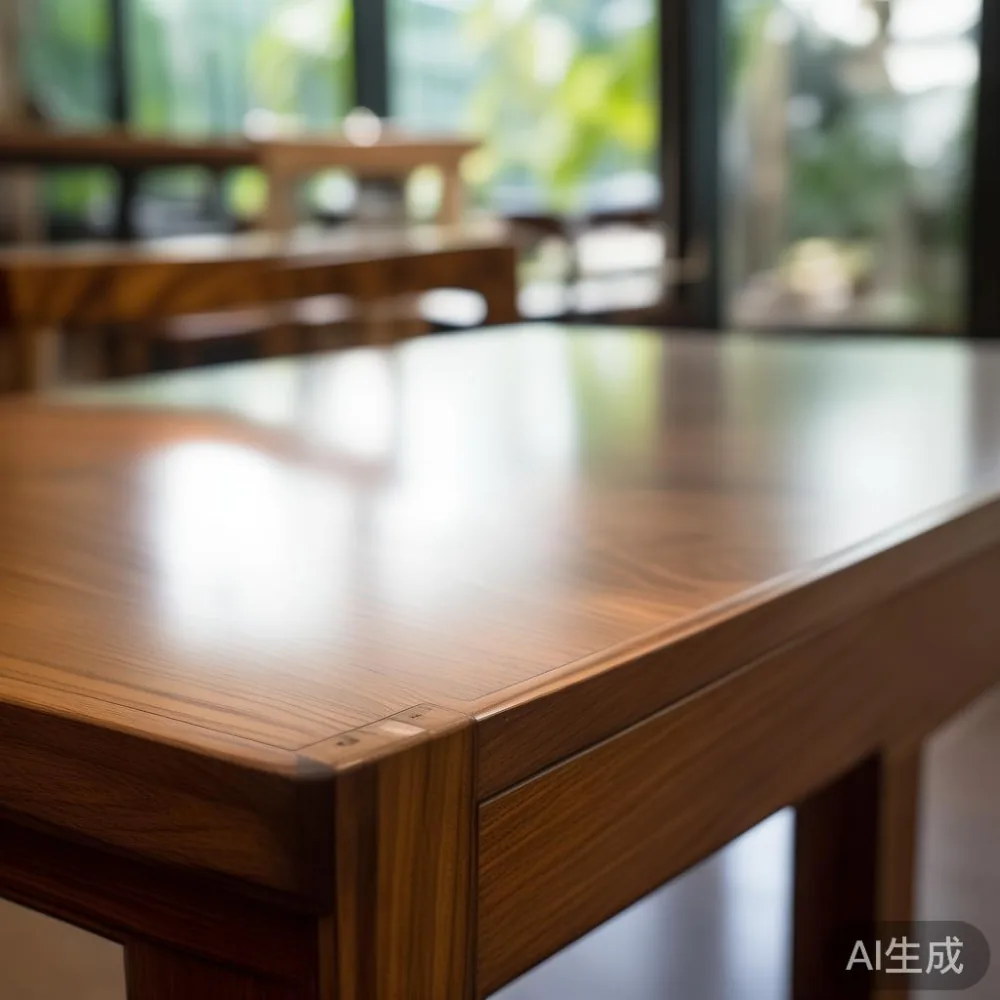
2. Polyurethane (PU) lacquer: thicker, more chemical-resistant, harder to repair locally, and the kind that goes cloudy if you put a wet laptop bag on it for one hour.
3. Conversion varnish / acid-catalysed lacquer: the toughest, the most expensive, and the standard on American light luxury inspired dining tables and on most export-grade standing desks above SGD 1,200 retail.
MIDHILL uses a conversion varnish finish on its standing desks and a slightly softer PU on its solid wood sofa arms and bed frame headboards, because the latter are touched rather than written on. Knowing which finish you have tells you everything about what you can put on it without a coaster.
Daily and Weekly Care Routine That Actually Works
Forget the texture. The honest answer is a two-minute habit loop and one piece of equipment.
Every day: Wipe the standing desk surface with a dry microfibre cloth at the end of your work session. Twenty seconds. That is the single biggest reducer of dust-induced haze in the long run. Dust is abrasive; every time you write on a dusty lacquer surface with a wrist, you are micro-sanding it.
Twice a week: Damp-wipe with a well-wrung microfibre and one small drop of pH-neutral soap. Water goes on the cloth, never on the wood. The cloth should feel barely moist, not wet. Singapore tap water is about 30 to 50 ppm hardness, and that mineral load builds up as a faint film after 8 to 10 damp-wipes, which is why "barely moist" beats "wet" every time.
Once a month: Place a hygrometer next to the desk. If it reads above 80 percent for more than 48 hours, run a dehumidifier in the room for two to three hours. A small 9-litre Woods compressor unit retail costs SGD 130 to SGD 220 and is the cheapest insurance you can buy for a SGD 1,500 to SGD 3,200 standing desk. Running it costs roughly SGD 0.18 per hour of electricity at today's regulated tariff.
Skip the silicone sprays and the orange-oil polishes sold at IMM or Tampines Mall. They leave a film that traps moisture and dust, and they make future refinishing harder. Skip the magic eraser needed for stain removal on melamine. On lacquer, a magic eraser is a fine sandpaper and will cut through the topcoat in three passes.
Is Modern light luxury nightstand furniture worth it?
Yes, modern light luxury nightstand furniture is worth it for Singapore owners if you choose solid wood construction, a conversion varnish finish, and a maker who will refinish the piece for life, which together typically puts a quality nightstand in the SGD 480 to SGD 1,100 range and avoids the MDF swelling that ruins most flat-pack alternatives by the second humid monsoon. A nightstand is a smaller, lower-risk way to test a maker's finish before committing to a SGD 2,400 standing desk or a SGD 3,800 solid wood bed frame, and any workshop worth its 10-year warranty will let the nightstand double as that test.
If the nightstand holds up across a year of Tampines humidity without going cloudy or cracking at the joints, you can extrapolate that the same maker's dining table, wardrobe, and standing desk will do the same. If the nightstand swells or discolours in eight months, walk away from the rest of the catalogue. This is the trick I use when I visit showrooms with clients who are about to spend four to five figures on a single room of post-modern light luxury furniture, which is the broader category that MIDHILL's solid wood sofa, marble table, wardrobe and standing desk lines all sit within.
What to Do When the Damage Has Already Happened
Last month I visited a client in a Punggol condo whose marble table had a perfect coffee-ring ghost on its adjacent standing desk. The ring was about 9 cm across. Here is the triage I walked her through, in order of cost and risk:
Cloudy haze (the whole surface, not a spot): Usually moisture trapped in the topcoat. Run a dehumidifier for 24 to 48 hours and avoid wiping for the first 12 hours. Roughly 60 percent of hazes resolve on their own if the humidity drops under 65 percent for two days.
White water ring (single spot, 5 to 12 cm): Place a folded dry cotton cloth over the spot and press with a warm iron on the lowest setting for 8 to 12 seconds, no steam. The heat pulls trapped moisture back into the cloth. Works on PU and conversion varnish about 70 percent of the time. Does not work on nitrocellulose.
Dark ring (stain has gone through the lacquer): Out of scope for the home. Send the panel back. A Singapore refinisher will charge SGD 80 to SGD 220 per panel to strip, sand, recolour, and recoat. MIDHILL refinishes its own pieces for life at cost of shipping only, which is a meaningful saving on a SGD 2,400 to SGD 4,200 standing desk.
Hairline crack along the grain: Almost always a humidity swing of more than 25 percent in a 30-day period. Stabilise the room first. The crack does not get worse once humidity holds at 55 to 65 percent for six weeks. A finisher can fill it cosmetically, but a moving crack will reopen if the underlying cause is not addressed.
How to Choose a Lacquered Standing Desk for a Singapore Home
The HDB and condo context shapes the choice more than the showroom does. Three practical points before you commit.
1. Measure the lift and the corridor. Newer BTOs in Punggol and Sengkang have lifts with a 1.1 m door and a cabin depth around 1.4 m. A standing desk top in its crate is usually 148 to 158 cm long. Tilt the crate on its side and it goes through. On its end it does not. Older Tampines and Bedok blocks have shallower corridors, sofas and bed frames often have to be pivoted at 45 degrees around the lift lobby corner. Ask the maker for the crated dimensions in centimetres before you pay the SGD 80 to SGD 160 white-glove delivery fee.
2. Check the top thickness and the load rating. A standing desk top for a Singapore home should be 2.5 to 3.5 cm thick. Thinner tops flex when the motor lifts a 12 kg monitor arm plus a 6 kg laptop. The frame should rate for at least 100 kg dynamic load. The motors should spec for 6,000 to 8,000 cycles a year, which gives a service life of 8 to 10 years at a typical Singapore work-from-home pattern of 6 to 10 sit-stand transitions per day.
3. Match the finish to the room. Matte conversion varnish hides micro-scratches better than gloss and is the right pick for a study room that doubles as a guest room. Gloss is the right pick for a dining table in a feature room, because light luxury design language reads better in gloss, but it shows every fingerprint and ring within the first week.
Long-Term Setup, Cost, and Warranty Reality in Singapore
A solid wood standing desk from a Foshan workshop that exports to 15-plus countries retails in Singapore at roughly SGD 1,200 to SGD 4,200, depending on top size, motor count, and finish. Add SGD 80 to SGD 160 for delivery and SGD 60 to SGD 120 for a small on-site assembly callout in HDB corridors where the crate will not fit through the door. GST at 9 percent applies on the full landed price including delivery.
Warranty length is a real signal. A 12-month warranty is a parts warranty. A 5-year warranty covers structure and motor. A 10-year structural warranty plus lifetime refinishing is what MIDHILL offers, and lifetime refinishing is the clause that matters in Singapore, because the climate will outlast any surface finish. Refinishing, fading, swelling, cracking, ring stains: every one of them is recoverable if the maker still answers the phone five to fifteen years from now.
If you are ordering from overseas, expect 35 to 55 days from order to landed-for-delivery by sea, or 12 to 18 days by air for an extra SGD 220 to SGD 380. The standing desk will usually arrive crated in plywood, which the driver will take away at no extra cost if you ask. Keep the crate for 14 days; Singapore consumer law gives you 14 days to return a piece for a full refund if it is unused and in its original crate, and the workshop refunds within 7 to 10 business days of the unit landing back at the Foshan warehouse.
The Short List of Things Not to Put On Your Standing Desk
A few items I have seen damage lacquered standing desks in Singapore homes within a single afternoon: a cold glass of iced coffee placed without a coaster (the condensation ring appears within 30 to 90 minutes), a hot laptop base running above 48 degrees Celsius (the heat softens PU lacquer and leaves a permanent ghost), a houseplant pot without a saucer (capillary moisture wicks through the bottom and darkens the lacquer over 4 to 8 weeks), and an unlined leather desk blotter (the dye in cheap leather migrates into lacquer over 6 to 12 months and stains the surface brown). All four are easy to avoid and cost under SGD 25 each to fix at the point of purchase.
Treat the lacquered surface as a working finish, not a decorative one. Wipe it daily, dehumidify monthly, refinish before the damage becomes structural, and your standing desk will outlast three laptops and two office chairs, which is roughly the lifetime of a single work-from-home setup in a Singapore HDB or condo today.