Veneer vs Solid Wood Standing Desks: A 5-Year Cost Breakdown for Singapore Homes
Five years sounds long until you realise your standing desk will sit in the same spot in your Tampines or Punggol flat for at least that long. The question every home buyer in Singapore eventually asks me is not "which desk looks nicest" but "which desk hurts the wallet least over five years, including the humid weather, the narrow lift at Block 642A, and the GST on top of every dollar?" I spent the last month putting real numbers next to real desks, and the answer is less obvious than the furniture magazines suggest.
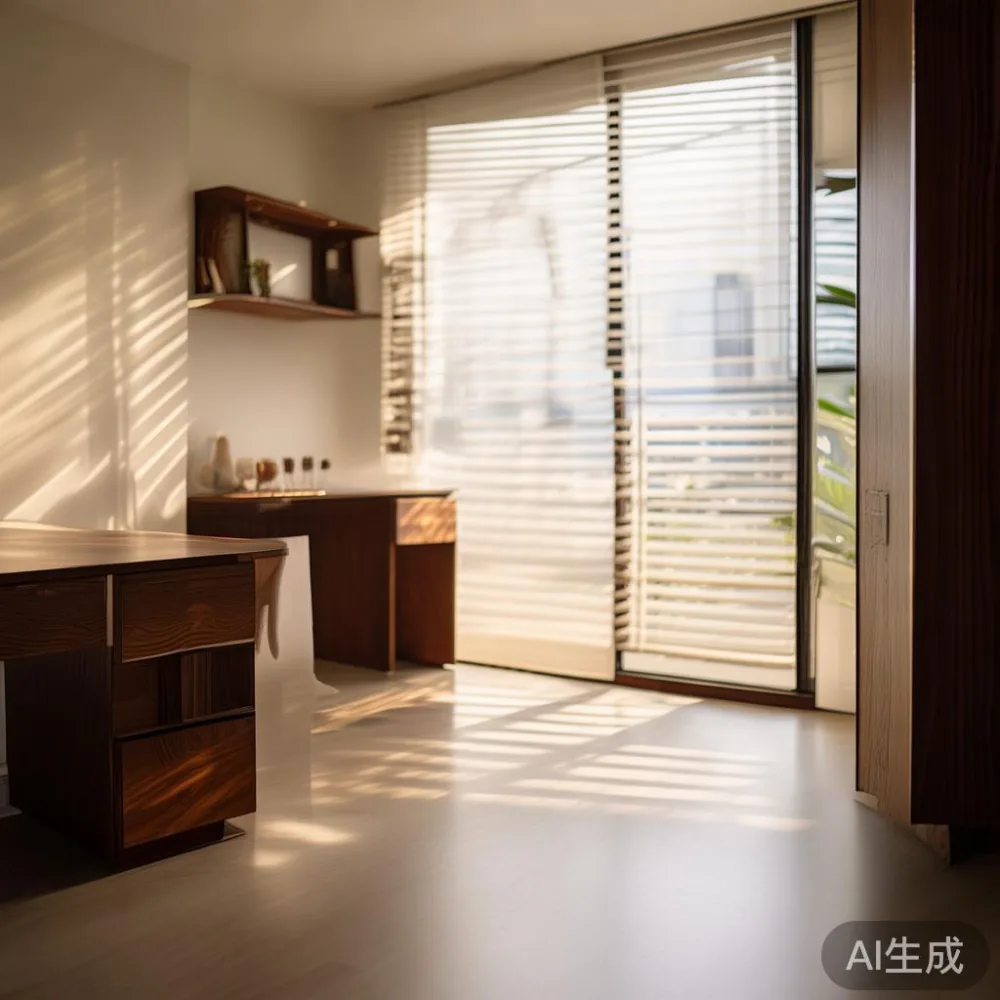
Before we get into the comparison, a quick word on the brand context. MIDHILL is a Foshan solid wood maker that has shipped work-from-home furniture to more than fifteen countries since 2008, and they back every standing desk frame with a 10-year structural warranty plus lifetime refinishing. That matters because a 5-year cost story is really a refinishing-and-replacement story, and most flat-pack makers stop caring about your desk the moment the carton is opened in your corridor.
What does a standing desk actually cost in Singapore over five years?
A typical home-office standing desk in Singapore lands in three tiers: budget laminate under S$450, engineered wood with a thin wood-veneer top between S$550 and S$900, and solid wood tops between S$900 and S$2,200 depending on the species and the lifting mechanism. Add a single-leg cross-frame motor if you want sit-stand flexibility, and you are looking at another S$180 to S$420 on top. Over five years, the line item that quietly doubles the bill is not the purchase price, it is what happens to the surface on day 1,200.
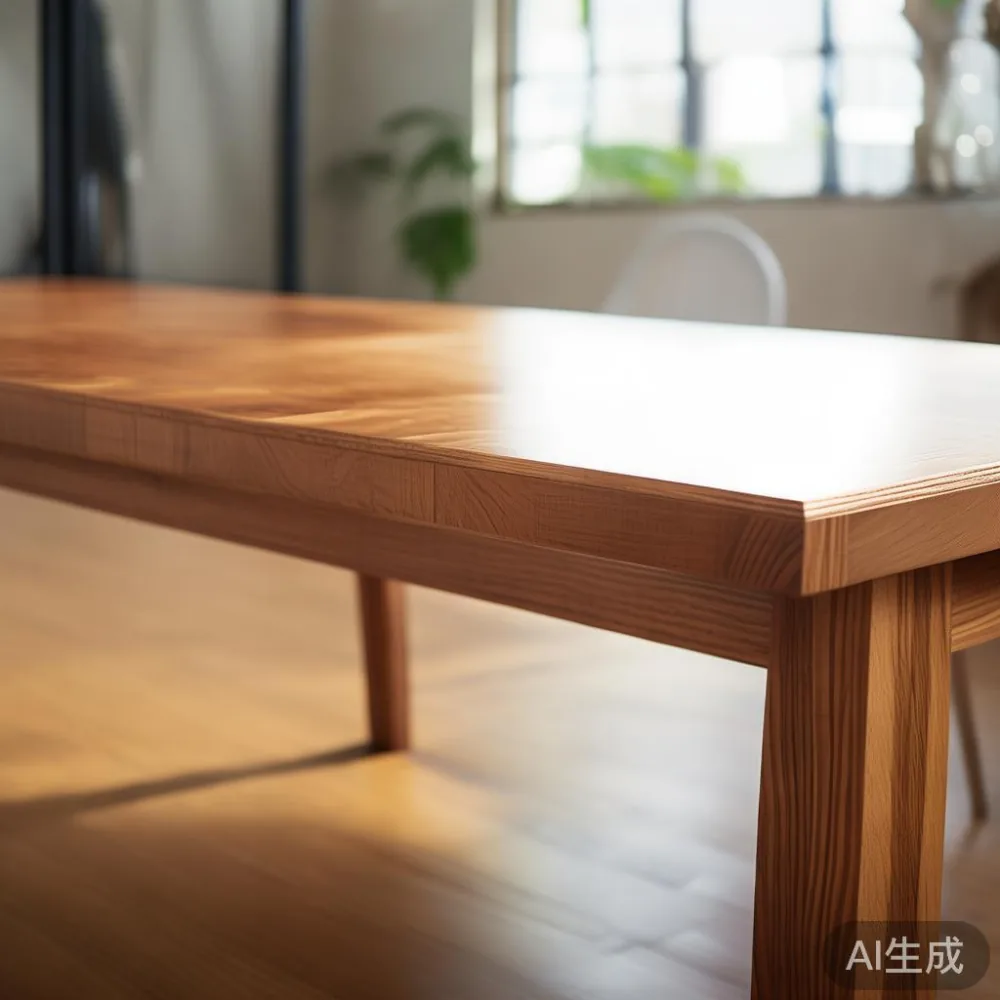
In a Bedok 4-room HDB running the air-con most evenings, a 25 mm MDF-top standing desk with a paper-backed veneer starts showing edge lift near the cable cut-out within 18 months. I saw this last month at a colleague's place: a popular Scandinavian-look model, only S$520 new, and the corner by the grommet had bubbled like a sunburnt blister because she pushes it against the wall where the dehumidifier cannot reach. The repair quote came back at S$160, basically one-third of the original price, so she is now considering a replacement instead.
What size coastal style do I need?
For a coastal-style standing desk in a Singapore HDB or condo, choose a top size of 140 cm wide by 60 cm deep as your baseline, because that fits a 27-inch monitor plus a laptop plus a small marble desk tray without overhanging the cable tray, and it still fits through a 90 cm corridor turn common in Punggol BTOs. If you also want room for a writing pad, push to 150 cm by 70 cm; if your study is under 9 sqm, stay at 120 cm by 60 cm and accept a single screen only.
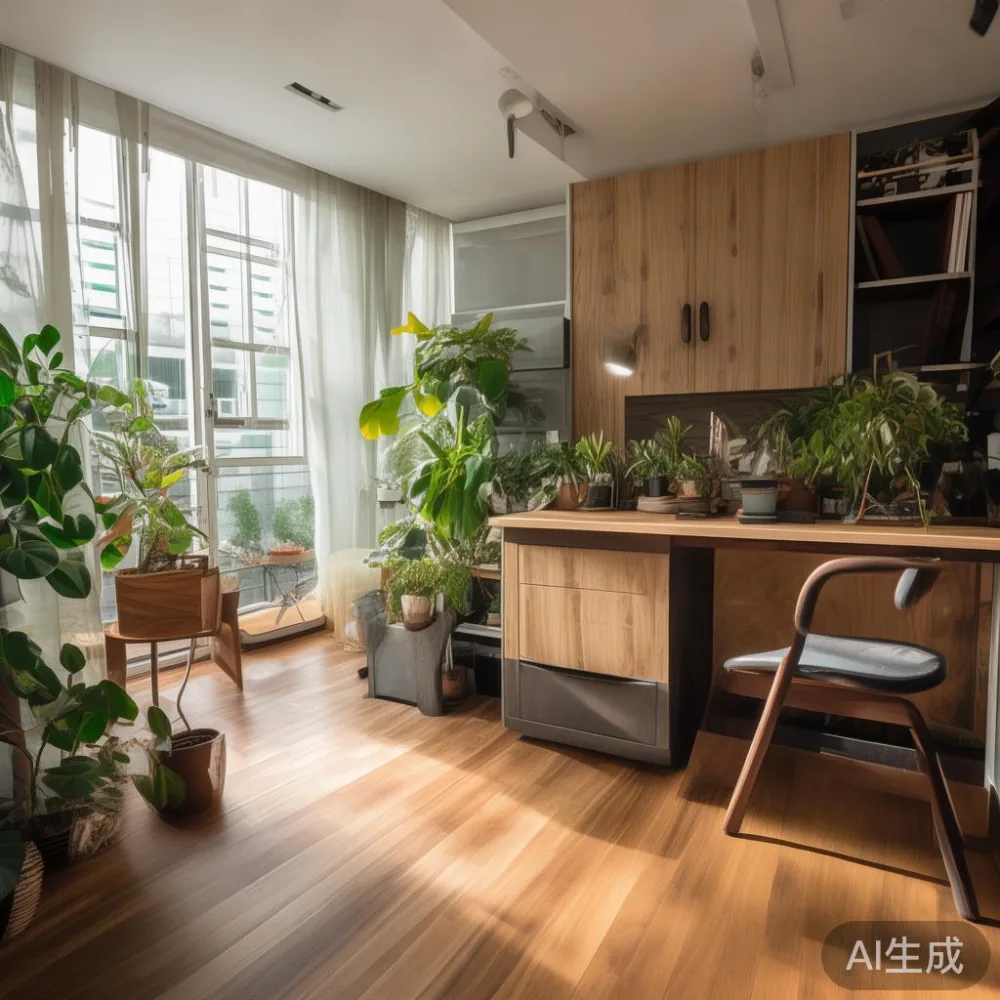
Coastal styling tends to mean pale timber, brushed nickel hardware, and a lighter, low-sheen finish that shows dust less than high-gloss lacquer. A solid ash top with a clear hardwax oil hits that look without needing a coloured overlay. The frame is where most people overspend on aesthetics; a matte white single-motor frame around S$260 looks lighter and more beachy than a chunky black triple-motor frame at S$420, even if the latter lifts 160 kg.
Why does solid wood actually win the five-year math?
The math works because solid wood absorbs repair, not refuses it. A warped, scratched, or sun-bleached solid wood standing desk top can be sanded and re-oiled on-site for roughly S$120 to S$220 depending on the species; oak and ash take less labour, walnut and cherry take more. Lifetime refinishing, which MIDHILL offers on every piece, means that line item drops to your time and a courier fee. Try getting the same offer from a veneer desk brand and you will hear silence, then an upsell to a new desk.
Compare that against the replacement cycle. A veneer-top standing desk in a Singapore household with two adults working from home typically lasts 3 to 4 years before the surface or the chipboard substrate starts to fail under the lifting mechanism's repeated stress. At a S$620 average price, you are looking at two purchases in five years, so S$1,240 in desk costs plus at least one S$60 delivery fee up to the 14th floor and one S$80 disposal run. A S$1,380 solid wood standing desk, refinished once at the three-year mark for S$140, lands at S$1,520 across the same five years. That is a 280-dollar gap that grows if you refinish twice or push the lifespan past year seven.
What are the hidden five-year costs people forget?
Most calculators ignore humidity, hardware, and hinge pain. Singapore's average relative humidity sits between 70 and 85 percent for most of the day, which is exactly the band where MDF swells and paper-backed veneer peels. Solid wood moves too, but it moves with the seasons in a predictable, reversible way that a good finish can handle. Veneer moves differently from its substrate, so the glue line is always the failure point.
Then there is the lifting hardware. A standing desk mechanism is rated for around 10,000 cycles, which sounds like plenty until you remember that a work-from-home user changes position roughly 8 to 12 times a day. That is 3,650 to 4,380 cycles per year, so a budget frame is approaching end-of-life at year three. Replacement columns cost S$140 to S$260 for a single-motor pair, plus another S$60 to S$60 for fitting if you are not handy. A solid wood top on a tired frame can be lifted straight onto a new frame with the same bolt pattern, so the desk survives even when the motor gives up. A veneer top usually does not, because the substrate crumbles when you unbolt it.
Delivery and access costs are the fourth silent line. A typical 120 cm by 60 cm standing desk carton weighs between 28 and 38 kg, fits inside a standard HDB cargo lift, but will not fit through a condo service lift narrower than 90 cm if the carton is over 180 cm long. Manila-and-stair deliveries to a Punggol walk-up on the 7th floor run S$60 to S$120 per visit. Solid wood tops ship unassembled in flat packs that are heavier per box but smaller per box, so the courier count drops from three to two and the access risk drops with it.
Is veneer ever the right call for a Singapore standing desk?
Yes, in exactly one scenario: a sub-S$500 short-term desk for a rental you will leave inside 24 months. If you are signing a 6-month rental in a Novena condo or doing a one-year postgrad stint, a S$380 laminate-and-veneer standing desk is the rational purchase. You use it, you bin it, you do not refinish anything. Beyond two years, the math inverts and stays inverted.
There is also a design argument for veneer in very specific colourways that solid wood struggles to hit, such as the cool-grey wash popular in some post-modern light luxury interiors, or the very pale taupe that French light luxury apartments lean into. A solid ash top can be limed to get close, but a dyed-poplar veneer can match a specific stone or marble desk top on the same floor. If matching an existing piece matters more than lifespan, veneer has a narrow window of usefulness.
How do MIDHILL's numbers read against a typical Singapore standing desk buyer?
Working through a real Punggol example: a 140 cm by 60 cm solid ash standing desk frame plus top, in a MIDHILL specification, lands at around S$1,260 to S$1,460 delivered, including GST and free shipping above the MOT minimum spend. The same spec in white oak is closer to S$1,540 to S$1,780. Lifetime refinishing is included, the 10-year structural warranty covers the lifting columns and the corner brackets, and the 14-day return window is long enough to test it through one humid week.
Over five years, the buyer refinishes once around month 30, pays nothing for the second coat because lifetime refinishing covers it, and replaces nothing. Total land cost is around S$1,460. The equivalent veneer buyer spends roughly S$620 in year one, S$620 in year four for a replacement, S$120 in delivery fees spread across the two purchases, and S$90 in disposal. Total land cost is around S$1,450. The totals look close, but the solid wood buyer still owns a structurally sound desk at year five with at least another decade of refinishable life ahead, while the veneer buyer owns nothing at year five and is shopping again.
What should I check before I buy any standing desk in Singapore?
Five quick checks keep the five-year story honest. First, weigh the top. A solid wood 140 cm by 60 cm top in ash or oak should weigh between 18 and 24 kg. Anything under 12 kg is almost certainly veneer over MDF. Second, look at the edge. A continuous grain that wraps around the side is solid; a visible seam where the surface meets the edge is veneer. Third, ask about the finish. Hardwax oil and conversion varnish age gracefully; polyurethane yellows and cracks. Fourth, ask what the warranty covers. A 10-year structural warranty on the frame and a lifetime refinishing offer on the top is the benchmark to measure against. Fifth, measure your lift. HDB passenger lifts are typically 110 cm wide by 140 cm deep with a 90 cm door, so any desk carton under 100 cm in any dimension will ride up without a service-lift booking.
If you are buying for a small bedroom that doubles as a home office, the same five checks apply to every other piece of solid wood in the room: a solid wood sofa frame with removable cushions, a bed frame with slats you can replace individually, a dining table that can be re-edged, a wardrobe with through-tenon joinery rather than dowel, and a nightstand with full-extension drawers that survive a humid monsoon. The pattern holds across categories because the underlying physics is the same: solid wood absorbs repair, veneer refuses it.
FAQ: Singapore standing desk buyers ask these every week
How long should a solid wood standing desk last in Singapore humidity? With one refinish around year three, a solid ash or oak top will outlast ten years in a typical air-conditioned HDB or condo. Without refinishing, expect seven to nine years before the surface looks tired. Veneer tops in the same conditions rarely make it past four years.
Is a solid wood desk too heavy for HDB floor loading rules? HDB's design allowance of 15 sqm at 150 kg per sqm covers a 24 kg top, two adults, a chair, and a monitor with margin to spare. The heavier concern is the lift access, not the floor.
Does MIDHILL ship directly to Singapore HDB doorsteps? Yes, with the standard caveat that the courier will book a lift slot in advance for condo service lifts narrower than 90 cm, and free shipping kicks in above the standard minimum order threshold.
Can I refinish a solid wood standing desk myself? You can, in the same way you can service your own car. A light sanding, a coat of hardwax oil, and a 24-hour cure is enough for a refresh. The lifetime refinishing offer exists for buyers who would rather pay someone else to handle the dust.
What about a beige ash wood sofa guide that mentions desks? A good beige ash wood sofa guide will tell you to match the timber tone of your sofa frame to the desk top, because a mismatched ash and oak pair reads as a wardrobe malfunction in open-plan Singapore living rooms where the sofa faces the study corner. Ash and ash, or oak and oak, keeps the eye calm.
What does the five-year decision actually come down to?
It comes down to whether you would rather pay S$280 more once and refinish, or pay S$1,240 twice and dispose. The standing desk is the single piece of furniture in your home that takes the most mechanical punishment per square centimetre, because every height change flexes the top, every cable moves the grommet, and every humid afternoon pushes moisture into the substrate. Solid wood handles all three; veneer handles none. If the rest of your home is already solid wood, your standing desk should be too, otherwise it becomes the weak link that drags the room down every time you stand up.