Complementing Minimalist Interiors with Wood-Finished Furniture
A warm minimal interior in a Singapore HDB flat or condo should feel calm without becoming sparse. Pale timber, low-contrast walls, restrained decoration and a few tactile pieces create warmth more effectively than a crowded room. Furniture proportions matter just as much as colour: in compact Tampines, Bedok and Punggol homes, every centimetre affects circulation, lift planning and visual openness.

This guide uses practical measurements for local spaces, including common HDB living rooms, condo dining areas and bedrooms. Prices are shown in SGD and include Singapore GST where applicable. A typical new HDB flat gives a living and dining area about 20–30 sqm, while a compact bedroom may measure only 8–12 sqm. Even in larger homes, a 90 cm corridor or an 85 cm lift can restrict furniture delivery, so measurements should be settled before fabrication.
MIDHILL designs solid wood pieces for warm, lightly layered rooms. Its standing desk range, seating and storage can sit comfortably beside Scandinavian forms, French details or post-modern light luxury without making the space look over-designed.
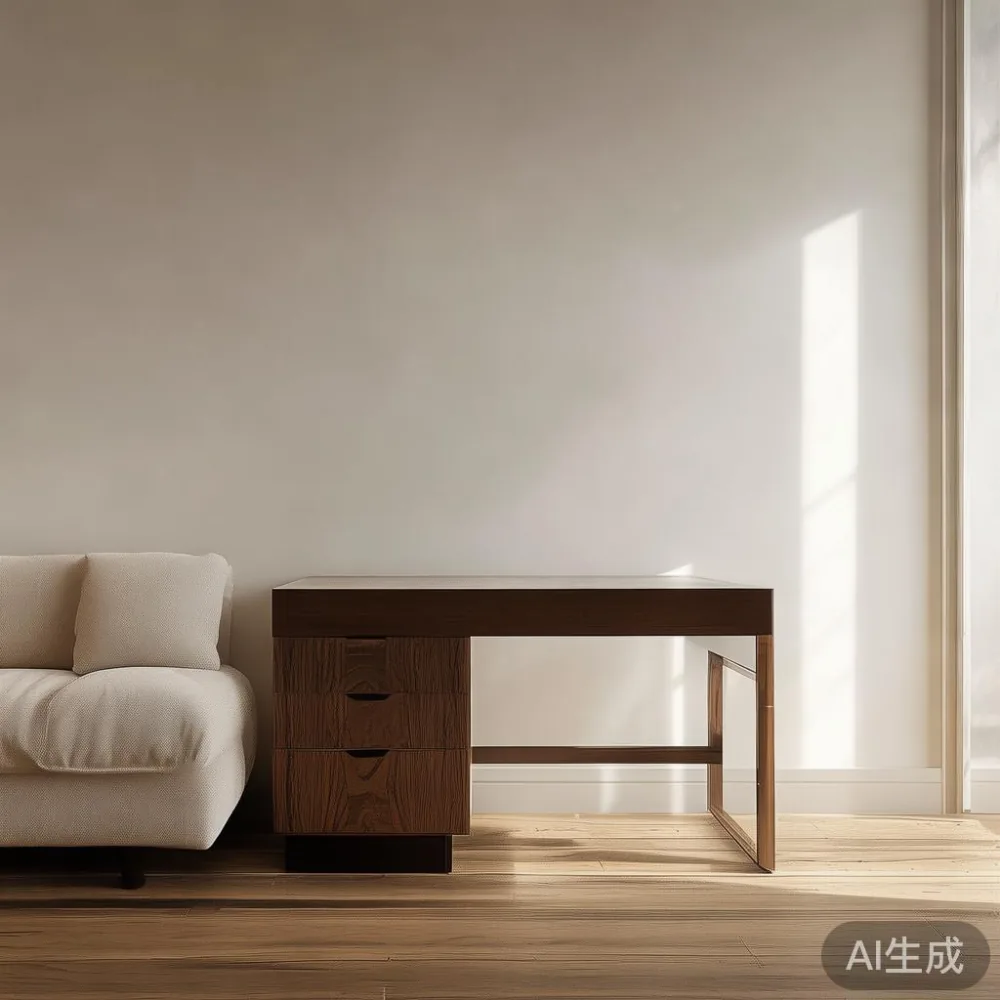
What Makes a Warm Minimal Interior Work?
Warm minimalism relies on balance: pale colours keep the room open, while oak, walnut, cane, linen and brass prevent it from feeling clinical. Aim for a limited palette of 3 main colours. For example, use warm white walls, light oak furniture and charcoal accents. Repeat one colour in at least 2 places to create continuity.
Scale is equally important. Keep at least 75–90 cm between a dining table and the nearest wall where possible, and preserve a 90 cm route from the entry to the balcony. In a compact living room, a 180–200 cm solid wood sofa looks substantial without overwhelming a 2.8–3.2 m wall. Choose low seat heights around 40–43 cm and slim legs of 15–20 cm to reveal more floor area.
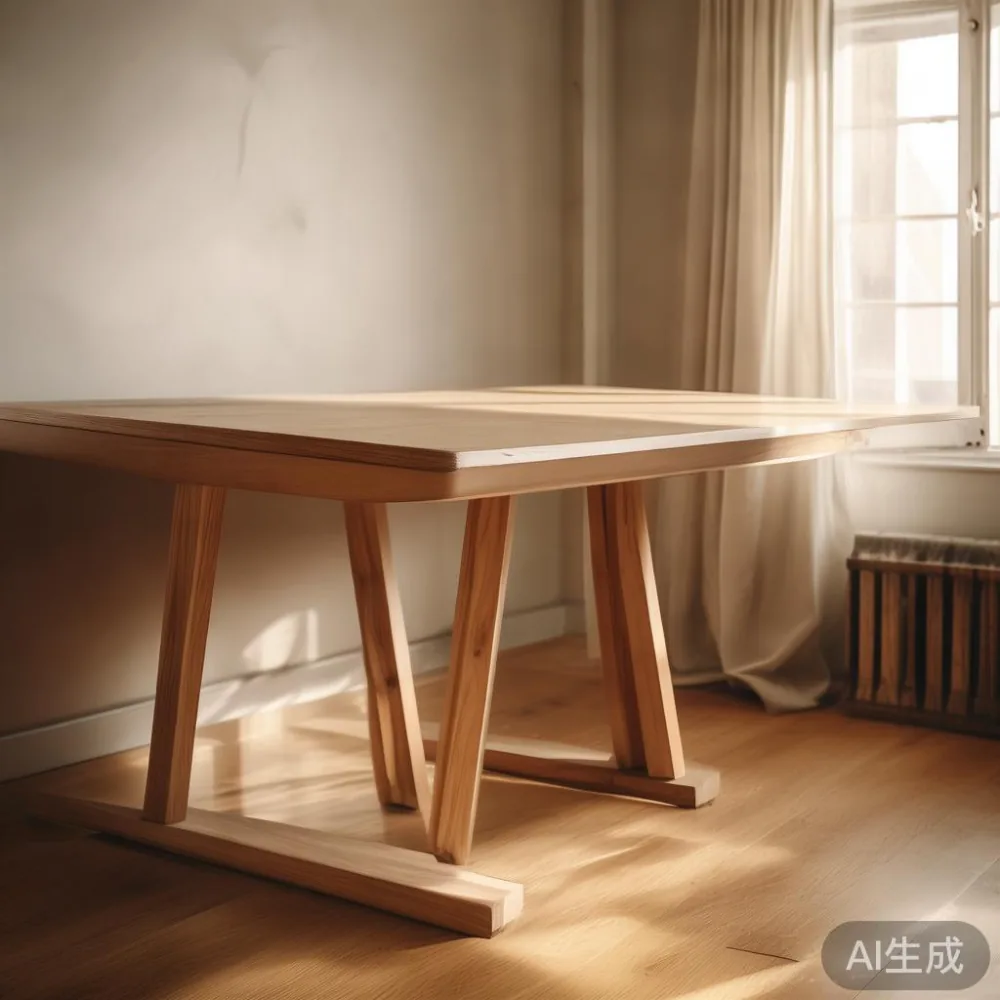
Curtains and lighting shape warmth as much as timber. Hang them 10–15 cm above the floor and extend them across the window rather than stopping midway. Use 2 or 3 lamps with warm white light around 2700–3000K. A 7–9 W bedside lamp is enough for reading, while a 12–18 W floor lamp can illuminate a seating corner.
The goal is not emptiness. A 45 cm ceramic vase, a framed print measuring 50 × 70 cm or a 30 × 40 cm table book adds personality while retaining visual restraint. Warm minimal rooms feel considered because their few objects have purpose, scale and texture.
How Do You Choose Furniture for a Warm Minimal Home?
Begin with the room’s largest fixed feature, not a catalogue photograph. Measure wall lengths, windows, doors, sockets and lift access. Record narrow points rather than estimating later. A dining table may suit an open room, but its packed crate still needs to clear the landing, lift door and corridor turn.
Choose one dominant material and use another as an accent. Light oak, white oak or pale ash suits HDB interiors with cool white walls. Walnut gives a warmer, post-modern light luxury effect and pairs well with cream upholstery. Dark timber needs brighter lighting and lighter textiles to avoid reducing the sense of space.
Check proportions in person or through a scaled plan. A 140 × 80 cm dining table seats 4 people and leaves about 55–65 cm per place. A round 110 cm version can seat 3 and works better beside a narrow corridor. For a living room, select a solid wood sofa no more than 80–85% of the usable wall length; this leaves visual breathing room and a practical gap for a floor lamp.
Storage should conceal clutter rather than display it. A wardrobe between 180 and 220 cm wide can suit a bedroom, but hinged doors need more clearance than sliding panels. A depth of 55–60 cm is practical for hanging clothes, while a depth of 50 cm may suit a study. This is where a standing desk can become part of the room’s composition rather than an isolated office object.
Can a Standing Desk Suit a Warm Minimal Interior?
Yes, provided its size, colour and placement follow the room’s proportions. A standing desk typically measures 120–160 cm wide and 60–75 cm deep. Compact models around 120 × 60 cm fit a study nook, while a 140 × 70 cm top gives more room for a laptop, notebook and monitor.
For warm minimalism, select a pale oak or natural walnut top with restrained hardware. Avoid a desk that visually blocks a window or interrupts the main circulation route. Leave at least 90 cm in front of it when seated and around 100–120 cm when transitioning between sitting and standing. The desk height should generally move from about 72 cm seated to 105–115 cm standing, depending on the user.
Remember that “standing” does not require standing all day. Alternate positions every 30–60 minutes, adjust the screen so its upper edge is near eye level and keep elbows around 90 degrees. A small 35–45 cm monitor arm can improve alignment, but cable channels should be built in rather than left exposed.
In a study, the standing desk can share the same timber family as a bookcase or nightstand without matching every edge perfectly. Mid-century modern for office projects often favour clean lines, tapered supports and functional spacing; those principles suit a compact Singapore room. A light oak desk can cost about SGD 1,200–2,600, while a wider motorised solid wood model may range from SGD 2,400–4,800.
For a more relaxed study, use Mid-century modern for hotel references to create a welcoming desk corner: one task lamp, a wool chair and a simple shelf are enough. Avoid turning the workspace into a separate showroom. The desk should feel connected to the bedroom or living area, especially when the room is only 8–10 sqm.
How Do You Match a Solid Wood Sofa, Bed Frame and Dining Table?
A solid wood sofa with a pale timber frame and oatmeal, sand or warm grey cushions works across Scandinavian, French and post-modern interiors. Its visible frame should have softened corners if children use the room, while the seat depth should remain around 55–60 cm for comfortable sitting. Keep coffee-table clearance near 40–45 cm, and leave at least 75–90 cm between the sofa front and the opposite seat.
For a 3-seat sofa, a width of 190–220 cm is common. In a narrow HDB living room, a 170–190 cm model may be more appropriate. If you compare silhouettes, French sofa vs Nordic sofa decisions often come down to detail: French forms may include rounded arms, upholstered frames and a little more softness; Nordic forms tend toward straighter profiles, lighter proportions and exposed or neatly framed timber.
A bed frame should visually anchor the bedroom without making the room feel heavy. Light oak boards between 35 and 50 cm wide create a calm horizontal rhythm. Keep side gaps around 60–90 cm where possible, although compact HDB bedrooms may require a narrower 50–60 cm passage. A 90 × 190 cm mattress fits a queen bed frame measuring roughly 100–105 × 200–210 cm.
When asking how to style Japanese bed in room layouts, treat the low platform as a horizontal line and keep the bedding simple. Use 2–3 neutral layers, a textured throw and one warm lamp rather than many small decorations. This approach works with both a solid wood bed frame and a restrained European for guest room scheme.
The dining table is often the room’s social centre. A 180 × 90 cm solid wood table accommodates 6, while 160 × 80 cm seats 4 and may be easier to move through a condo corridor. Leave 90–110 cm around the table for chairs and movement. In a small kitchen, a 120–140 cm table or a narrow 90 cm drop-leaf option can provide flexibility.
Use a marble table only as a controlled accent. A 90–110 cm round marble top can brighten a dining corner, but it needs a visually stable base and careful protection from acidic spills. If the rest of the room already contains glossy surfaces, a solid oak or walnut table often creates a more coherent warm minimal setting.
What Makes French Light Luxury Feel Warm Rather Than Formal?
French light luxury works well in Singapore interiors when the references are subtle. Curved sofa arms, a softly upholstered headboard, slim bronze hardware and a round dining table can suggest French light luxury without filling the room with ornate furniture. Warm minimalism is more successful than literal château styling.
Pair one curved or upholstered piece with simple timber elsewhere. For example, combine a 200 cm solid wood sofa with oatmeal cushions, a pale oak dining table and matte black lamp stems. Add one cream rug measuring 160 × 230 cm, if the living room permits. Keep the floor visible around it so the furniture retains visual space.
For storage, luxury French provincial furniture references can be softened through flat fronts, pale finishes and minimal handles. A wardrobe with two 90 cm doors, a 55–60 cm depth and a warm white or light oak finish can feel elegant without becoming overly decorative. In a compact bedroom, sliding doors save about 60–80 cm of clearance compared with hinged doors.
A nightstand should sit close to the bed and match its height. A top around 50–60 cm high is convenient beside a standard mattress. Choose a small drawer for a phone and charger, plus an open shelf for books. Avoid oversized boxes that reduce the passage beside the bed.
How Do You Fit Furniture Through Singapore Lifts and Corridors?
Measure the complete route before ordering. Record the flat door width, landing turns, corridor width, lift door, lift car dimensions and any steps. A common HDB lift door may be about 90 cm wide, but internal dimensions and permitted load vary by block. A wide dining table can fit upright yet fail at a turning corner.
Ask for the product’s packed dimensions, not just its assembled dimensions. A 180 × 90 cm table may arrive in a protective carton longer than the tabletop itself, and a wardrobe may be delivered as separate panels. For larger solid wood pieces, confirm whether assembly is included and whether the carrier can bring the item to the door rather than the bedroom.
Protect floors and walls during delivery. Use blankets or corner guards, and reserve about 10–15 cm between the furniture and nearby surfaces for assembly. If a piece cannot pass directly through the lift, professional movers may need to use a stairwell or hoist; obtain a written cost estimate first.
MIDHILL offers delivery planning for international and Singapore orders, with free shipping over US$350 under its stated policy. Local GST and delivery charges should still be checked at checkout. Typical made-to-order lead time is around 30–60 days, subject to the selected timber, finish and current production schedule. A clear delivery window is more useful than a vague “fast” promise.
Which Colours and Finishes Work Best with Warm Minimalism?
Light oak and natural ash create an airy background. Walnut adds contrast and depth, while white-painted timber can brighten a room with limited daylight. Avoid too many yellow undertones if your walls are already cream; a slightly neutral oak can look cleaner beside white and grey textiles.
Use metals as small connectors. Brushed brass, matte black and warm nickel each change the atmosphere: brass supports French light luxury, black creates sharper post-modern contrast, and nickel suits Nordic rooms. Keep the finish consistent within one zone rather than mixing all three across a single table.
For fabric, choose colours such as ivory, oatmeal, camel, taupe, dusty blue or soft olive. Test them in daylight and at night because Singapore light changes quickly. If a sofa is already strongly coloured, repeat that colour in a cushion or rug rather than adding more large pieces.
Wood care matters in a humid climate. Wipe surfaces with a damp cloth, dry promptly and avoid standing water. Re-oil or refinish according to the finish; a sealed tabletop may need attention every 12–24 months depending on use. Keep furniture at least 15–20 cm from exterior walls where condensation is possible.
What Should You Check Before Buying Solid Wood Furniture?
Check the material, construction and dimensions rather than relying on a style label. Solid wood expands and contracts with humidity, so ask whether side panels, shelves and table leaves are solid timber or engineered board. For a dining table, confirm the top thickness, often around 20–30 mm for a substantial solid wood top, and the stability of the base.
Look at the hardware, joints and finish details. Drawers should run smoothly, wardrobe doors should align, and a standing desk should stop securely at its selected height. Ask for a sample or finish reference when colour accuracy is important. Screens can make light oak appear much paler than it does indoors.
Review the warranty and after-sales terms in writing. MIDHILL provides a 10-year structural warranty and lifetime refinishing, which can be useful for long-term ownership. Return policies are also relevant: MIDHILL offers a 14-day return period under its stated conditions, so confirm eligibility, packaging and collection requirements before accepting delivery.
Measure the room twice and make a simple scale drawing. A 10 cm planning error becomes obvious at the lift or beside a wardrobe. The most successful warm minimal room is not the one with the most furniture; it is the one where every piece has enough space, a clear purpose and a colour that belongs to the whole.