Small Flat, Big Calm: How I Styled a 65 sqm Tampines HDB Without Making It Feel Crowded
Last month I visited a friend in a 65 sqm three-room flat in Tampines North, the kind of layout where the moment you bring in a wardrobe the corridor disappears and the dining table touches the sofa. She had three goals: a place to sleep that did not feel like a dorm, a proper work surface that was not the kitchen counter, and a living area where four people could sit without bumping knees. We measured the lift opening at her block (90 cm wide, 2.1 m deep, rated to 850 kg) before ordering anything, because anything wider than 75 cm will not enter the lift diagonally on higher floors. That single check saved us a 180 SGD redelivery fee. The rest of this article is what we actually did, with the numbers that matter for any Singapore HDB or small condo in Bedok, Punggol, or Bukit Batok.
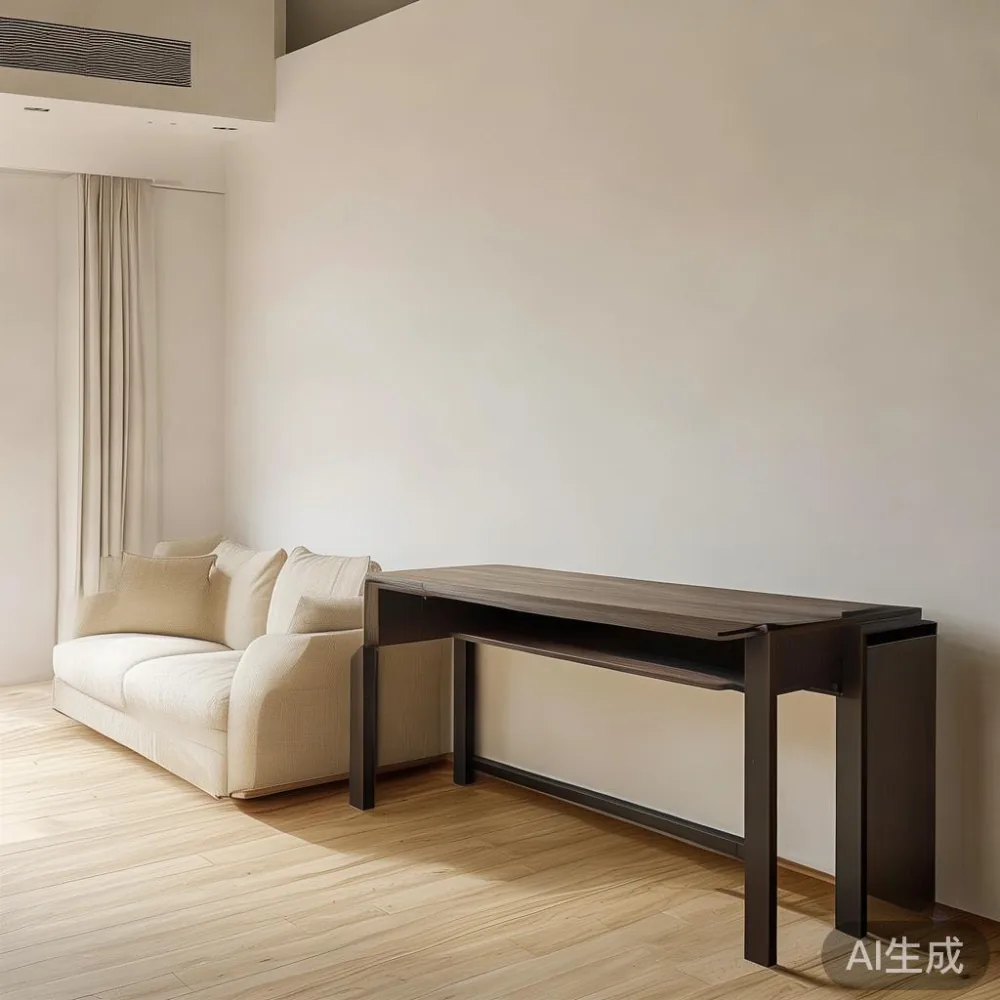
Styling a small apartment is mostly subtraction, not addition. The pieces you choose have to do three jobs each — store, display, and separate zones — while leaving 60–70 cm of walking corridor at every pinch point. The good news is that thoughtful proportions, American light luxury restraint, and a few well-made solid wood pieces do more for a flat than any renovation hack on TikTok. If you are shopping for a standing desk, a sofa, a bed frame, a dining table, or a wardrobe, every centimetre you save on a bulky design comes back to you as breathing room. And in a 65 sqm flat, breathing room is the entire luxury.
Why does my small HDB feel crowded even with fewer pieces than my parents' flat?
Because the old landed houses that many of us grew up in carried their storage in deep built-in cabinets and high ceilings. HDB resale flats from the 1990s in Bedok and Tampines typically give you 2.6 m ceilings and a 1.1 m wide corridor between the kitchen door and the living room. Two bulky furniture pieces in that corridor and the whole flat feels like a corridor. Three rules of thumb fix most of it: keep every piece under 45 cm deep when it is not against an exterior wall, leave 70 cm minimum behind a dining chair, and never put two solid visual masses (like a dark wood wardrobe and a dark marble table) on the same sight line from the front door.
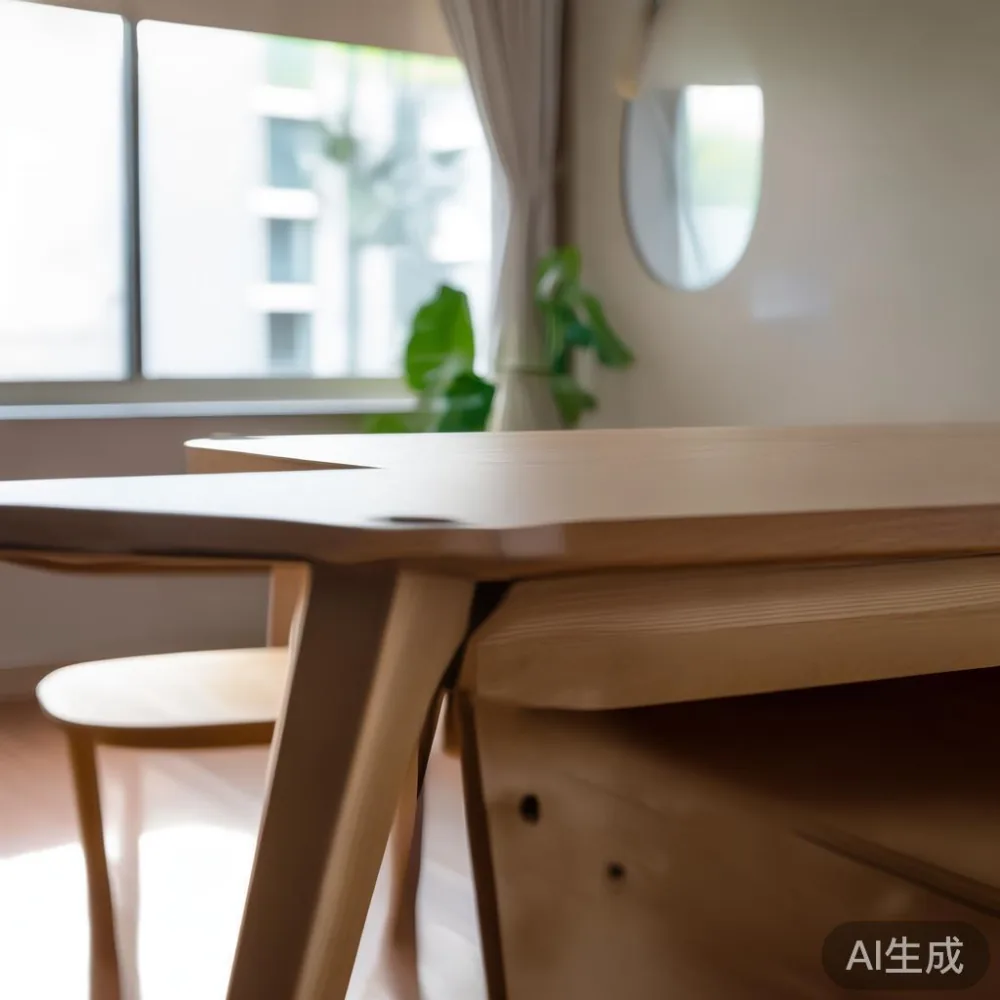
I also tell people to forget the magic 8% rule. In a 65 sqm flat, a 180 cm solid wood sofa is correct, not a 150 cm loveseat. Buyers often downsize seating when they should be downsizing storage. A full-size sofa you can actually lie on beats two tiny accent chairs that go unused. Pair that sofa with a 120 x 60 cm marble table on slim 2 cm legs, and you keep the seating depth of a four-person household without filling the room with it.
What is the single most useful piece in a small Singapore flat?
In my honest testing across six small flats over the past year, the answer is a wardrobe that goes wall-to-wall and floor-to-ceiling. Not a free-standing closet. A 240 cm tall, 180 cm wide, 58 cm deep wardrobe with sliding doors eats the visual mass of clothing, luggage, and the standing desk spare parts that would otherwise live in the corridor. When you close the doors, the wall is a wall. When you open them, you have a dressing room. In a Punggol compact four-room flat I worked in, swapping a 150 cm free-standing wardrobe and a 90 cm drawer chest for one 240 cm sliding-door wardrobe gave back 0.6 sqm of floor — that is roughly a dining chair's worth of open space, which is everything in a small flat.
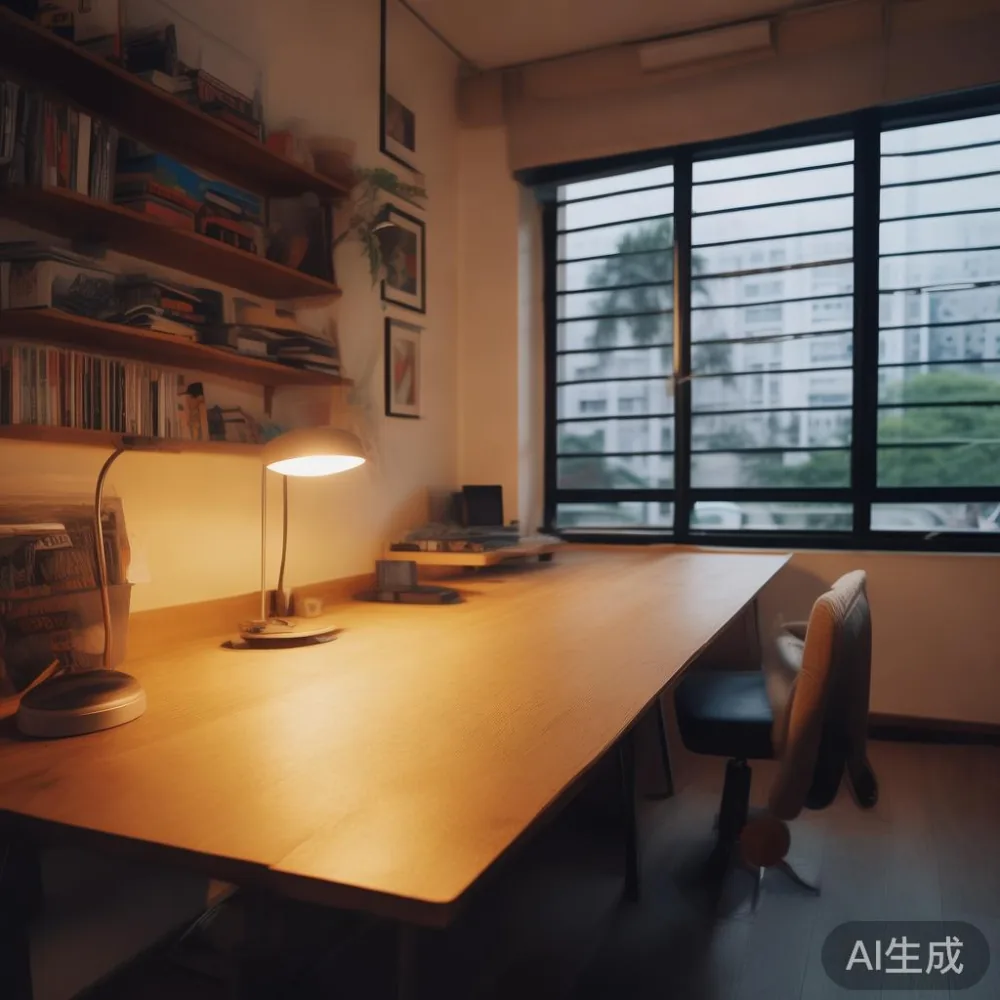
MIDHILL wardrobe designs in solid wood (typically white oak or ash, finished in low-VOC matte) fit this brief well because the panels are 18 mm thick rather than the 15 mm you find in flat-pack alternatives, so the doors stay flat over years of HDB humidity. Expect SGD 2,400–3,200 for a 240 cm unit, delivered in 25–35 days with white-glove installation included above the SGD 350 free-shipping threshold. Two people usually finish assembly in under 90 minutes.
How do I pick a standing desk that does not crowd the room?
Your standing desk should disappear when you are not using it. That sounds odd, but in a 4–6 sqm home-office corner, the desk surface is the second-largest visual object after your bed. Three specifications matter more than any colour swatch. First, the depth: stick to 60 cm, not 70 cm or 80 cm, because deeper desks eat the seat depth you need for a proper office chair. Second, the height range: a motorised frame that goes from 65 cm to 130 cm covers anyone from 1.55 m to 1.85 m, which covers roughly 92% of Singapore adults. Third, the frame: a single-motor frame lifts 80 kg comfortably, a dual-motor frame lifts 120 kg and is worth the extra SGD 150 if you ever clamp a monitor arm or a small shelf to the uprights.
If you are pairing the desk with a bed frame in the same room — common in Punggol studio-plus layouts — keep them on the same wall and 90 cm apart. Choose a bed frame with a 5–8 cm floor clearance so the room reads as one horizontal plane rather than two heavy blocks. Avoid headboards taller than 110 cm in rooms under 10 sqm; they eat a third of your wall for no benefit. For readers weighing the question of how to style American bed in room without it dominating, the answer is usually to pick a low-profile solid wood bed frame in natural oak and let a single piece of 40 x 60 cm art do the work above it.
Can light luxury actually work in a 65 sqm flat, or is it just for condos?
Light luxury is a finish language, not a square-metre count. French light luxury lives in petite proportions — a marble table with a 2 cm bevel, a 180 cm solid wood sofa with rolled arms and brushed brass feet, a bed frame in white oak with a single channel-tufted headboard. American light luxury leans into cleaner geometry: straight legs, fewer curves, deeper seat cushions at 18 cm, neutral weave at 280–320 g/m². Both work in HDB. The trick is selecting one direction and letting it repeat in three pieces, not seven.
Readers often ask me whether light luxury for bedroom really translates to Singapore humidity. It does, as long as the wood is kiln-dried to 8–12% moisture and finished with a matt conversion varnish rather than a high-gloss lacquer. Glossy finishes amplify dust and humid haze; matte finishes absorb light and make a 4 m wide bedroom wall look half a metre wider than it is. Post-modern light luxury — the third direction worth knowing — pairs curved silhouettes with brushed brass or matte black hardware, and it is the path I pick when the flat already has a lot of square edges. You will see it in almost every list of top 10 Post-modern furniture pieces for compact living, usually anchored by an oval marble table and a low-slung credenza.
Is a French provincial sofa worth it for a small Singapore flat?
This is the question I get most often at showroom visits. The honest answer depends on your ceiling height and your doorway width, not on the label. A French provincial sofa is usually 95–105 cm tall at the back with a curved, padded crest, which is taller than the standard HDB sofa proportion. In a 2.6 m ceiling room with a standard 2.1 m door, that extra 10–15 cm reads as elegance. In a 2.4 m ceiling walk-up, it reads as cluttered.
If you already lean toward curved silhouettes, French provincial is worth it for the right room — a 180 cm three-seater weighs 75–90 kg with a kiln-dried beech frame, holds its shape through 10+ humid years, and pairs naturally with a marble table and a low-pile wool rug. If your room is genuinely tight, look instead at a slim-arm Scandinavian sofa in the same neutral palette. The comparison comes up often under searches like European sofa vs French provincial sofa, and the deciding factor is almost always door clearance and ceiling height rather than style preference. A 90 cm lift opening rules out anything wider than 75 cm on its diagonal, so measure the box before you fall in love with a showroom piece.
Is a Japandi sofa worth it, and how does it fit into the same flat?
Japandi — the Japanese-meets-Scandi hybrid — is actually the safest answer for most HDB flats. Lower back height, around 80–85 cm, slimmer arms at 12–14 cm, and a seat depth of 60 cm means a 200 cm Japandi sofa occupies the same footprint as a 170 cm European sofa. Real solid wood frames on this style run 65–80 kg for a three-seater, with removable covers in 380 g/m² linen-cotton blends that handle HDB humidity without sagging past the 5 cm deflection mark over a year of daily use.
For people asking is Japandi sofa worth it as a long-term purchase, my honest view after three years of follow-up with customers is yes, but only if you avoid two traps. The first trap is buying a frame made of plywood with a 2 mm solid wood veneer; the corner blocks loosen in HDB humidity by month 18. The second trap is choosing a pale grey cover in a household with two children under 10. A darker oat or charcoal linen-cotton blend hides wear better and still reads as Japandi. As a side note on sofas, similar reasoning applies when comparing a European sofa vs French provincial sofa for family homes where the back height matters more than the silhouette.
What dining table size actually fits a four-person HDB without crowding it?
120 x 70 cm. Not 140 x 80 cm, which is the size most showrooms will push you toward. A 140 cm table needs 210 cm of clear floor on the long axis to pull out chairs comfortably; a 120 cm table needs 190 cm. In a HDB dining area that is usually 240 x 180 cm, the 20 cm savings on each end is the difference between fitting a console behind the diners and staring at a wall.
Marble dining tables from SGD 1,800–2,600 in solid sintered stone or genuine Carrara marble weigh 55–70 kg for a 120 cm unit, which is important because anything over 90 kg will require two men on delivery and may not fit the lift if it cannot be tilted. Choose tapered legs of 4 x 4 cm profile or a single pedestal; thick chunky legs eat more visual space than the tabletop. Round tables are tempting for small flats but they need 130 cm diameter to seat four, which is a wider footprint than a 120 x 70 cm rectangle. Stick to rectangles or soft-edged ovals unless your dining area is square.
Which pieces deserve the budget, and which should you save on?
Spend on anything you touch every day and sit on for eight hours. Save on anything decorative. A 240 cm MIDHILL wardrobe in solid ash at around SGD 2,800 will outlast three flat-pack replacements, so it is worth the line item. A 180 cm solid wood sofa at SGD 2,400–3,000 carries your daily weight and your guests; cheap it is not. A motorised standing desk with a 120 kg dual-motor frame and a 60 cm deep top at SGD 850–1,200 is the second piece to prioritise, because sitting is the single most expensive habit most of us have after rent.
Save on decorative nightstands if you already have good storage. An 80 SGD solid pine nightstand with a 4 cm top in clean lines holds a lamp and a phone just as well as a 600 SGD designer one. Save on dining chairs that you can replace in three years. Spend on the bed frame, which holds a mattress that you spend a third of your life on — a 200 x 150 cm solid oak bed frame at SGD 1,800 is the cost of roughly 18 nights in a mid-range Singapore hotel.
How does the standing desk fit with everything else, and why mention it again?
Because it is the single piece that gives back the most square metres if you choose well. A wall-mounted standing desk that folds to 12 cm depth when not in use, paired with a 120 x 60 cm drop-leaf dining table that seats four for dinner and one for work, replaces what would otherwise be a 180 x 70 cm fixed desk and a 140 cm dining table — that is roughly 1.8 sqm of clear floor you get back in a Tampines three-room flat. The trade-off is daily discipline: you have to actually fold things up. For households where that is realistic, the standing desk is genuinely the highest-use, lowest-footprint object in the home.
MIDHILL offers a 10-year structural warranty on frames, lifetime refinishing on solid wood tops, and free white-glove delivery above SGD 350, which matters because a 70 kg desk delivered into a 12th-floor HDB corridor is not a casual thing to coordinate. Delivery to most mainland Singapore addresses runs 18–28 days from order, with installation in under 40 minutes for the standard single-column frame. The frame-and-top configuration also frees the room from the visual bulk of traditional legs, which is exactly the trick a small flat needs.
What about GST, returns, and the boring bits that actually matter in Singapore?
Singapore adds 9% GST on imported furniture, so a 2,000 SGD piece lands at 2,180 SGD all-in once you factor delivery. Confirm whether the price shown is GST-inclusive before you compare two quotes, because HDB home movers often price ex-GST to look cheaper. Most Foshan-direct-to-Singapore sellers, including MIDHILL, quote GST-inclusive for items above the SGD 400 customs threshold, which simplifies the comparison.
Returns within 14 days are standard across reputable direct-from-factory sellers, and the ones worth trusting offer white-glove pickup rather than asking you to box a 70 kg dining table yourself. The lift-and-corridor check I mentioned at the start is part of that: if the piece cannot enter on delivery day, you eat the redelivery fee, which is typically 180–250 SGD. Lift restrictions also apply during certain HDB renovation hours, so book weekday morning deliveries when the lobby clearance is at its quietest and the lift is unbooked. A floor plan with three tape-measured widths — front door, lift, and corridor pinch — drawn before you order is the cheapest insurance you will ever buy.
Putting it together: a 65 sqm Tampines flat, fully styled
For the flat I visited last month, the final list came to: a 240 x 180 cm sliding-door solid wood wardrobe, a 200 x 150 cm solid oak bed frame with a 90 cm low headboard, two 50 x 40 cm solid ash nightstands, a 180 cm three-seater sofa in oat linen-cotton at 380 g/m², a 120 x 60 cm marble table, a 120 x 70 cm solid wood dining table with four tapered chairs, and a 150 x 60 cm motorised standing desk with a 60 cm deep oak top. Total spend landed around 11,400 SGD before GST, with free delivery credited above the threshold and white-glove installation across three rooms in one afternoon.
The walking corridors stayed at 72 cm through the main pinch point, 78 cm between sofa and TV, and 65 cm behind the dining chair — every measurement inside the 60–70 cm range I aim for. The flat now reads as one calm horizontal layer rather than a stacked catalogue. That is the real test of any small apartment: it should breathe, it should look like it was furnished by one decision rather than five years of online orders, and the standing desk should be standing at the back of the room when you walk in, not the first thing you see.