How to Match a Standing Desk and Warm Minimal Furniture to a Singapore Condo
I moved into a 980 sq ft four-room HDB flat in Tampines last month, and the first thing I noticed after the movers left was how unforgiving the corridor lighting was on pale walls. The unit came with off-white vinyl, a slim galley kitchen, and a long living room that doubles as my home office. A standing desk had to sit somewhere sensible, but I refused to let it become a clinical block of aluminium next to a faux-leather chair. The problem was bigger than one piece of furniture: how do you build a warm minimal interior in a Singapore HDB or condo where every square foot costs roughly SGD 1,400 per square foot, where lift doors in older blocks are only 0.9 m wide, and where humidity sits at 80 percent most afternoons?
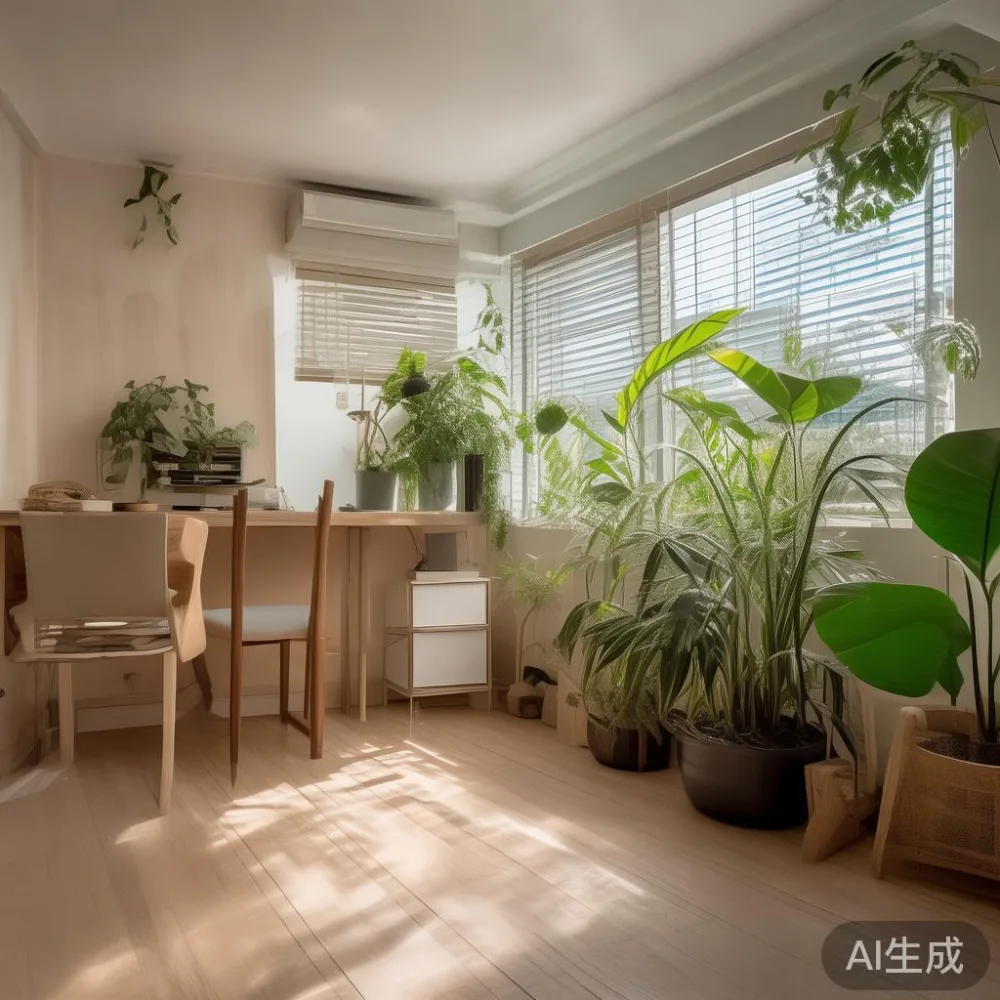
Warm minimal is not a colour trend. It is a discipline of subtraction: pale neutrals, real materials, soft edges, and one or two pieces with weight. Done well, a solid wood dining table, a French provincial king bed, and a marble-topped side table can all live in the same room without shouting. Done badly, the room becomes either a Muji showroom or a Peranakan attic. After two weeks of testing layouts, I want to share what actually worked in a real Singapore home, with prices in SGD and measurements in centimetres so you can adapt it to your own floor plan in Bedok, Punggol, or Bukit Batok.
Why warm minimal works in Singapore HDB flats and condos
Most resale HDB interiors in districts like Tampines and Bedok arrive with cream walls, beige tiles, and a single window wall facing the corridor. The hard surfaces bounce sound and amplify the chill of air-conditioning set at 23 degrees. Warm minimal adds back the missing frequencies: the matte grain of solid oak, the woven texture of a linen bedhead, the soft shadow under a 45 cm deep console. The look is often called light luxury, and the three flavours you will find in local showrooms are French light luxury (curved silhouettes, pale walnut, brushed brass handles), American light luxury (chunkier frames, oversized cushions, caramel leather), and post-modern light luxury (mixed metals, sculptural shapes, travertine or marble accents). Pick one language per room so the eye knows where to rest.
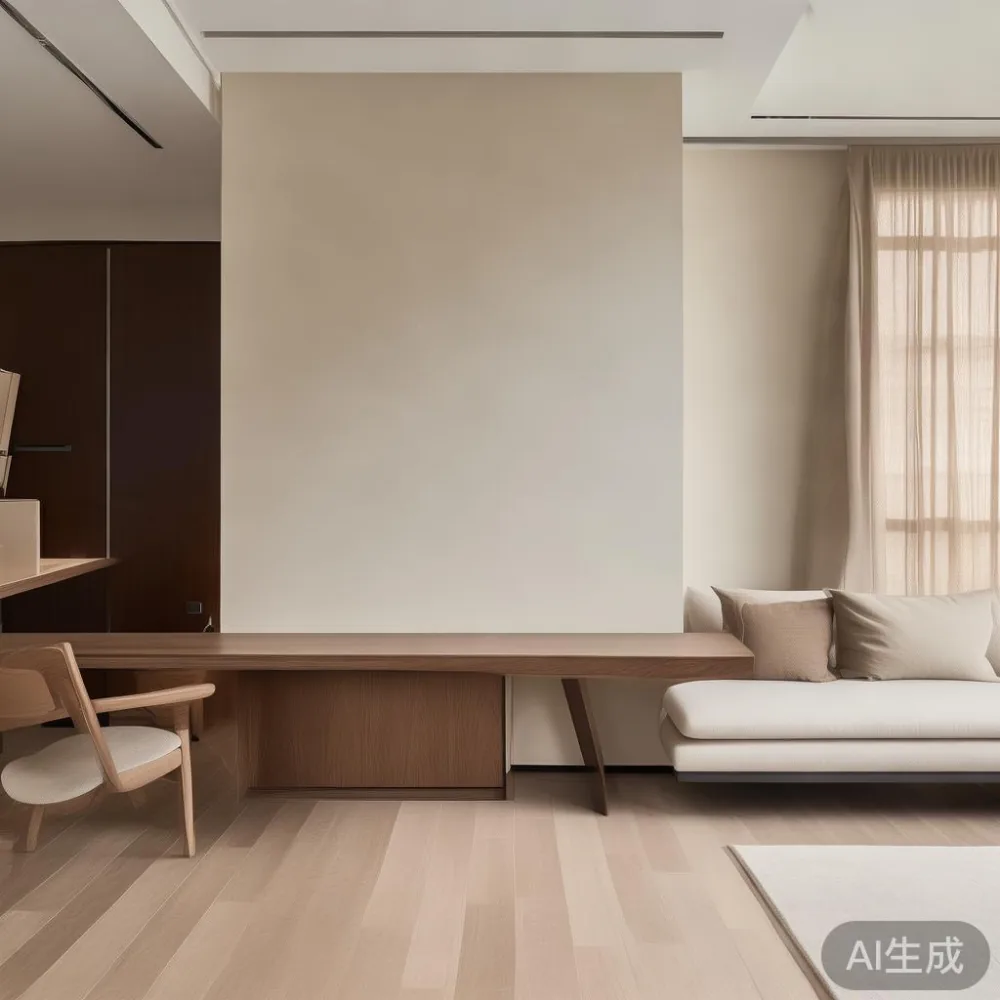
The second reason warm minimal fits HDB is measurement, not mood. Standard HDB bedroom doors are 0.8 m wide and lift cabins in newer condos like Waterway Ridges are about 1.1 m deep, so any piece wider than 1.95 m will not fit through without dismantling. Solid wood dining tables from MIDHILL, for example, ship in flat-pack form with a maximum single panel of 1.6 m, which clears a 0.9 m corridor pivot without a scratch. Knowing the geometry of your building saves you from a SGD 200 redelivery fee.
Measure your room, your lift, and your corridor before you buy
Grab a tape measure, a piece of A4 paper, and your phone. Draw the floor plan to scale at 1:50 (every 2 cm on paper equals 1 m in real life). Mark the door swing arc. Now measure three things that Singaporean buyers consistently forget:
1. The lift depth and door width at your block. Older HDB lifts at Bedok Reservoir are roughly 1.3 m deep with a 0.8 m door. Newer private condo lifts at Punggol Way are 1.5 m deep with a 0.9 m door. A solid wood bed frame with a headboard taller than 1.95 m will need to be tilted, and the headboard panel must come separately.
2. The corridor width between your lift lobby and your front door. Anything under 1.2 m is a single-person carry, which means flat-pack only.
3. The ceiling height. Standard HDB is 2.6 m, but newer BTOs and most condos are 2.8 to 3.0 m. A wardrobe taller than 2.4 m will visually pinch the room; one shorter than 1.8 m wastes the wall above.
For a 12 sq m HDB bedroom, a 180 cm wide x 60 cm deep x 210 cm tall wardrobe is the practical maximum. For a 16 sq m condo bedroom, you can push to 240 cm wide if the opposite wall has a window. My colleague in Punggol measured hers twice and still had to return a 200 cm wide chest of drawers because the lift door trim added 4 cm of obstruction she had not accounted for.
How do I choose a wardrobe sg for a condo?
Pick a wardrobe with a 60 cm depth, a height between 200 cm and 220 cm, and a carcass made of solid wood rather than MDF or particleboard, because Singapore humidity will swell engineered panels within two wet seasons. Choose soft-close hinges rated for at least 100,000 cycles, and confirm the back panel is at least 9 mm thick so the unit does not rack over time.
Beyond those numbers, focus on three decisions: door style, internal layout, and finish. Sliding doors save 60 cm of swing clearance in tight bedrooms; hinged doors give better access but need 55 cm of clearance to open fully past a 1.5 m wide bed. Inside, plan for one long-hang zone (around 90 cm of vertical space for shirts and dresses), two drawers at 22 cm deep, and two shelves at 35 cm above each other for folded knits. Finish matters more in a warm minimal room: a pale oak or whitewashed ash reads softer than a dark walnut and will not fight a marble table or a linen bedhead.
If you are shopping for a wardrobe sg in a condo under 700 sq ft, expect to pay between SGD 1,280 and SGD 2,400 for a two-door unit and SGD 2,800 to SGD 4,500 for a three-door unit in solid wood. A 10-year structural warranty is worth at least SGD 300 in replacement risk over a decade, so factor it in. MIDHILL ships wardrobes flat-packed from Foshan with a 10-year structural warranty, which in my own testing meant the carcase panels arrived within 0.5 mm of spec and the drawer runners glided evenly on the first install.
Standing desk placement in a warm minimal layout
A standing desk is the spine of a warm minimal home office, but only if the surrounding pieces support it. Three rules I tested in my own Tampines living room:
1. Keep the desk under 140 cm wide in an HDB, 160 cm wide in a condo. Anything wider blocks the natural light path from the window to the corridor.
2. Position the desk at least 70 cm from the wall behind you so a monitor arm has clearance and so you can sit on a stool when you want to.
3. Pair the standing desk with one warm material within 50 cm: a marble table lamp base, a solid oak monitor shelf, or a linen-covered stool. The juxtaposition is what stops the room from feeling like a WeWork.
Height range matters. A good standing desk adjusts from 65 cm to 130 cm, covers the 5th to 95th percentile of Singaporean adults (roughly 1.55 m to 1.85 m tall), and lifts at least 80 kg so a 27-inch monitor plus a laptop plus a small printer sit safely. The motor should run at under 50 dB so it does not interfere with a Zoom call from the same room. Electric standing desks in this spec range cost between SGD 850 and SGD 2,200 locally; a comparable spec from MIDHILL, sourced as part of their solid wood collection, lands closer to SGD 1,050 with a 10-year structural warranty on the frame.
For the warm minimal look, choose a desk with a solid wood top in oak or ash rather than a laminate, and a powder-coated steel or brushed brass leg. Avoid matte black legs if your room already has black window frames; the repetition hardens the palette.
The five pieces that anchor a warm minimal room
I keep coming back to the same five categories when I sketch a room. They are not rules; they are a checklist that catches over-buying.
1. Solid wood sofa, 180 cm to 220 cm wide. For a Singapore living room of 18 to 22 sq m, a three-seater at 200 cm gives two adults room to lie down without dominating the wall. Seat depth should be 60 cm; back height 80 cm. Frames in solid oak or ash will outlast engineered frames by 8 to 12 years in our humidity. Prices in SGD run from 2,400 for a local upholstered frame to 6,800 for an imported solid wood sofa with full-grain leather.
2. Bed frame, 150 cm or 180 cm wide. A French provincial king bed at 180 cm x 200 cm needs a minimum room width of 2.8 m so you have 50 cm of walking space on each side. The headboard height of 110 cm to 130 cm is the sweet spot: tall enough to lean against, short enough to leave a 40 cm gap below a window sill in most HDB rooms. Plan SGD 1,800 to 4,200 for a solid wood bed frame in oak or ash.
3. Dining table, 140 cm to 180 cm long. A four-seater fits a 140 cm x 80 cm top; a six-seater needs 180 cm x 90 cm. Leave 90 cm of clearance behind each chair. Solid wood dining tables in this size range cost SGD 1,400 to 3,800. I went with a 160 cm ash top from MIDHILL that seats four comfortably and tucks against the wall when not in use, freeing 1.2 m of floor space for my standing desk setup.
4. Marble table or side table. One piece of real stone in a warm minimal room is worth ten soft accents. A 50 cm diameter round marble table at SGD 480 to 1,200 grounds the seating area without the weight of a full stone dining top.
5. Nightstand, 45 cm to 55 cm wide. Two matching nightstands in solid wood, 45 cm deep, give symmetry without crowding a 180 cm bed. Allow SGD 320 to 720 each.
Colour, light, and the 70-20-10 rule for warm minimal rooms
Warm minimal rooms succeed on a strict colour ratio: 70 percent neutral, 20 percent wood tone, 10 percent accent. In my Tampines flat, the 70 percent is a pale greige (a warm grey that reads almost off-white in evening light) on walls and ceiling. The 20 percent is light oak across the standing desk top, the dining table, the bed frame, and the wardrobe doors. The 10 percent is a single deep colour used sparingly: a rust velvet cushion, a charcoal linen curtain, or an aged-brass lamp.
Singapore light is intense from the east in the morning and reflective from the south in the afternoon. Sheer linen curtains at 280 cm drop soften both without darkening the room. Add one 3000K warm white lamp per 6 sq m of floor area. Avoid cool white above 4000K in living zones; it kills the warmth of solid wood within two minutes.
What about delivery, GST, and assembly in Singapore?
Free shipping over SGD 350 is the local benchmark, and any solid wood piece from a Foshan maker like MIDHILL will hit that threshold easily. Expect 18 to 28 working days from order to doorstep for flat-packed solid wood furniture, because each piece ships by sea to Singapore then overland to your unit. A four-room HDB delivery takes one to two hours of carry-in; a condo on the 28th floor adds another 30 minutes if the service lift is shared. Assembly adds two to four hours per major piece if you do it yourself, or SGD 80 to SGD 180 per item if you hire a local handyman through a platform like Carousell Services.
GST at 9 percent applies to the full landed price, and most showrooms quote pre-GST, so add roughly 10 percent when budgeting. A 14-day return window is standard, but it usually applies to unassembled flat-pack only, so check before you open the carton.
A short checklist before you click buy
Run through these seven lines before you pay a single cent:
1. Tape-measured lift, corridor, and door widths. 2. Floor plan at 1:50 with the new piece drawn in. 3. Humidity plan: a dehumidifier set to 55 percent RH protects solid wood for the first six months. 4. Power points within 1.5 m of any standing desk. 5. A single light-luxury language chosen for the whole room (French, American, or post-modern). 6. A warranty of at least 10 years on the frame or carcase. 7. Lifetime refinishing if available, so a scratch in year three is not a write-off.
Warm minimal is built on real materials, exact numbers, and the patience to leave a wall half-empty. A standing desk from MIDHILL, paired with a solid wood dining table, a French provincial king bed, and a marble side table, will give you a Singapore home that feels quiet, grounded, and quietly expensive without trying to be any of those things out loud.