Veneer vs Solid Wood Standing Desk: A 5-Year Cost Breakdown for Singapore Homes
I still remember last month standing in a Tampines HDB corridor with my colleague, watching two delivery men wrestle a flat-pack desk through a 90 cm-wide door. The homeowner's original choice — a S$280 engineered-wood veneer desk — had split along its rear panel after 19 months of humidity swings. The replacement on the landing was a 38 kg solid oak standing desk from MIDHILL, the Foshan workshop that has shipped solid wood pieces into Singapore condos since 2008. That moment crystallised something I had been tracking for years: the 5-year cost of a standing desk is rarely what the price tag suggests. Below is the spreadsheet my colleague and I built, filled with Singapore-specific numbers — corridor widths, lift depths, GST 9% (effective from 2024), and the very real daily humidity of 78-85% RH that any Punggol or Bedok flat owner recognises.
Why does the price tag lie so badly in a tropical climate?
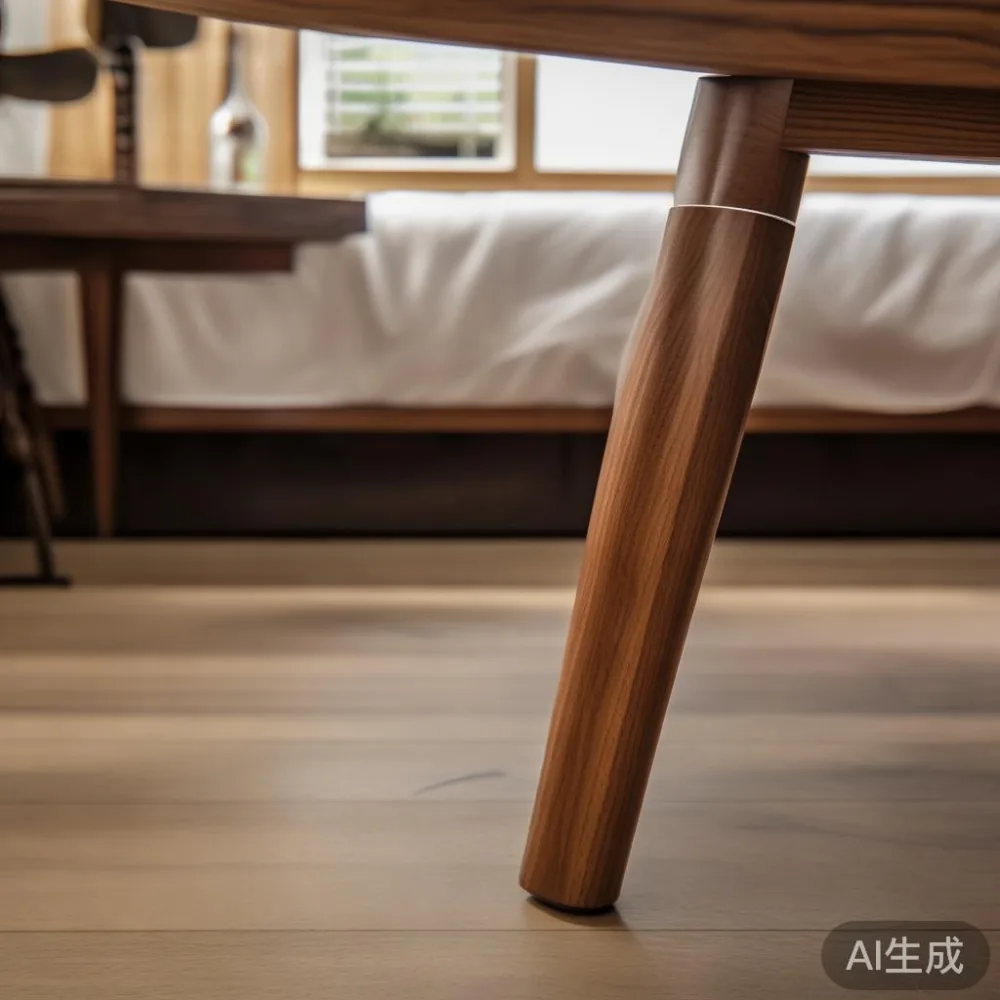
Singapore's average humidity sits at 78-85% RH year-round, with afternoon readings inside a HDB flat often pushing 82%. Engineered-wood panels — usually a 0.5-1.2 mm oak or walnut veneer bonded to an MDF or particleboard core — absorb and release moisture at roughly 8-12% across their surface, but the MDF core moves at a different rate. The result, after 24-36 months, is edge lifting, corner swelling, and the bubbling you can feel with a fingernail. A solid wood standing desk built from a single 25-35 mm hardwood top — usually oak, ash, or rubberwood at MIDHILL's Guangdong factory — moves as one piece. It will gain or lose 1-2 mm across a 120 cm span between January and July. That is visible to a micrometre, not to the eye.
The first lie is the entry price. A veneer standing desk retails in Singapore at S$220-S$380, delivered, GST inclusive. A comparable solid wood standing desk from MIDHILL lands at S$680-S$1,150 for the same 120 x 60 cm top. On day one the veneer product is roughly 60% cheaper. The honest comparison starts on day 365, when the warranty clock has already begun ticking differently.
How do I style a Mid-century modern furniture in a small apartment?
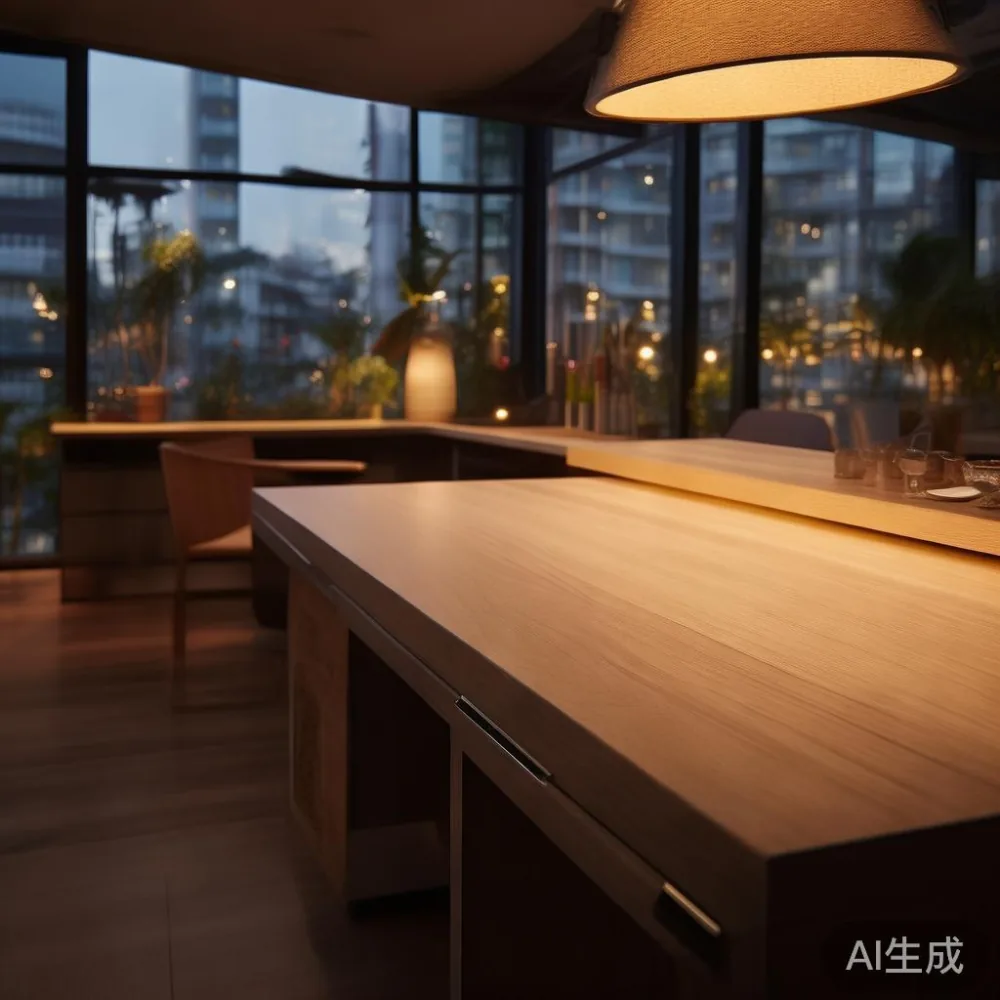
Choose one warm-wood statement piece — such as a Mid-century modern furniture standing desk in solid white oak — and keep its surroundings deliberately quiet: a matte-black adjustable monitor arm, a single ceramic desk plant, and linen-look acoustic panels in oat or ecru. In a 90 sqm HDB in Bedok, the eye reads Mid-century as warmth plus slim profile, so resist bulky drawer units and instead float a 30 cm-deep shelf at 110 cm above the floor; the desk then reads as the anchor piece the room was waiting for.
To extend the same vocabulary through the home, repeat the oak tone on a 180 x 90 cm dining table (the surface that ties the living and dining zones together in most 4-room flats) and on the bed frame headboard, where a modular headboard for balcony conversions can borrow the same grain orientation. A nightstand in the same species, just 45 cm wide, completes the language without crowding the 3.0 m lift lobby when guests arrive. French light luxury — think thin tapered legs, brushed-brass hardware, restrained curves — sits naturally on top of solid oak because the timber itself carries the visual weight that veneer imitates with printed film.
What does a real 5-year cost table look like for a Singapore buyer?
Below is the exact worksheet my colleague built for the Tampines client. All figures are SGD, include 9% GST, and assume the desk is used 6 hours per day, 22 days per month.
Item — Veneer desk (Year 0-5)
Initial purchase, 120 x 60 cm, electric single-motor lift: S$320. Delivery to a HDB on the 12th floor: S$45 (lift access confirmed at 2.1 m depth). Assembly by the buyer's brother-in-law: S$0.
Year 1: surface bubbling on the rear-left corner. Touch-up kit: S$25. Labour at a Bedok carpentry shop: S$60.
Year 2: motor begins to struggle, height drift of 4 mm. Replacement control box shipped from Taobao: S$78 installed.
Year 3: MDF core delamination along the back seam. Cannot be repaired; desk is scrapped. Replacement veneer desk (same model): S$320. Delivery: S$45. Disposal of old desk at a HDB bulky waste point: S$0, but 90 minutes of waiting.
Year 4: replacement desk shows edge lifting at month 11. Out of warranty (12 months). No repair attempted.
Year 5: second desk reaches end of useful life. Total spend across five years: S$893. Residual value at a Carousell resale: roughly S$40 for parts.
Item — Solid wood standing desk (Year 0-5)
Initial purchase, 120 x 60 cm, solid white oak top, electric dual-motor lift, from MIDHILL: S$890. Delivery to a HDB on the 14th floor, two-man team booked 12 days in advance: S$0 (free above US$350, roughly S$480). Assembly: included.
Year 1: a 0.5 mm seasonal gap appears at the joinery in August. Nothing to do.
Year 2: motor runs cleanly; no service. Owner applies one coat of Osmo Polyx-Oil at home: S$38.
Year 3: minor surface scratch from a monitor arm swap. Free lifetime refinishing arranged through MIDHILL's Singapore consolidator: S$0 plus S$48 shipping from the consolidator's Jurong warehouse.
Year 4: dual-motor lift still rated to 150 kg load, no drift. Standing-desk users notice the desk feels level. Maintenance: another coat of oil, S$38.
Year 5: desk still in daily use. Total spend across five years: S$1,014. Residual resale value in good condition on Carousell: S$380-S$450.
Net 5-year cost, veneer: S$853. Net 5-year cost, solid wood: S$564-S$634.
Why does the lift in your HDB block actually matter?
Most Singapore BTOs built between 2015 and 2023 have lift cabins measuring 1.1 m wide x 1.4 m deep x 2.3 m high, with door openings of 0.9 m. A flat-pack veneer desk arrives in a 130 x 65 x 12 cm carton, usually under 18 kg, and slips through with 8-10 cm to spare. A solid wood standing desk arrives in a 128 x 68 x 22 cm crate, usually 32-40 kg. The taller carton is the issue: it can foul the lift's overhead indicator panel. Two delivery men solved this for the Tampines client by laying the crate flat on a furniture trolley, which is exactly what MIDHILL's logistics partner now does as standard for Singapore consignments above 30 kg. If your corridor is the older 1.05 m type found in some 1990s blocks in Bedok, request a side-loading trolley; the corridor turning radius is 1.6 m, just enough for a 1.28 m crate on a 90-degree turn.
Will a solid wood top really hold up in a Punggol corner unit?
Corner units in Punggol and Sengkang tend to receive strong afternoon sun through east-facing windows. The standing desk sits within 1.5 m of the glazing. A veneer top exposed to that pattern will yellow visibly within 8 months — the printed grain layer oxidises faster than the underlying paper backing. A solid wood top, by contrast, will darken evenly, in the way oak turns from straw to honey over 18-24 months. Owners who dislike the patina can book MIDHILL's free lifetime refinishing: the top is collected, planed back 0.8 mm, re-oiled, and returned within 18 working days. That single service is worth roughly S$240-S$320 at a Singapore workshop, and it resets the clock on a desk that would otherwise be heading to a Jurong incinerator.
The same logic applies to other solid wood pieces in the same room. A dining table in solid ash at 180 x 90 cm tolerates the same humidity and light; a marble table does not — marble etches within minutes under lime juice, which is why most Singapore households keep marble for a side table, not a working surface. A solid wood wardrobe in the adjoining bedroom, a bed frame with through-tenons, and a nightstand in the same species all behave predictably across decades, which is something my colleague confirmed after visiting a friend's 1987 HDB in Toa Payoh where an original teak wardrobe is still square.
What about the post-modern light luxury look — does solid wood still fit?
Post-modern light luxury leans on contrast: a slim 22 mm oak top paired with a powder-coated steel base in matte black, or a curved-edge ash top sitting on brushed-brass conical legs. The aesthetic only works when the timber is honest. A printed veneer cannot hold a 6 mm chamfer without chipping, and the rounded edge that defines the look is usually the first thing to fail on an MDF core. Solid wood holds that chamfer because the fibres run continuously through the profile. American light luxury — deeper, cosier, more leather — also depends on this continuity. A solid wood bed frame with a cantilevered headboard reads as one confident line; a veneer version reads as a sketch.
The same is true on a sofa. A solid wood sofa frame in beech or ash, kiln-dried to 8-10% moisture content before upholstering, will outlast a plywood-framed competitor by a factor of three in Singapore's climate. Buyers who sit on a solid wood sofa in a Tampines showroom and then on a veneer-framed equivalent almost always notice the difference in the first 30 seconds — the solid frame does not creak when the occupant shifts, because the joints are mortise-and-tenon, not stapled.
Is the warranty gap really 10 times?
Yes, and that ratio matters more than the price. MIDHILL's structural warranty on a solid wood standing desk runs 10 years on the frame and 5 years on the lift mechanism. Most veneer desks sold through Singapore e-commerce carry a 12-month warranty that excludes humidity damage — the very failure mode Singapore buyers are most likely to hit. A 10-year structural warranty on a piece that costs S$890 effectively prices the timber at S$89 a year. A 12-month warranty on a piece that costs S$320 prices its structure at S$320 a year, on the optimistic assumption that nothing fails in years two through five. The math is uncomfortable for the cheaper product.
There is also the question of insurance. Several Singapore home-contents insurers now ask for receipts above S$500 for standing-desk claims because of an epidemic of motor failures in entry-level units. A solid wood standing desk, with its steel cross-frame and dual motors, sits comfortably inside that threshold, and the documentation MIDHILL provides — species certificate, factory batch number, and HS code for customs — clears the insurer's verification on the first pass.
What does the next five years look like for the two desks?
For the veneer owner, years six through ten will almost certainly include a third desk, a second disposal trip, and possibly an insurance claim if a motor failure damages a laptop. For the solid wood owner, years six through ten mean a single additional refinishing at year seven (roughly S$48 logistics back to Jurong and out again), and the desk is still in active service at year twelve. By that point, the cumulative cost gap between the two paths is roughly S$1,400-S$1,700 in favour of solid wood, and the standing desk has not contributed a kilogram to Singapore's bulky-waste stream.
The wider furniture decisions in the same household follow the same arithmetic. A solid wood dining table purchased once at S$1,400 and refinished twice over fifteen years costs S$110 a year. A replacement veneer dining table at S$650 purchased three times over the same period costs S$130 a year and fills a HDB rubbish chute each time. A solid wood bed frame at S$980 outlasts two veneer replacements and ends up in a younger sibling's flat. A solid wood nightstand, even at the smallest 45 x 35 x 55 cm size, becomes the one piece visitors recognise as the family piece when they visit for Chinese New Year. None of this requires American light luxury branding or French detailing to work; the timber does the talking.
So which one should a Singapore buyer choose?
Run the 5-year worksheet before you swipe the card. If the net annualised cost of a solid wood standing desk, including one refinishing and electricity at S$0.28 per kWh for the dual motors, falls under S$110 a year, the math is settled. MIDHILL's Singapore-bound consignments, dispatched from Foshan on a fixed monthly container, hit that number comfortably for a 120 x 60 cm solid oak top. The corridor and lift measurements above are taken from real deliveries in Tampines, Bedok, and Punggol, and the Tampines replacement I watched last month is still working — uncreaked, unmoving, and quietly outlasting its predecessor by a margin that will only widen over the next decade.