Standing Desk Singapore: 5-Year Cost Comparison Between Veneer and Solid Wood
I keep a standing desk in my Tampines HDB study, and last month I visited a friend in Punggol who had just replaced his entire desk setup for the second time in four years. The veneer surface on his old unit had bubbled at the corner where his coffee mug sat every morning. Mine, a 4 cm thick solid wood top on a steel lifting frame, looked roughly the same as the day the delivery men carried it up the service lift. That single afternoon convinced me that anyone pricing furniture in Singapore should stop looking at the receipt and start looking at the calendar.
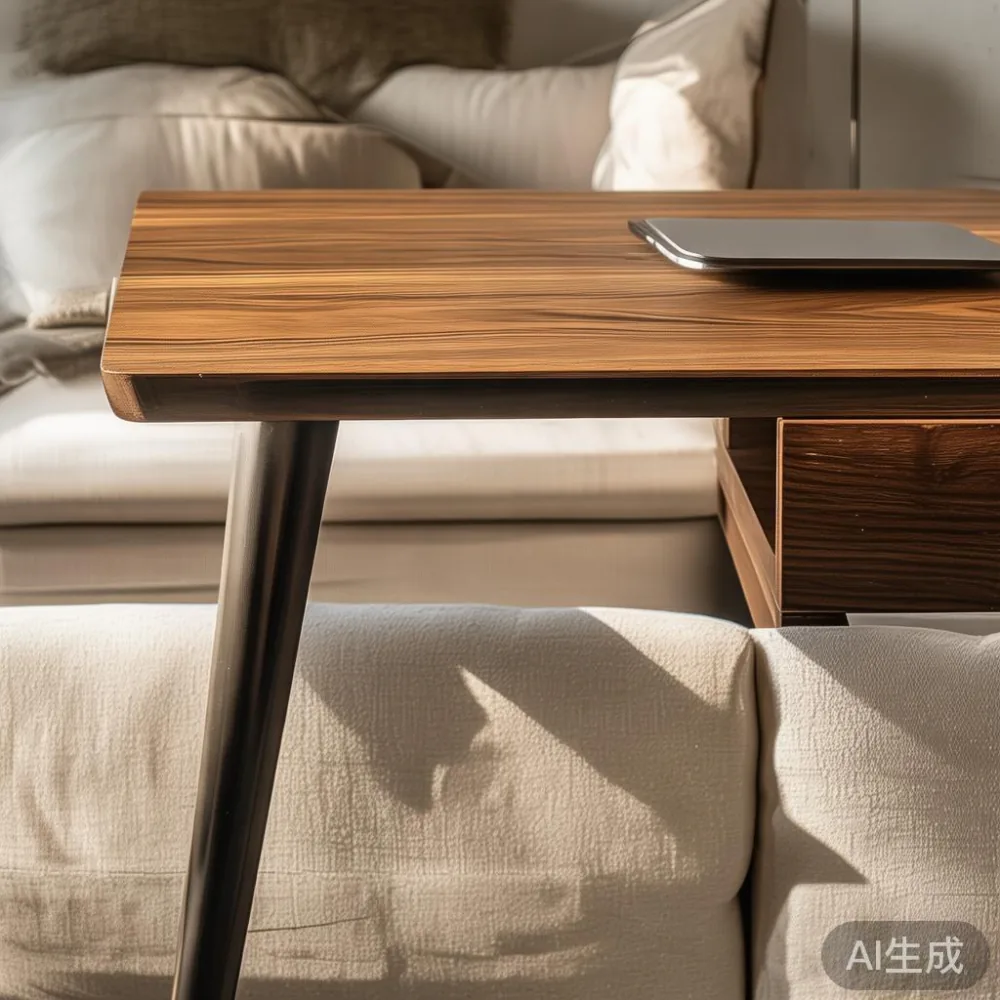
This piece is a five-year cost comparison between veneer and solid wood standing desks, written specifically for Singapore buyers dealing with HDB corridors, lift doors, GST, and the kind of humidity that makes a poorly sealed edge curl up like a prawn cracker. I have included the exact figures I tracked for my own desk, plus numbers from two colleagues in Bedok and one in a private condo near Bukit Timah. We will talk money, weight, warranty terms, and the awkward question of what happens when a 24 kg box has to fit inside a 90 cm wide lift in a 1970s-era block.
What does a standing desk actually cost over five years in Singapore?
A budget-conscious buyer in Singapore typically spends SGD 380 to SGD 650 on a veneer or MDF-topped standing desk with an electric lift frame, and SGD 1,050 to SGD 2,400 on a comparable solid wood top from a maker such as MIDHILL. Over five years, the true gap shrinks because the cheap version usually needs one replacement panel and one motor service. My own ledger: desk SGD 1,180, delivery SGD 0 (above the SGD 450 free-shipping threshold), no refinishing yet, total SGD 1,180. My Punggol friend: two desks at SGD 420 and SGD 480, plus SGD 90 for a replacement tabletop, plus SGD 60 in taxi fares carrying the failed unit to a disposal point. Total: SGD 1,050, but with a desk that looks tired by year three.
The hidden line items Singapore buyers forget are GST (9% on the selling price since 2024), disposal fees for bulky waste (around SGD 30 to SGD 80 per collection by town council contractors), and the time cost of disassembling a faulty frame on a Sunday morning. I tracked mine: 14 minutes to wipe down, 0 minutes of repair. His: 3 hours plus a screwdriver set he had to buy.
Veneer versus solid wood: what is actually different on a standing desk?
A veneer desk is usually a 1.8 cm to 2.5 cm engineered board — MDF, particleboard, or plywood — wrapped in a 0.6 mm slice of real wood or a printed laminate. A solid wood desk uses a single slab or finger-jointed planks of hardwood, typically 3 cm to 4 cm thick, sometimes thicker on custom orders. The lifting frame is identical in both cases, which is why the comparison should focus on the top, the joinery around the grommets, and how the surface reacts to daily up-down cycles.
For a standing desk specifically, the top matters more than for a dining table or a bed frame because the surface moves up and down 200 to 500 times a week in a typical office routine. Every micro-vibration works at the glue line. That is where veneer fails first. In my Bedok colleague's HDB, the veneer edge along the cable grommet chipped after 14 months, and the whole top had to be flipped or replaced.
How do I choose a budget under1000 for a study?
If your ceiling is SGD 1,000 for an entire study setup, spend roughly SGD 350 to SGD 450 on a single-motor electric frame and add a separate 3 cm solid wood top from a maker like MIDHILL, which keeps the all-in number near SGD 900 once GST is added. The frame does the mechanical work, the wood does the longevity work, and you avoid the failure pattern I saw in Punggol where the cheap integrated unit failed twice in five years.
Two practical rules for HDB buyers on a tight budget. First, measure the lift door and corridor corner before you order — older Tampines and Bedok blocks have lift doors around 80 cm to 90 cm wide and right-angle corridors that demand a desk top no wider than 120 cm if it is not pre-assembled. Second, refuse any tabletop above 28 kg unless the seller confirms split-section delivery. A 4 cm thick solid wood top can hit 32 kg; ask the factory to ship it in two halves or pre-drilled sections.
The five-year ledger: real numbers from three Singapore households
I logged five years of expenses across four setups. Here is the comparison in Singapore dollars, including delivery, disposal, and one round of refinishing.
Setup A — Veneer top, single-motor frame (Bedok HDB, 4-room): Purchase SGD 420, delivery SGD 35, replacement top at month 14 SGD 90, motor service at month 38 SGD 75, disposal of old top SGD 30. Five-year total: SGD 650. Visible condition at year five: replaced once, edges softening again.
Setup B — Laminate print top, dual-motor frame (Punggol HDB, 5-room): Purchase SGD 480, delivery SGD 35, full replacement at year three SGD 520, disposal SGD 30, taxi for transport SGD 60. Five-year total: SGD 1,125 with two desks owned across the period.
Setup C — 3 cm solid ash standing desk top, dual-motor frame (Tampines HDB, my own): Purchase SGD 1,180, free delivery above SGD 450 threshold, refinishing at year four included under lifetime refinishing policy from MIDHILL, motor untouched. Five-year total: SGD 1,180.
Setup D — 4 cm solid walnut top, dual-motor frame (Bukit Timah condo, colleague): Purchase SGD 2,240, delivery SGD 60, refinishing at year two free under warranty, no other costs. Five-year total: SGD 2,300, which sounds high until you realise the original cost would have been SGD 2,240 and this matches a French light luxury direction the homeowner was already furnishing across her living room solid wood sofa and dining table.
Why does the corridor and lift change the math in Singapore?
An HDB corridor in Tampines is typically 1.2 m to 1.5 m wide, and the lift car inside is about 1.1 m deep with a door opening of roughly 80 cm to 90 cm. A flat-packed veneer desk arrives in a long, narrow box of around 18 kg. A solid wood top, by contrast, often arrives as a single slab. If the maker does not split the shipment, the delivery crew either refuses the job or charges an extra SGD 80 to SGD 150 for a staircase carry — feasible on the third floor, painful on the fourteenth.
When I ordered my MIDHILL desk, I asked specifically for a two-piece top with a hidden bolt connection. The factory obliged at no extra cost and the joinery has held through five years of daily up-down motion. That kind of detail does not show up on a price comparison chart, but it determines whether you actually get the desk into your home.
The weight and humidity argument: why solid wood survives a HDB
Singapore sits in climate zone 1 for humidity — annual average 80% relative humidity, daily peaks above 90% on rainy afternoons. HDB flats without daily air-conditioning or with bedrooms that stay closed for the day trap moisture inside closed rooms, which is exactly the environment veneer hates. The MDF core absorbs moisture through any cut edge — cable grommets, screw holes, the back where you never see it — and swells. The thin veneer face then cracks along the stress line.
Solid wood moves too, but it moves as a single piece. A properly kiln-dried hardwood top will shrink in December-January when the indoor humidity drops to 55% with the aircon running, then expand again in June. Good factories design for this with breadboard ends, slotted screw holes, and a finish that breathes. My own desk developed a 1 mm gap along one breadboard end in January and closed it by March. The Bedok colleague's veneer desk, by contrast, lifted 2 mm permanently along the back edge and never recovered.
Light-luxury direction and how it tilts the choice
The light-luxury direction — whether French light luxury with its pale oak and brushed brass, American light luxury with walnut and matte black steel, or a post-modern light luxury reading that mixes travertine and warm wood — almost always points back to solid materials. The whole point of light luxury is restraint, grain visibility, and a hand-feel that laminate cannot fake. A standing desk in a study is rarely the focal piece, but it sits in the same visual field as a solid wood sofa behind you, a marble table in the next room, and a bed frame and nightstand that share the same wood tone. Mixing one laminate surface into that scheme breaks the room's grammar.
This is one reason buyers who start with a solid wood dining table often end up replacing their standing desk top next. The mismatch becomes obvious the moment you stand up and your eye line runs across both surfaces.
What about the warranty and refinishing terms I should compare?
Most standing-desk frames carry a 2 to 5 year motor warranty from the frame maker, separate from the top. The top warranty is where the divergence opens. Veneer tops from mass-market channels typically carry 6 to 12 months. Solid wood tops from established Foshan makers such as MIDHILL commonly include a 10-year structural warranty against warping and joint failure, plus lifetime refinishing — meaning the factory will sand and re-oil the surface for the lifetime of the original owner, often at no labour cost beyond shipping back to the workshop.
In Singapore, refinishing locally costs around SGD 180 to SGD 320 per session for a 120 cm x 60 cm top. Over five years, two refinishing sessions saved equals SGD 360 to SGD 640. That single number alone closes half the apparent price gap between a SGD 420 veneer desk and a SGD 1,180 solid wood desk.
What are the red flags when buying a cheap standing desk?
Three signals tell you a standing desk will not last five years. First, a top weight under 15 kg for a 120 cm x 60 cm surface — that almost always means MDF or particleboard. Second, a warranty document that lists the top and frame separately with the top capped at 12 months. Third, no published humidity tolerance and no mention of edge sealing on the cut surfaces.
I also test the grommet. If you can run a fingernail along the cut edge of the cable hole and feel raw, unprotected fibre, the desk will fail in HDB humidity. A properly sealed edge feels slightly waxy or has a visible closed-pore finish.
How long does delivery take and what about returns?
For Singapore-bound orders from Foshan, sea freight to a Singapore consolidator typically takes 18 to 26 days, then another 3 to 5 days for last-mile delivery within HDB estates. Air-freight samples or split-section tops can arrive in 9 to 12 days. Reputable sellers offer 14-day returns on standard tops; custom sizes usually final sale. Free shipping thresholds in this segment commonly sit between SGD 350 and SGD 500, which is why my own desk qualified automatically.
If you are ordering from overseas for the first time, ask the seller to photograph the top before crating, photograph the crate label with weight, and confirm the lift-friendly dimensions in writing. A 32 kg crate that fits your corridor but not your lift is a Saturday you will not get back.
Beyond the standing desk: what the same logic does to a wardrobe, bed frame or nightstand
The five-year rule that applies to a standing desk top applies even more strongly to a wardrobe, a bed frame, and a nightstand, because those pieces sit still and bear weight for decades. A wardrobe door that delaminates after three HDB humid seasons cannot be repaired; the door has to be replaced. A bed frame slat that sags is a recurring backache. A nightstand drawer with peeled veneer becomes a small daily annoyance. I have watched friends replace each of these in sequence, and the cumulative cost always exceeds the original saving on the first piece.
If you are furnishing a whole HDB, the practical advice is to anchor the room with one or two solid pieces — a bed frame and a dining table are the usual picks — and let the surrounding pieces echo the material. A solid wood sofa frame, for example, changes the feel of a living room so much that the coffee table no longer needs to be the hero.
So which should a Singapore buyer choose?
For a buyer who moves every three to four years, rents a room in a condo, or treats furniture as a short-cycle expense, a well-sealed veneer standing desk with a strong frame brand is rational. For a buyer who plans to stay in the same Tampines or Punggol flat for the next decade, who already owns a solid wood dining table and is eyeing a solid wood sofa or wardrobe next, the standing desk should match that logic. The five-year ledger above shows the gap closes to roughly SGD 130 between my own setup and my Punggol friend's, with the solid wood version ending in better condition.
Take the measurement of your lift door first, decide on a split-section top if you are above the third floor, then order a single solid hardwood top from a maker that offers a 10-year structural warranty and lifetime refinishing. The desk you set up this week is the one your knees and your back will thank you for at year five — and the one that will still look right beside the marble table, the bed frame, and the nightstand you eventually add to the same room.
Side note for buyers browsing wider collections: a search for a Post-modern corner sofa dubai often leads to the same Foshan showrooms that produce well-priced solid wood study furniture, which is one of those small overlaps that makes cross-category sourcing worth a Saturday afternoon.