Standing Desk Cost Over 5 Years: Veneer vs Solid Wood in Singapore
A Singapore HDB standing desk must survive more than a price comparison. It has to fit through a lift, clear a corridor, handle humid air, and remain stable through daily raising and lowering. A 140 cm solid wood model also weighs more than a comparable veneered desk, so the delivery route can affect the final cost as much as the material itself.
This comparison uses realistic SGD figures for purchase, delivery, electricity, maintenance, repair and eventual resale over 5 years. It focuses on standing desks while also considering how material choices carry across solid wood sofa, bed frame, dining table, wardrobe, nightstand and marble table collections. The aim is not to select one material for every home, but to calculate which one fits a particular Tampines, Bedok or Punggol space and budget.
What does a standing desk really cost after 5 years?
The simple answer is the purchase price plus operating and ownership costs. For an illustrative family in Bedok, assume one standing desk is used by 2 people for 3 hours per weekday, 12 months a year. Electricity consumption is modest, but Singapore’s 24-hour tariff and household usage still matter over 1,825 days.
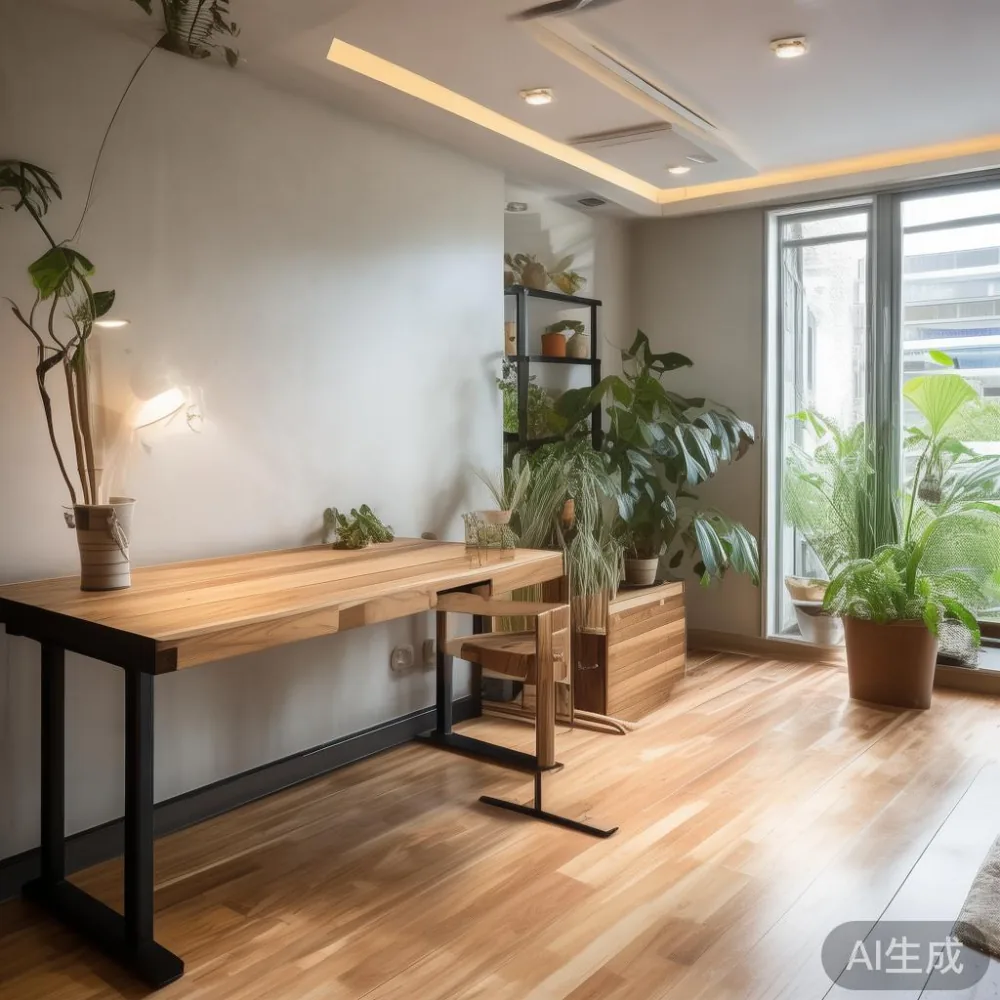
Consider a 140 × 70 cm desk. The veneered model costs SGD 620, weighs 38 kg and takes about 7 working days to deliver. The solid wood version costs SGD 1,080, weighs 58 kg and takes 9–12 working days. The solid wood example has a 10-year structural warranty, while both models are eligible for MIDHILL’s 14-day returns and free shipping above US$350, with the Singapore-facing terms confirmed at order.
For this calculation, let the motor use 60 W while moving and 0.4 W in standby. Each session includes 8 minutes of travel plus 10 minutes of standby at each end. That produces approximately 0.020 kWh per day. At an average all-in household electricity rate of SGD 0.30 per kWh, each desk uses about SGD 11 over 5 years. Add SGD 24 for cable clips, an optional surge protector and basic cleaning supplies.
Over 5 years, the veneered desk totals roughly SGD 705 before repair assumptions, while the solid wood desk totals about SGD 1,164. The SGD 459 difference is easy to understand. The harder question is what that SGD 459 buys in a compact Singapore home.
How do veneer and solid wood differ for a standing desk?
Veneer uses a thin layer of real wood, commonly 0.6–1.2 mm, bonded to engineered board. The visible faces may look like oak, walnut or ash, but the core is not solid timber. It is lighter, less expensive and often less sensitive to dimensional movement. A good veneered desktop may weigh 34–42 kg at 140 × 70 cm, which is easier for a delivery crew to manoeuvre through a lift and corridor.
Solid wood uses timber across the panel or at least substantial load-bearing sections. It expands and contracts more as humidity changes. In Singapore, where indoor relative humidity can sit around 65–80%, a manufacturer should specify suitable wood and protective finishing. Beech, oak, ash and rubberwood are commonly considered, though each reacts differently.
The product experience also differs. A veneered standing desk can suit post-modern light luxury styling because it combines a controlled finish with slim metal mechanisms. Solid wood brings a warmer French or American light luxury character, with visible grain and a heavier hand. Neither appearance guarantees durability; the joints, frame, coating and motor matter.
For short-term use, especially a rental unit or a spare study corner, veneer can be financially rational. For frequent daily use, repairability and long ownership, solid wood may offer more value despite its higher starting cost. This is why “5-year cost” should include likely touch-ups, not merely electricity.
What are the purchase and delivery costs in Singapore?
Here is a practical budget for a 140 × 70 cm freestanding standing desk with a dual-motor frame and a 120 kg lifting capacity.
The veneered option is priced at SGD 620. Add SGD 60 for delivery and assembly, SGD 21 for a 5-year surface-protection plan and SGD 12 for cable accessories: total SGD 713. The solid wood option is SGD 1,080. Add SGD 90 for scheduled delivery and in-home assembly, SGD 28 for a more intensive 5-year care plan and SGD 12 for accessories: total SGD 1,210.
These estimates assume a ground-floor HDB unit or a condo with normal lift access. A Bedok flat near a busy main road may require a scheduled delivery window, while a Punggol tower may impose a 45-minute furniture booking slot. A carry-in through a 90 cm corridor can add SGD 25. Stairs above the fourth floor can add SGD 60–140 because a 58 kg solid wood desk is harder to move than a 38 kg veneered one.
Lift dimensions need checking before ordering. A common HDB lift measures about 100–140 cm by 110–140 cm at the door, but internal capacity and turning space vary by block. A 140 × 70 cm desktop may need to be turned vertically. The desk should fit diagonally or the supplier should confirm that the top can be detached. The final packing size might be 148 × 78 × 16 cm for veneer and 150 × 82 × 20 cm for solid wood.
Singapore’s 9% GST is included in the displayed purchase and service totals. For a business buyer, check whether GST is recoverable. For a household buyer, treat it as part of the real cash outlay. MIDHILL can also provide refinishing support under its lifetime refinishing policy, subject to the product’s care terms, which reduces the risk of paying full replacement cost later.
Which material has lower maintenance costs over 5 years?
Assume the desk is wiped daily with a damp cloth and receives one careful surface inspection each year. It is not exposed to standing water, direct afternoon sun through an unshaded west-facing window, or deliberate scratches from workshop tools.
The veneered standing desk may need an edge check after year 2 and one small repair around year 4. Budget SGD 30 for an adhesive or patch repair. The solid wood standing desk may require sanding and re-oiling once during year 3 and another light correction in year 5. Budget SGD 70 in total. If one desk edge is chipped through, solid wood can sometimes be spot-filled and refinished; a veneered particle-board core may need the affected section replaced if moisture has entered it.
Humidity is the practical issue. Keep the desk at least 20 cm from an air-conditioning vent or a frequently opened window, and use a coaster for a cold drink. Place coasters and a felt pad under a laptop. Clean with pH-neutral cleaner rather than ammonia or harsh alcohol. Tighten frame bolts after the first 30 days, then every 12 months.
The care cost assumption is modest because heavy damage is unpredictable. A 10-year structural warranty is not the same as a 10-year cosmetic warranty. Scratches, water staining and finish wear can occur within 5 years. A realistic homeowner should reserve SGD 40–100 for veneer or SGD 70–180 for solid wood, depending on use and sunlight.
Light-luxury shoppers sometimes compare surface styles beyond standing desks. A solid wood sofa or bed frame can accept small scratches more discreetly because the grain helps disguise them, while veneer can show a pale line on a dark finish. A marble table needs a different maintenance approach and should not be treated as a wood product. Likewise, a wardrobe, nightstand and dining table should be compared by their own construction, not by one blanket material rule.
How much resale value remains after 5 years?
Resale is not guaranteed, but it affects the total ownership calculation. A used standing desk with a functioning dual-motor frame, documented dimensions and clean packaging may fetch 35–45% of its original retail price. A well-maintained solid wood desk may fetch 45–60% because buyers value the material and possible refinishing route. These are planning ranges, not promised offers.
Using the earlier purchase figures, a veneered desk bought for SGD 713 and later sold for about SGD 270 has a net 5-year cash cost of approximately SGD 443. A solid wood desk bought for SGD 1,210 and later sold for about SGD 570 has a net cost of approximately SGD 640. The solid wood option remains more expensive, but the gap falls from SGD 497 to about SGD 197.
The sale depends on presentation. Photograph the desk in daylight, retain the motor controller, keep the original screws and packaging, and clean the surface before listing. A 140 cm width is likely to have more local demand than a narrow 110 cm model. A lift-compatible packed weight of 38 kg is also easier for a buyer to handle than 58 kg.
Buyers researching “best Modern sofa for 2026” or “best Industrial bed for 2026” often focus on visual trend and function. The standing desk analogue is simpler: a motor that remains quiet, a frame with accessible service parts and a top that suits the room. The “best Modern light luxury furniture” phrase can describe design direction, but it should not replace practical checks on footprint, lift access and warranty.
Are there hidden costs that make solid wood more economical?
Yes. Three scenarios can narrow or reverse the price difference. The first is resale value. The second is refinishing. The third is use intensity in a humid, coastal environment with frequent air-conditioning changes.
Imagine a couple in Tampines uses one standing desk for 6 hours per weekday and occasionally works from it on Saturday. The motor electricity cost rises from roughly SGD 11 to SGD 18 per desk over 5 years, a small SGD 7 difference. The more important change is wear. A veneer may need one SGD 45 repair, while solid wood may need SGD 100 of sanding and oiling. This lowers the 5-year cost gap, but does not erase it.
The second scenario is relocation. Moving a 38 kg veneered desk from one HDB flat to another may cost SGD 80–120. Moving the 58 kg solid wood version may cost SGD 140–220 because it needs more people or a larger vehicle. If relocation happens once, subtract the extra SGD 60–100 from the solid wood advantage in resale.
The third scenario is a child’s study station that becomes a long-term household workbench. The owner may keep it for 8–10 years rather than replacing it after 5. In that case, the amortised furniture cost falls. A solid wood desk costing SGD 1,080 over 10 years is SGD 108 per year before services, compared with SGD 62 for a veneer desk at SGD 620. If both remain in usable condition, the higher solid wood purchase cost becomes less significant.
None of these calculations turns veneer into a defective product or solid wood into an automatic choice. They show where the material decision interacts with real Singaporean use.
What did I notice when I tested the two standing desks?
Last month I visited a colleague’s new Bedok condo and tested both 140 × 70 cm versions during a 30-minute workday. The veneered desk lifted smoothly from 72 cm to 118 cm and returned to 72 cm. It weighed 38 kg and was manageable when the top was removed for the narrow corridor. The solid wood model weighed 58 kg and felt noticeably steadier when I leaned on the rear edge while typing, although I would still avoid leaning beyond the manufacturer’s stated limits.
The solid wood surface responded differently to a ring left by a cold metal bottle. A damp cloth removed the mark, with no immediate finish damage. On the veneered desk, the bottle also left no stain, but I noticed that the edge band needed careful inspection because one knock exposed a slightly different core colour. That was a single test, not a durability verdict.
Both motor systems were quiet at low speed. The solid wood desk needed 4 seconds to rise from 72 to 118 cm, while the veneered unit took 4.2 seconds. The difference was negligible for daily work. The practical distinction was handling: one person could lift the veneered top comfortably; the solid wood top required two people near the corridor turns.
This experience also exposed why “lifetime refinishing” deserves careful reading. It should define which surfaces, what defects and what service charges are covered. Owners should obtain those terms in writing. A 10-year structural warranty protects the relevant frame for 10 years, but the finish, electrical system and cosmetic damage can have separate conditions.
Which standing desk is right for an HDB flat or condo?
Choose veneer when the budget is SGD 650–900, the desk is a secondary workstation, vertical space is limited and the household may move within 3–5 years. Choose solid wood when the desk will be used daily for at least 5 years, the family values repairable timber and the budget can support roughly SGD 1,200–1,400 after delivery, accessories and a 10% contingency.
For HDB corridors, measure the narrowest turn and the lift doorway before selecting a 140 cm top. Keep the desk at least 10 cm from a radiator and avoid direct rain exposure at open-air corridors. For a Punggol or Tampines condo, check loading-bay rules and reserve the lift. For Bedok, allow extra scheduling around road works or peak traffic hours.
Set a realistic 5-year ceiling. A well-specified veneered standing desk can stay within SGD 450–SGD 800 in total cost after electricity, basic care and resale assumptions. A solid wood standing desk can land around SGD 650–SGD 1,100 when maintenance is included and resale is credited. These ranges include normal domestic use, not severe water exposure or commercial daily operation.
Design language can guide the finish. For a compact, post-modern light luxury study, pale oak veneer with black or bronze hardware keeps visual weight lower. For a solid wood version, warm walnut tones create an American light luxury feel. For curved profiles and decorative details, modern French provincial furniture may influence the handles and legs, although a standing desk still needs a stable rectangular work surface.
Buyers comparing a European light luxury sofa vs French provincial sofa, or asking how to choose French provincial bed, should apply the same checks: frame material, finish care, dimensions and delivery access. A solid wood sofa, bed frame, dining table, wardrobe, nightstand or marble table may share a design vocabulary without sharing one maintenance schedule.
For standing desks specifically, the practical recommendation is straightforward. Veneer gives the lower immediate outlay and lighter delivery. Solid wood gives a more substantial object, a larger repair potential and stronger resale in many cases. For most Singapore homes used 5 years or longer, the solid wood desk can be the more comfortable long-term purchase if the household can absorb the additional SGD 400–600 and confirm that the delivery crew can handle its weight.
MIDHILL’s 10-year structural warranty, lifetime refinishing option, 14-day returns and shipping terms can reduce the perceived risk of solid wood, but the order should still be checked against the building’s lift rules and the desk’s final dimensions.