Standing Desks Over 5 Years: Veneer vs Solid Wood Cost Comparison for Singapore Homes
A standing desk is more than a motorised frame and a worktop. In a Singapore HDB flat or condo, it must fit the room, survive daily movement, and still look composed after 5 years. The worktop decision can affect purchase price, maintenance, replacement frequency and resale comfort in ways that are easy to underestimate. Because the material also changes weight, handling and care, the practical comparison goes beyond a simple price-per-square-metre calculation.
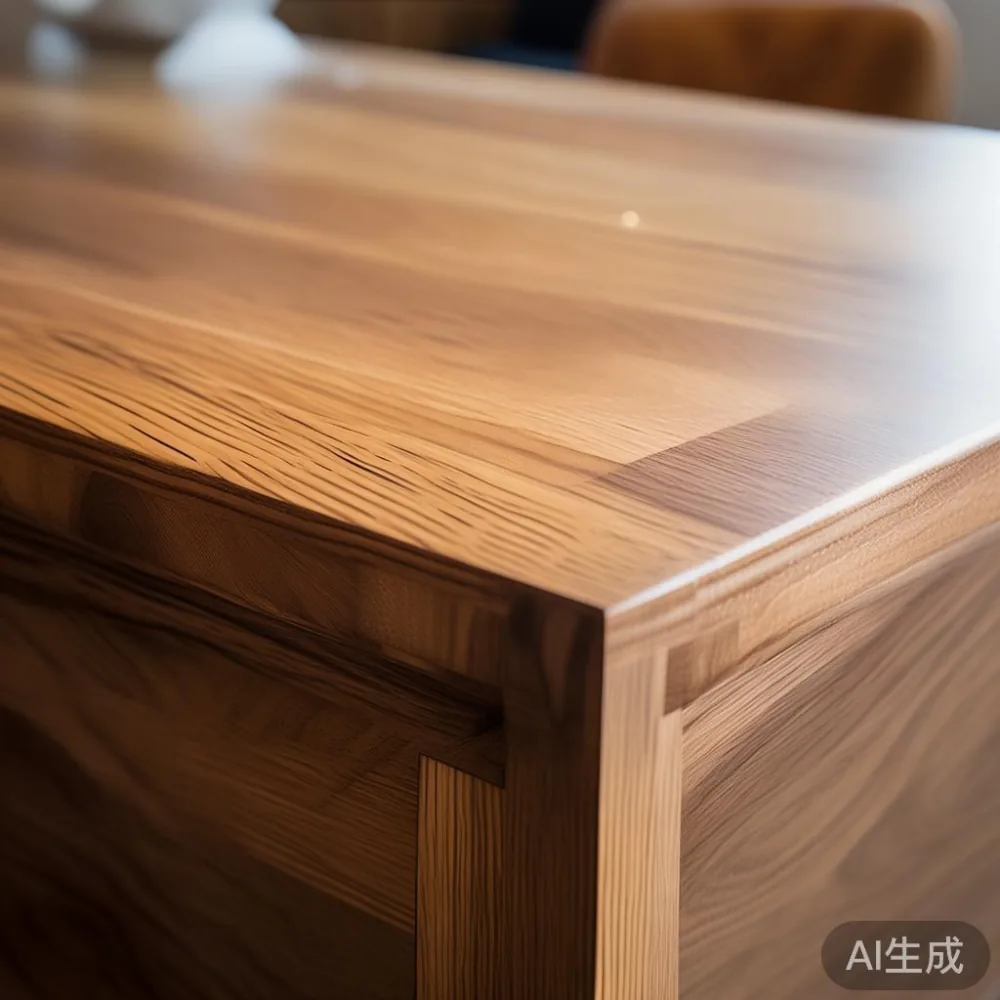
For this 5-year cost comparison, I have used a typical 140 × 70 cm electric standing desk, a 25 mm worktop, a lifting capacity of 100 kg and a home-use cycle of 5 days per week. Prices are illustrative Singapore retail estimates in SGD and include the standard GST treatment. They exclude delivery to the lift lobby, assembly, electrical works and the cost of clearing a bulky item. At 9% GST, a worktop priced before tax at S$500 becomes S$545 after tax. A S$900 pre-tax worktop becomes S$981.
I tested this approach last month with my colleague in Tampines. We compared a 140 × 70 cm veneered desk with a 140 × 70 cm solid oak desk, both with dual-motor lifting frames. The veneered top weighed 18.5 kg; the solid wood top weighed 27.8 kg. The lighter top was noticeably easier for my colleague to guide through a 90 cm condo corridor and position beside a 1.05 m wide lift door. The solid top did not flex, but it required two people and careful protection of the lift lobby walls.
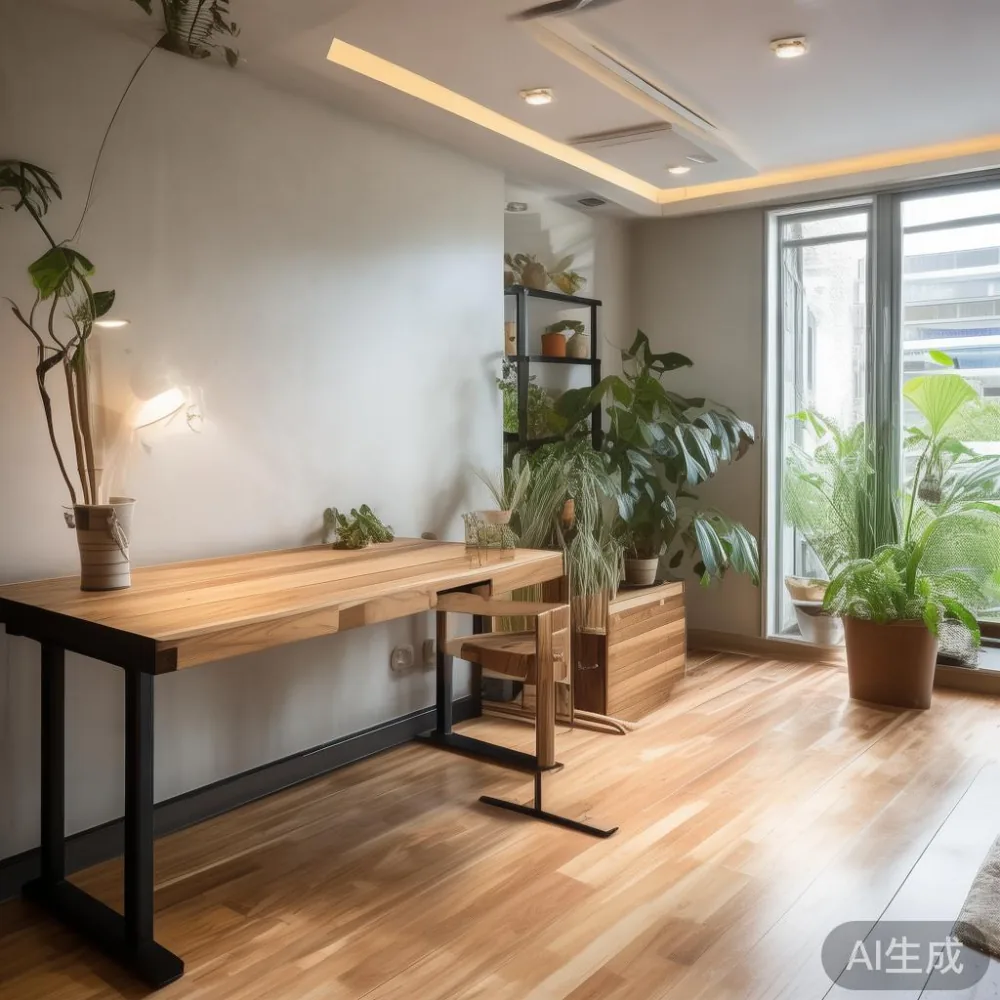
Over 60 working days and about 500 height changes, both frames performed well. That experience shaped the figures below, but the final cost still depends on humidity, care habits, the desk dimensions and whether the unit will be moved again.
What does a 5-year standing desk cost in Singapore?
A practical mid-range electric standing desk in Singapore commonly falls between S$700 and S$1,600 before GST, depending on the lifting mechanism, worktop material and storage options. The frame may account for S$500–S$900, while the top accounts for S$250–S$750. A compact 120 × 60 cm model can cost S$750–S$1,050, while a 140 × 70 cm model with a solid wood top often sits between S$1,150 and S$1,750.
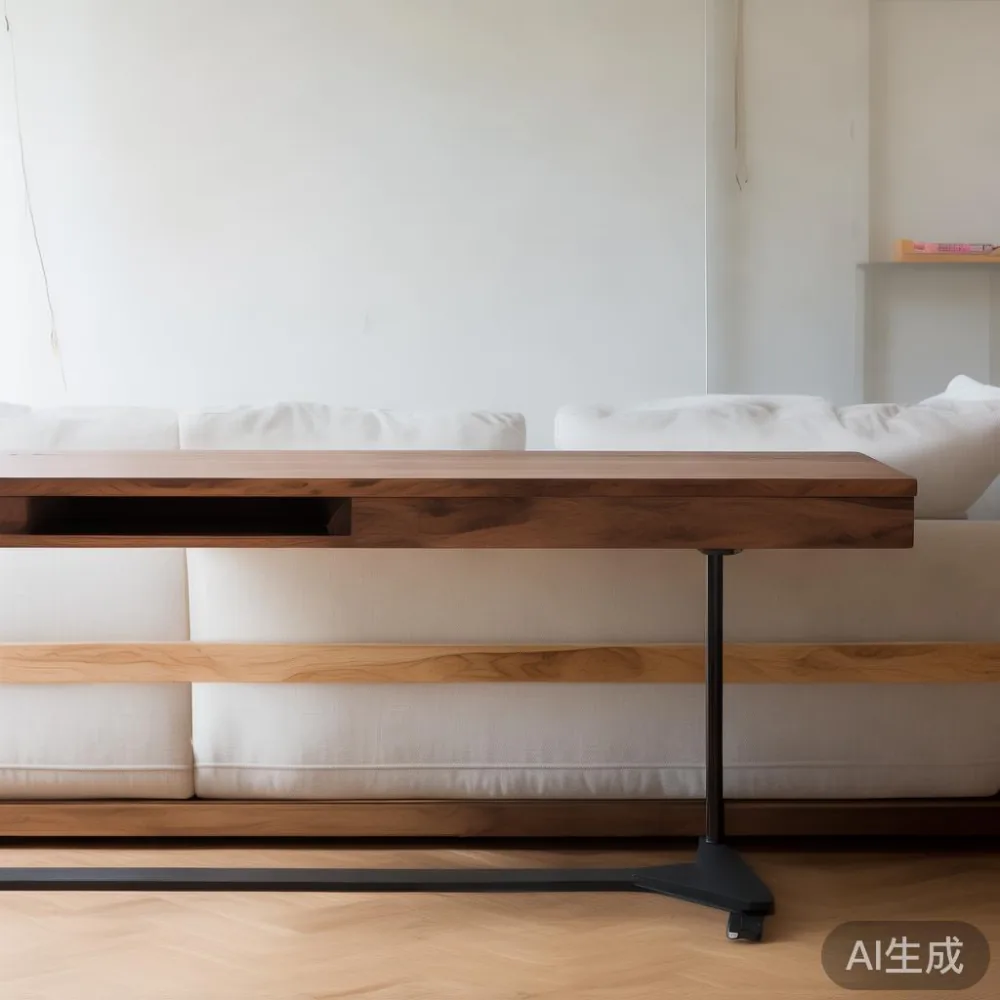
For a fair 5-year comparison, assume a 140 × 70 cm electric standing desk with a 100 kg lifting capacity, memory controls, a 60 × 40 cm cable tray and 2 drawer options. Its frame is rated for 10,000 lift cycles, although household use usually involves fewer. At 5 days per week and 8 changes per day, 10,000 cycles would take roughly 5 years. This does not mean failure occurs at cycle 10,001: cycle ratings are laboratory figures, and daily loading, humidity and maintenance all affect real-life performance.
A reasonable frame-and-hardware allowance is S$650 before GST, or S$708.50 after GST. Add assembly at S$80–S$150, a 90 cm lift-lobby delivery at S$45–S$90 and an optional 1.8 m floor cable cover costing S$35–S$65. This produces the following working model:
- Veneer standing desk: S$1,050 before GST, or S$1,144.50 after GST, including a typical frame, 25 mm worktop and standard hardware.
- Solid wood standing desk: S$1,420 before GST, or S$1,547.80 after GST, with the same frame and comparable hardware.
- Annual electricity use: about 120 kWh at S$0.32/kWh, costing S$38.40 per year, or S$192 over 5 years for either desk.
- Planned maintenance: S$100 in year 3 for cable and controller checks, plus S$60–S$120 for surface treatment in years 2 and 4.
The initial solid wood premium is S$403.30 after GST. Over 5 years, that is S$80.66 per year before finance or opportunity costs. A buyer who values a desk that can be refinished may accept this premium; a buyer who expects several house moves may not.
How does veneer age on a standing desk?
Veneer is a real material system, not a synonym for flimsy furniture. A quality standing desk top may use a 0.6 mm or 1.2 mm hardwood face over a stable engineered core. It can provide consistent colour and grain across a 140 × 70 cm surface, with less weight and less expansion than a solid slab.
The 5-year cost depends on edge treatment and exposure. A veneered top with a sealed underside, eased edge and factory-applied finish may need only routine cleaning. A vulnerable edge may chip or lift after repeated contact with chair arms. Estimates used here are S$60 for a minor edge repair in year 2, S$100 for reglueing or patching in year 4 and S$80 in year 5 if the top is replaced rather than repaired. If replacement follows the same price path, a new veneered top may cost S$350–S$550 before GST, including installation.
Singapore’s humidity makes care relevant, but outdoor exposure remains the main issue. A desk beside an open window in Bedok can face sun, rain and wind that a bedroom desk avoids. Keep the surface away from direct afternoon sun, wipe spills within 10 minutes and use a damp cloth followed by a dry cloth. Avoid steam cleaning and keep standing desk legs away from dripping air-conditioning condensate.
During my Tampines test, the veneered sample showed no visible lifting after 60 days. That short trial cannot predict 5 years of use, but it confirmed the practical advantage: at 18.5 kg, the top was 9.3 kg lighter than the oak version. Veneer can therefore lower moving costs. For a HDB flat, book the lift for at least 30 minutes, measure the packaged desk and check that it can turn through the corridor.
What happens to a solid wood standing desk after 5 years?
A solid wood standing desk can develop drying lines, small dents and colour variation as timber responds to seasonal humidity. These changes do not automatically mean structural failure. Oak, ash and similar hardwoods remain useful when the surface has enough thickness for restoration.
For this model, assume a 25 mm top made from kiln-dried hardwood. Singapore’s climate usually calls for controlled indoor humidity rather than aggressive sealing every few months. Wipe with a pH-neutral cleaner, protect the surface from standing water and place coasters under drinks. A small scratch can be treated with wax or touch-up in year 2 at a cost of S$40–S$80. A full sanding and refinishing in year 4 costs roughly S$180–S$320, or S$39–S$70 per year across 5 years.
Solid wood can also earn a partial resale credit. If the desk is in good condition, a buyer may assign S$150–S$300 to the solid top, compared with S$30–S$100 for a damaged veneered top. This is not guaranteed resale value, merely a conservative allowance in the comparison.
The more significant risk is damage during moving. Solid wood tops of 25 mm thickness can be checked or split if the panel flexes during removal from a HDB unit. A 140 × 70 cm oak top weighing 27.8 kg also needs two capable adults. Allocate S$90–S$160 for protective wrapping and moving assistance each time. If the desk moves twice in 5 years, that adds S$180–S$320, which should be included in the ownership calculation.
MIDHILL’s lifetime refinishing policy is relevant here because it changes the long-term care calculation for qualifying solid wood pieces. Its 10-year structural warranty also gives purchasers a defined period for frame-related concerns. These commitments do not prevent surface wear, but they can reduce uncertainty compared with a product sold without clear aftercare terms.
Which standing desk has the lower 5-year cost?
Using a scenario with one relocation in year 4, the comparison is as follows:
- Veneer option: S$1,144.50 purchase; S$192 electricity; S$260 planned repairs and treatment; S$120 moving assistance; S$0 replacement. Total: S$1,716.50, or S$343.30 per year.
- Solid wood option: S$1,547.80 purchase; S$192 electricity; S$210 refinishing and repairs; S$120 moving assistance; S$150 residual-credit deduction. Total: S$1,919.80, or S$383.96 per year.
The solid wood standing desk costs about S$203.30 more over 5 years in this scenario. If no repair is required, the veneer option can cost around S$1,456.50, while the solid wood desk remains around S$1,689.80. If the veneered top needs replacement in year 4 and the solid top is refinished instead, the difference narrows to roughly S$50–S$120.
It is also reasonable to finance the purchase. At 8% annual interest over 24 months, interest on a S$1,144.50 veneer desk would be about S$95, while interest on a S$1,547.80 solid wood desk would be about S$128. The extra S$33 of finance cost does not change the conclusion, but it makes the S$403.30 purchase premium more visible.
For a rental unit or a home expected to change within 3 years, veneer usually offers the more predictable cash outflow. For a home office that will remain in place for at least 5 years, solid wood offers a repairable surface and stronger material character. The lower 5-year cost is not automatically the same as the better long-term ownership experience.
Can veneer fit a Punggol or Tampines HDB flat?
Material weight can matter more than room dimensions. A compact standing desk may fit a 90 cm corridor, but the diagonal measurement of the packaged top still has to clear the lift door, doorframes and turning corners. In many HDB layouts, the lift car is 90–110 cm wide and the lift door is about 80–90 cm, although block and flat details vary.
For a 140 × 70 cm top, ask the supplier for the carton dimensions rather than estimating from the table. If the packaged width exceeds 92 cm, the unit may still need to be tilted through the lift door, but that increases the risk to the top or lift frame. A lighter veneered desk can be easier to rotate in a 1.10 m corridor, while a solid wood panel may need a second person. The practical message is to measure the route from the flat door to the study, not only the final furniture position.
Condo owners in Punggol may have narrower service corridors despite larger living rooms. A common route includes a 1.05 m wide door, a 120 cm corridor and a lift with a 100 cm internal width. Order site delivery only after confirming the loading bay, parking restrictions and lift reservation. A S$70 delivery charge in Singapore is modest compared with the cost of a damaged worktop.
Style should follow the room, not overwhelm it. French light luxury works well with pale oak, restrained profiles and a standing desk that acts like a writing table. American light luxury can pair darker walnut with metal details. Post-modern light luxury suits a clean frame, softened corners and a mixed-material palette. The frame should remain visually quiet because the worktop occupies most of the standing desk’s visible area.
How should I compare a standing desk before buying?
Check five items in writing: top material and thickness, underside construction, edge sealing, warranty coverage and repair pricing. For veneer, confirm whether the face veneer is 0.6 mm or 1.2 mm, and ask whether edges are sealed against moisture. For solid wood, ask whether the top is kiln-dried, whether it has been stabilized, and whether minor movement is covered by the warranty.
Also check the frame’s cycle rating, maximum load, speed and warranty. A 100 kg capacity is adequate for a typical setup with a 27.8 kg top, monitor arms and accessories, leaving roughly 70 kg of margin. Keep the total load under the stated limit and follow the controller’s calibration guidance.
Design references can help with matching, but keep the search centred on the desk itself. A Scandinavian for dining room approach may use light grain and simple lines, which can translate to a matching standing desk. Modern light luxury for dining room schemes often combine pale upholstery with warm timber, making a coordinated writing surface easier to specify.
The same care applies when matching other furniture. A solid wood sofa, bed frame, dining table, wardrobe, nightstand or marble table should share compatible tones without forcing every item to look identical. For broader planning, our notes on wholesale Mid-century modern furniture and the best Italian light luxury sofa for 2026 are useful adjacent references, but the standing desk should still be judged by dimensions and daily use. A guide to how to choose light luxury sofa can also clarify the differences between decorative veneer and repairable solid timber.
Is a solid wood standing desk worth S$403 more?
For a Singapore home used as a long-term office, the extra S$403.30 can be justified if the desk will remain in one room, the owner values tactile grain and the surface will be maintained. It also becomes more attractive when a 10-year structural warranty and lifetime refinishing reduce concern about future care.
The answer changes for renters, frequent movers and buyers who need the lowest predictable outlay. Veneer’s lighter weight can save on moving, while a smaller worktop can create further savings. A 120 × 60 cm model may reduce the top price by S$120–S$220 and make corridor access easier.
Check the seller’s policies before payment. MIDHILL provides free shipping above US$350 and a 14-day return window, so Singapore buyers should confirm the exact conversion, local delivery terms and return logistics for a large desk. For questions, email midhillco@gmail.com with the building’s lift dimensions and the intended worktop size. Product questions can also cover nearby categories, such as the best French provincial bed for 2026, while keeping the standing desk measurement as the starting point.
The practical result is clear: veneer generally wins on 5-year cash cost, while solid wood offers stronger repairability and a more enduring material story. Measure the route, calculate the full ownership cost and choose the surface you will still want to use every morning.