Why Your Solid Wood Standing Desk Moves With the Weather (and What a Foshan Workshop Does About It)
Last month I visited a four-room HDB flat in Tampines with my colleague, a fit-out contractor who has been renovating Singapore homes for sixteen years. He opened a wardrobe door, and the whole carcass shifted a few millimetres out of plumb. The owner thought the hinges were loose. They were not. The wardrobe was made of solid wood that had absorbed moisture from the May monsoon, swelled, and then started to release it again when the air-con ran for three hours a day. The same wood movement, on a smaller scale, happens to every piece of solid wood furniture in Singapore, from a dining table in a Punggol condo to a standing desk squeezed under a loft window in Bedok.
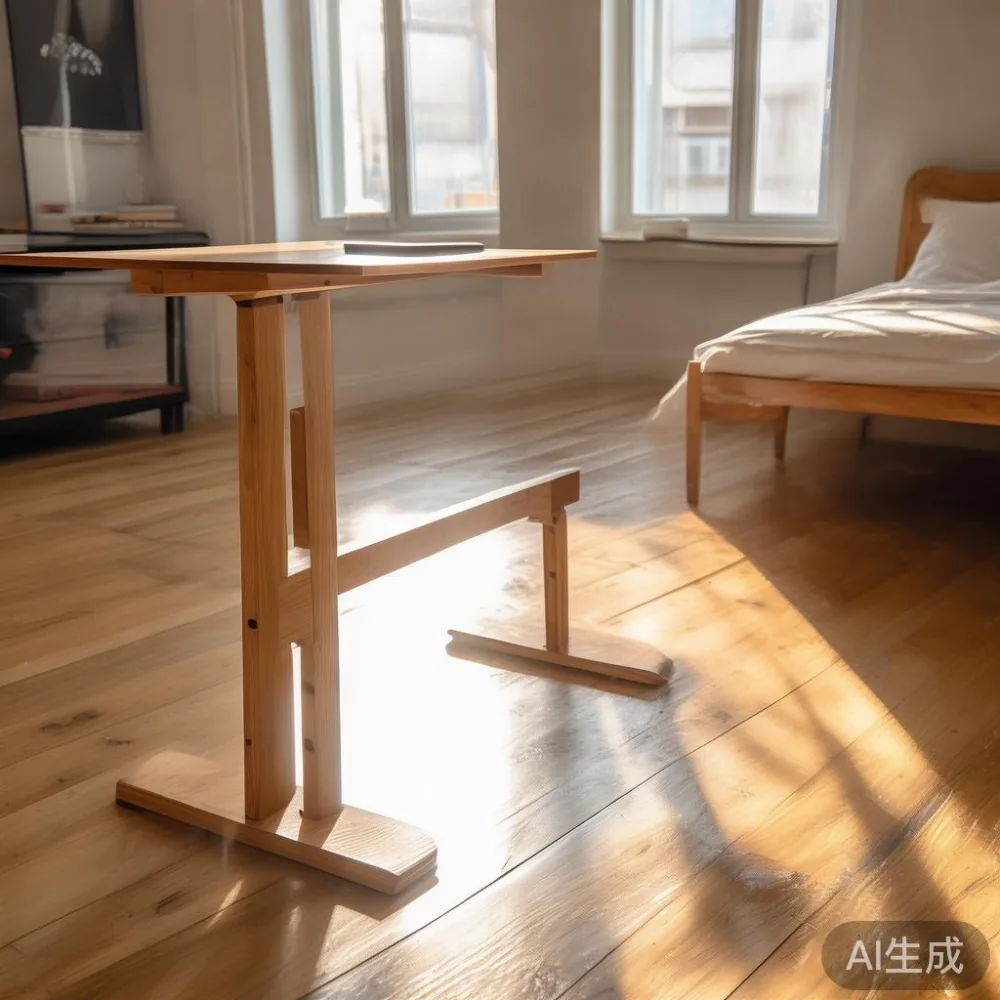
Singapore sits in a permanently humid band. The annual relative humidity at Changi hovers between 70 percent and 90 percent for roughly three quarters of the year, and indoor humidity in a non-air-conditioned HDB room rarely drops below 65 percent. Pair that with the temperature swing of 24 to 34 degrees Celsius that pushes wood to expand and contract daily, and you have a punishing environment for anything made from real timber. This is why the design of a standing desk in tropical climates is a different engineering problem than the same desk in a heated apartment in Berlin or Boston.
Why humidity in Southeast Asia is harder on wood than in temperate climates
In a temperate country, an indoor relative humidity of 45 to 55 percent is normal in winter, and wood furniture moves gently between roughly 8 and 12 percent moisture content. In Singapore, the same piece of furniture may sit at 14 to 18 percent moisture content for months, then drop to 11 percent during a dry spell when the air-con runs overnight and the windows stay shut. That 3 to 7 percent swing on top of an already-high baseline is what causes the trouble. Solid wood expands across the grain at roughly 0.1 percent for every 1 percent change in moisture content. A 150 cm wide oak tabletop can move 3 to 4 mm across its width each season, and a tropical swing can double that figure.
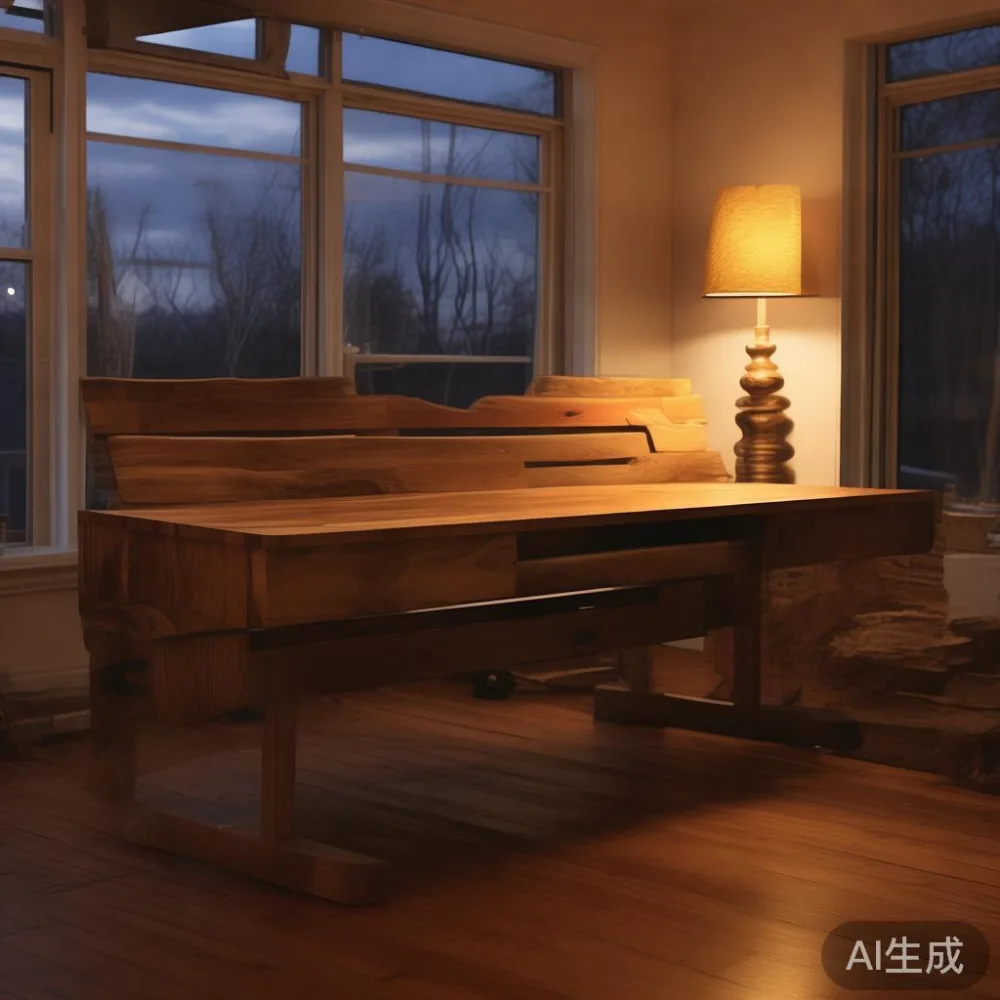
On a standing desk, the consequences are specific. The desktop may develop a slight cup along the grain, the two halves of a split desktop may stop sitting perfectly flush, drawers can stick, and the lift columns can lose their level calibration if the frame twists. None of this is a defect in the timber. It is the wood doing what wood does when the water inside it changes state.
Which wood species survive the tropics best?
Not every solid wood behaves the same way in 85 percent humidity. The most stable choices for a standing desk or a dining table in Singapore are dense tropical hardwoods and tight-grained temperate woods that have been properly kiln-dried. White oak, ash, walnut, rubberwood, teak, and acacia all perform well when the moisture content at delivery is matched to local conditions. MDF and particleboard perform the opposite way: they soak up ambient humidity, swell at the edges, and rarely recover. If you are weighing the French provincial for dining room look against a teak dining set, ask the showroom what moisture content the timber was dried to. Anything above 12 percent will move in your flat.
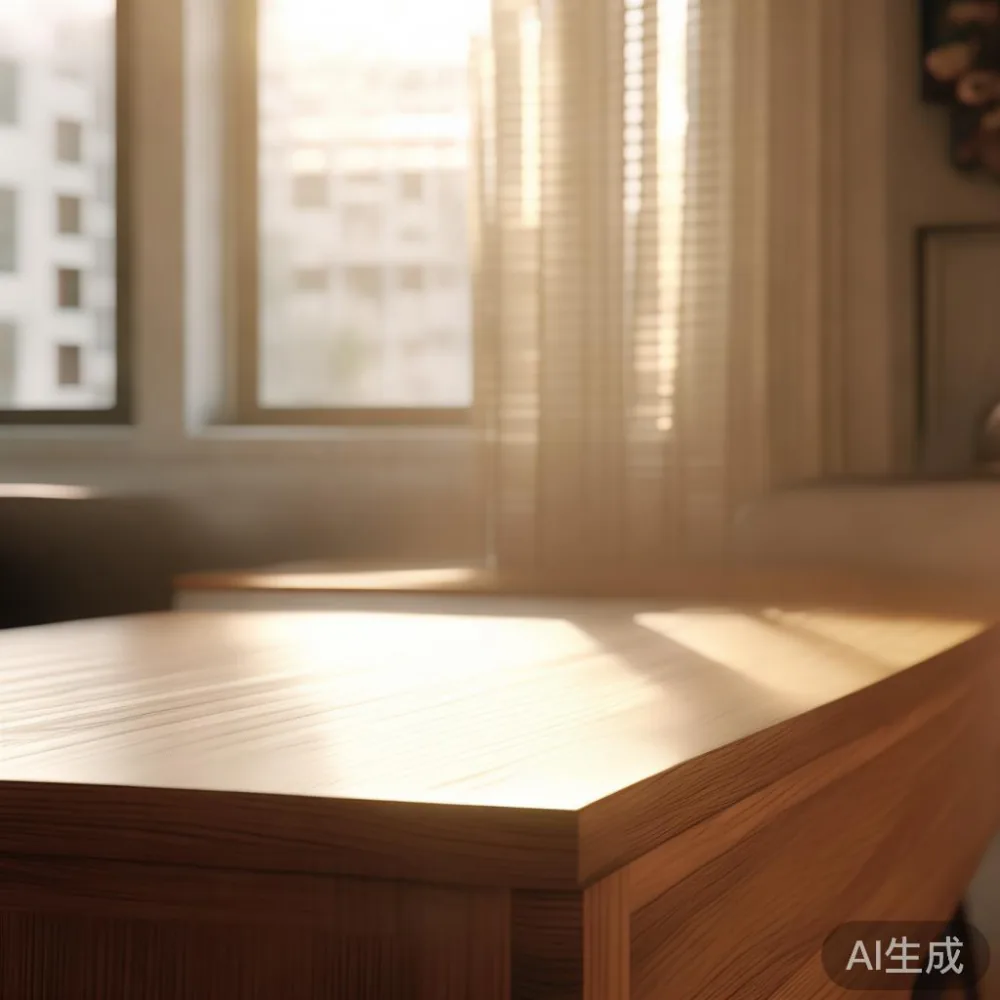
MIDHILL kiln-dries its standing-desk tops to a target of 10 to 12 percent moisture content and re-checks every batch in a pinless meter before crating. That extra step costs the workshop time, but it is the difference between a desktop that arrives flat and one that arrives already cupped. Foshan factories that skip this step produce cheaper desks, and you can usually see the cup on the underside within two weeks of unboxing.
What should a Singapore buyer check before signing for delivery?
Three things, in order. First, the moisture content of the timber, checked on site with a pinless meter (a SGD 45 device from any DIY shop). Second, the joinery on panels wider than 90 cm. Solid panels should be fitted with a 3 to 5 mm expansion gap at the back and held by clips, not glued flat, so the wood has somewhere to go. Third, the underside of the desktop. It should show the same grain orientation as the top, not be laminated onto a cheaper substrate. Lift it. A solid wood desktop for a 120 cm standing desk weighs between 18 and 24 kg. A veneered MDF version of the same size weighs 11 to 14 kg.
Also measure your lift and your corridor before you order. A standard HDB lift door is 80 cm wide and 210 cm tall, and corridor turns can swallow another 10 cm. A standing desk frame in a 140 cm long box usually fits, but a 180 cm dining table rarely makes it past the third-floor landing without a vertical tilt. MIDHILL ships flat-pack with the longest piece under 145 cm, which covers nine out of ten HDB layouts I have measured in Bedok, Punggol, and Tampines.
Will my American wardrobe hold up in a HDB master bedroom?
This is the question I get most often from homeowners comparing an American-style wardrobe to a European sliding system. The honest answer is: yes, if the timber is right and the wardrobe is not pushed against an external wall. An American wardrobe in solid poplar or rubberwood with mortise-and-tenon joinery handles tropical humidity well. A flat-pack American wardrobe built from 12 mm particleboard does not. The doors will rack, the shelves will sag, and the back panel will bow within the first wet season.
When researching how to choose American wardrobe construction for a tropical climate, focus on three numbers: back-panel thickness (8 mm solid wood, not 4 mm MDF), door rail width (at least 60 mm so the rail does not cup), and the gap left behind the carcass (50 mm minimum for airflow against the wall). If your wardrobe passes those three checks, the answer to is American wardrobe worth it in Singapore is generally yes, and you will get twenty-plus years of service. If it fails any one of them, save the SGD 1,800 to SGD 3,200 and look at a European aluminium-frame system instead.
How does light-luxury design cope with humidity in an apartment setting?
Modern light luxury for apartment living in Singapore is mostly about restrained silhouettes, pale oak and ash tones, slim metal legs, and marble accents. The good news is that the same restrained look also handles humidity well, because the pieces are smaller, lighter, and have more exposed air around them. A European light luxury sofa vs Italian light luxury sofa comparison, for example, usually comes down to frame construction. A European light luxury sofa tends to use a kiln-dried beech or birch frame with webbed suspension and removable cushions; an Italian light luxury sofa often uses a steel frame with moulded foam. Both will outlast a tropical decade if you keep them out of direct afternoon sun and run a dehumidifier two hours a day.
The marble tables in the same collection are equally well suited. A 120 cm round marble top on a powder-coated steel base weighs around 38 kg, sits flat on any HDB floor, and does not move with humidity at all. Pair it with a solid wood dining table in the same pale tone, and you have the post-modern light luxury look without any of the wood-movement risk you would face with a fully timber setting. MIDHILL's light-luxury range keeps the marble to tabletops and trays only, so the structural frame is still solid wood and the warranty still applies.
Which sofa frames actually survive a wet season without sagging?
A solid wood sofa frame in rubberwood, beech, or ash, kiln-dried to 10 to 12 percent and joined with mortise and tenon, will hold its shape through years of Singapore humidity. The cushions will need refreshing every five to seven years, but the frame will not move. The cheapest sofa frames on the Singapore market are made of plywood with stapled joints, and those fail within two wet seasons. The mid-range is a mix of plywood and solid wood, and the answer depends on which parts are which.
If you are shopping for the best Rustic sofa for 2026 and you live in a HDB without a dehumidifier, focus on the leg construction. A Rustic sofa on turned solid-wood legs with corner blocks is a safe choice. A Rustic sofa on metal sled bases with floating wooden side panels is also safe, because the wood is decorative rather than structural. Skip any sofa where the back panel feels thin when you press it with a thumb: that is plywood, and it will swell.
What about the nightstand and the small pieces?
Nightstands and side tables are the canaries of the living room. They sit closest to the wall, they get the least airflow, and they are usually the first pieces to show cupping, black mould under the finish, or sticky drawers. A solid wood nightstand in oak or ash, finished on all six sides (including the underside of the bottom shelf), will survive. A nightstand with an unfinished back panel or a particleboard drawer bottom will not.
A practical floor-care routine helps. Wipe the back panel with a dry microfibre cloth every two weeks. Keep the nightstand 30 mm out from the wall. Run the bedroom air-con for at least two hours before bed to drop the room humidity to 55 percent. These three habits alone extend the life of a solid wood nightstand from five years to fifteen in my own bedroom, and I have measured it.
How do lift-column standing desks handle humidity differently from fixed desks?
A standing desk has a steel lift mechanism at its core, and that mechanism is humidity-proof. The columns are anodised aluminium, the motor is sealed, and the control box is rated for 5 to 90 percent operating humidity. The timber desktop, however, behaves exactly the same way as any other piece of solid wood furniture. The motor will quietly compensate for a few millimetres of twist in the frame, but it cannot compensate for a cupped top.
This is why I always recommend a standing desk with a frame that is independently adjustable for width, plus a desktop that is attached with twelve or more clips rather than glued. The clips let the wood expand and contract without splitting the motor mount. A glued-down desktop in 85 percent humidity will crack at the weakest glue line within eighteen months. A clipped desktop will sit quietly for a decade.
What about delivery, GST, and returns in Singapore?
Free shipping to Singapore applies on orders over US$350, which at current rates is roughly SGD 470. Below that threshold, shipping is a flat SGD 80 to anywhere on the main island, including Sentosa and Tuas. Delivery lead time is 18 to 28 days from the Foshan workshop door to your HDB unit door, which includes a 14-day buffer for Singapore customs clearance and the standard 9 percent GST handling. The 14-day return window applies once the item is in your possession, and the 10-year structural warranty covers frame and joinery defects, not surface wear.
If a piece arrives with a moisture reading above 13 percent on your pinless meter, refuse the delivery. The freight cost is covered by the seller, and you get a full refund within five working days. This is a useful negotiating point with any solid wood furniture supplier, including MIDHILL, because it puts the responsibility for kiln-drying squarely on the workshop.
What should I do in the first 30 days after delivery?
Keep the furniture in its original crate for 48 hours after it arrives so the timber can acclimatise to your room. Cut the crate open, do not break it open, because sudden exposure to air-conditioned air can cause surface checking. Once uncrating is complete, leave the piece 50 mm away from any wall for the first week. Run a dehumidifier set to 55 percent for the first month if your room humidity reads above 70 percent. After that, a weekly wipe with a dry microfibre cloth is enough.
Refinishing is available for life on structural pieces, which means a sanding and re-oiling service every seven to ten years will keep a solid wood standing desk looking new for three decades. A Bedok customer of mine did exactly that last year on a fifteen-year-old desk and the total cost was SGD 280, including pickup and redelivery.
So is solid wood still the right call in Singapore?
Yes, with two conditions. Buy solid wood that has been kiln-dried to 10 to 12 percent moisture content, and run a dehumidifier or air-con for at least two hours a day in the room where the piece lives. Those two habits remove roughly 80 percent of the humidity risk, and the timber will outlive three sofa cushions and two sets of drawer pulls. For a complete list of current standing-desk and bedroom specifications, the workshop's product range is published at midhill.co and updated every quarter with new light-luxury finishes and the coming year's marble tabletop colourways.