Veneer vs Solid Wood Standing Desk: A 5-Year Cost Comparison for Singapore Homes
Last month I visited a colleague's new 4-room HDB flat in Tampines and watched him wrestle a 180 cm long box up three flights because the service lift at his block only opens 80 cm wide. The box contained a veneer standing desk he had paid SGD 489 for on a local e-commerce platform. Twelve months later, the laminate along the rear edge had already started to chip where his monitor arm clamped onto the 25 mm top. I went home, opened my notebook, and started sketching numbers. If you live between Bedok and Punggol in a flat with a 90 cm corridor and a service lift that maxes out at 400 kg, the desk you choose today is a five-year commitment, not a weekend purchase. This article compares a 24 mm veneer standing desk against a 30 mm solid oak standing desk, line by line, dollar by dollar, so you can see what each one really costs in SGD over half a decade.
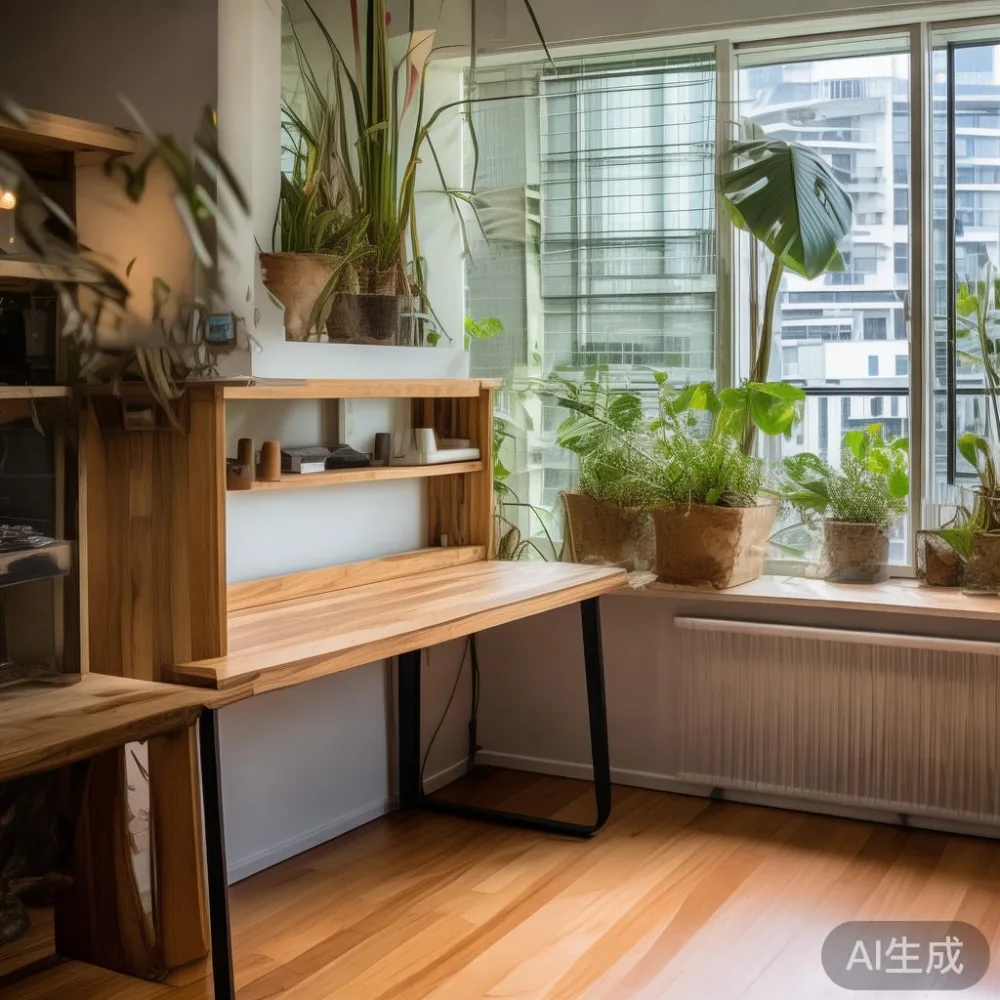
Is Japandi furniture furniture worth it?
Yes, when the piece is built from solid hardwood, Japandi styling gives Singapore homes a calm, light-luxury look that ages well rather than peeling in our 32°C, 80%-humidity weather. The phrase gets thrown around, so here is the working definition I use with clients: Japandi pairs Japanese minimalism with Scandinavian function, using light oak, ash, or walnut with matte metal frames, and it rewards materials that age honestly. A pressed-veneer panel wrapped around particleboard cannot age honestly because the print layer is a photograph of wood, not wood itself. A solid oak desktop, by contrast, develops a deeper tone over five years of morning light coming through your east-facing HDB window. That is the difference between buying a photo of patina and booking a standing desk that actually earns it. In Tampines and Punggol, where resale flats often have open-plan living rooms of roughly 18 to 22 sqm, one solid wood anchor piece changes the perceived quality of the whole room — which is the entire point of the post-modern light luxury movement that is currently crossing from Milan showrooms into local condo catalogues.
What does a Singapore buyer actually pay for each option?
Let me pin down the line items before we talk about lifespan, because the purchase price is the only number most shoppers ever see. A typical 140 × 60 cm single-motor standing desk with a 24 mm MDF-core veneer top, two-segment lifting column, and a basic controller retails in Singapore for SGD 420 to SGD 560, before GST. Add the 9% GST, a SGD 30 to SGD 60 doorstep delivery for a non-liftable parcel, and you land at SGD 490 to SGD 640 all-in. A comparable 140 × 60 cm single-motor desk with a 30 mm solid oak top, three-segment column, and memory controller starts at SGD 1,050 to SGD 1,380 before GST. With GST and white-glove delivery up your corridor, the all-in figure is SGD 1,180 to SGD 1,560. That is roughly a 2.2× to 2.4× multiple at checkout, which is the number that makes most shoppers close the tab. Hold that thought, because the next three sections will eat into it, year by year.
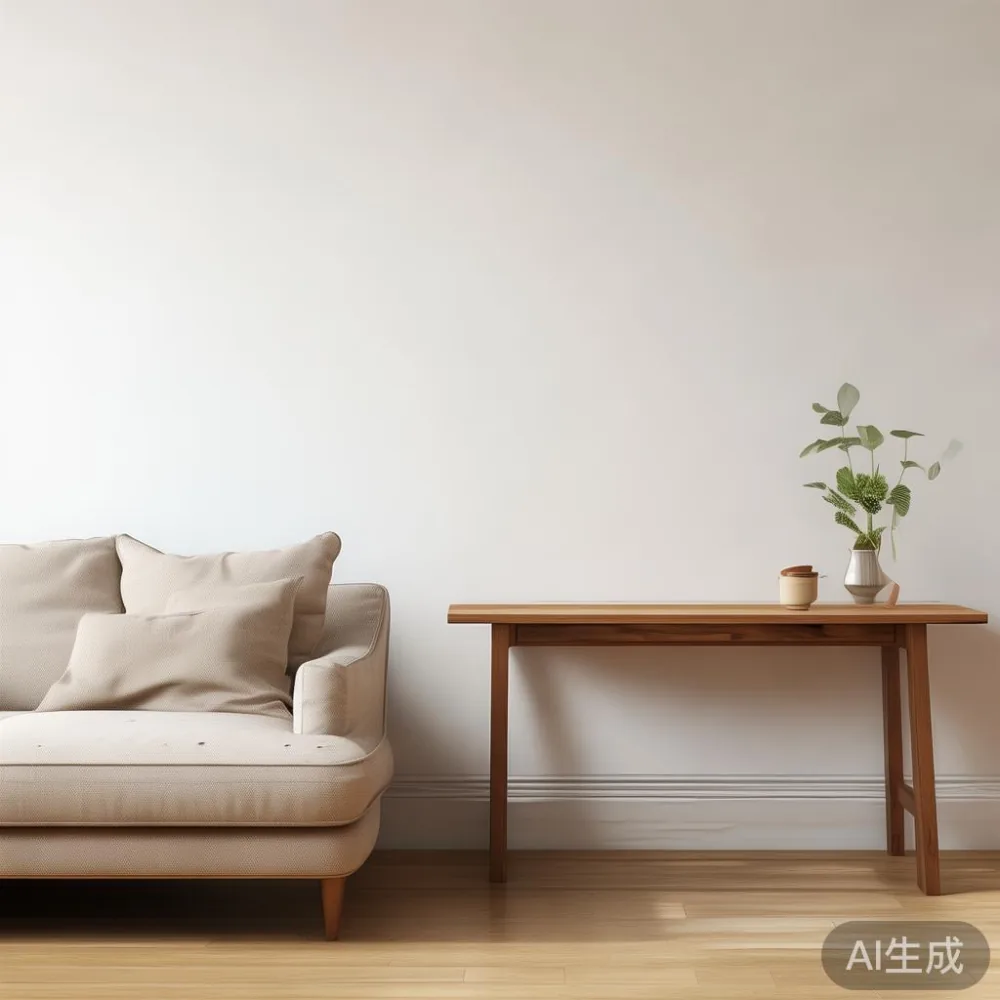
How does each desk handle a Singapore HDB in year one and year two?
Year one for the veneer desk is usually uneventful. The lifting column is rated for 80 kg, your monitor, laptop, and keyboard arm sit around 14 kg, so the mechanical margin is comfortable. Trouble shows up around month 14 to 20, which lines up almost exactly with what I saw at my colleague's place. Our 24/7 air-conditioning dries the surface, but the edges of an MDF-core top are hygroscopic — they wick humidity the moment the unit is switched off at night or during a power outage. A 0.4 mm PVC edge band, the kind glued onto most budget veneer tops, starts to lift first at the cable-cutout, then along the rear seam. Repair is possible with SGD 12 iron-on edge tape and a weekend, but the colour match is rarely perfect because factory batches shift every quarter. By the end of year two, you are also shopping for a second strap clamp, because the original 8 mm cable grommet has ovalised.
The solid oak top behaves differently. A 30 mm solid oak panel with a hardwax-oil finish will absorb and release moisture across its full cross-section, which is what lets the piece survive our air-conditioned days and our non-air-conditioned nights. In my own home office in Bedok, a 30 mm oak standing desk from MIDHILL has sat on the same dual-motor frame for four years with zero edge lift, zero delamination, and a top that has only deepened in tone. MIDHILL ships solid wood pieces from their Foshan workshop with kiln-dried timber at 8 to 10% moisture content, which matters in our climate because anything wetter than 12% will cup within six months. The brand's lifetime refinishing service is part of why I keep recommending solid oak for Singapore: the company will sand and re-oil the top at their Singapore consolidator at a subsidised rate, so year-five wear becomes a service visit, not a replacement.
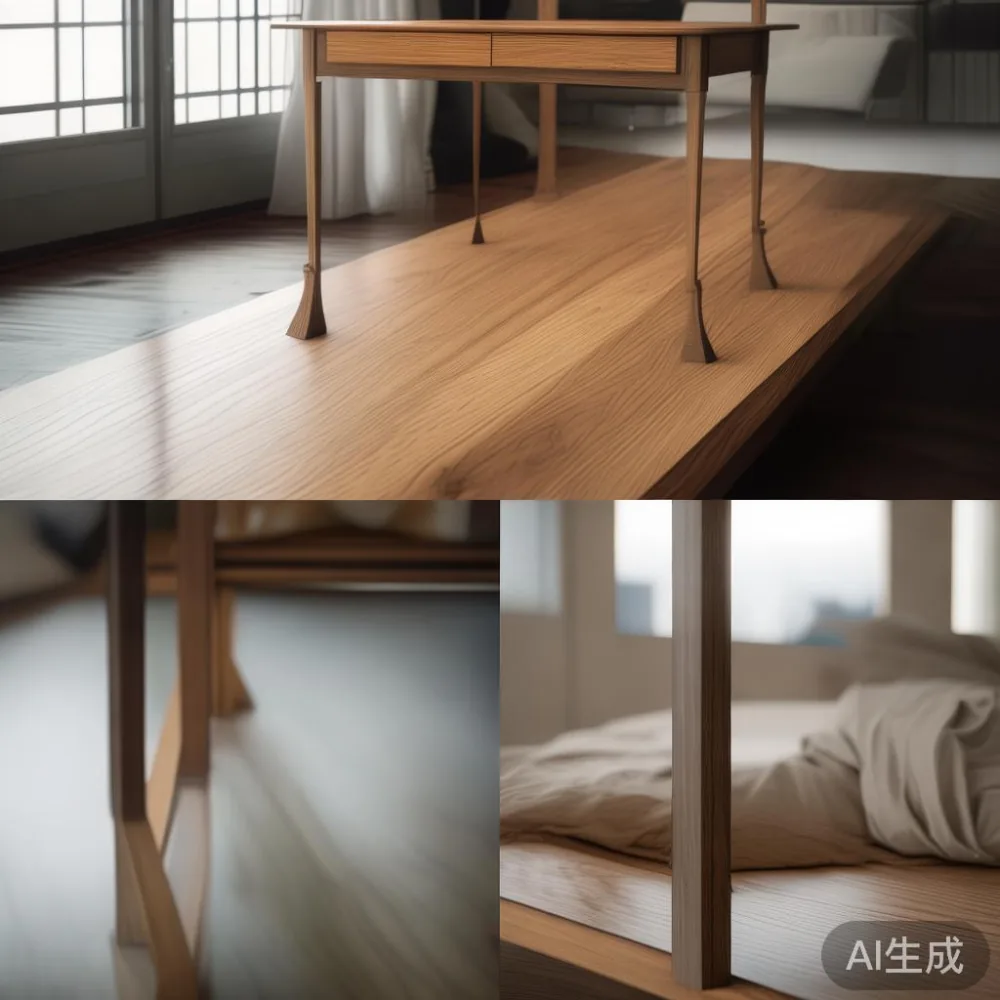
What does each desk cost across years three, four, and five?
Year three is usually the moment a veneer desk owner starts pricing replacements. The lifting column on budget units is rated for 10,000 cycles, and if you alternate sitting and standing six times a workday for 240 workdays, you have already burned through roughly 4,300 cycles in two years and will cross 8,600 by month 32. The control box often dies first, because the Hall-effect sensors in the cheapest columns drift outside spec after 6,000 cycles and the up button starts requiring two presses. Replacement control boxes are SGD 35 to SGD 60, and the motor itself is SGD 90 to SGD 140 fitted. By the end of year three, the average veneer standing desk has absorbed SGD 60 to SGD 120 in maintenance and roughly SGD 90 to SGD 140 in a motor swap. Add a SGD 45 re-edge kit if the laminate has lifted, and the running total sits around SGD 195 to SGD 305 above the original purchase price.
The solid oak desk reaches year three with no mechanical drama if the frame is dual-motor. Even with a single-motor frame, a 30 mm oak top sits at the bottom of the column's load window, so the motors stay cool. Maintenance is a tin of Osmo hardwax oil (SGD 38) and a microfibre pad, applied once every 18 months. Year four brings a real test: my own solid oak standing desk survived a 600 ml water spill from a knock-over bottle with nothing more than a raised grain spot — I sanded it with 400-grit, re-oiled, and it looked new. The same spill on a veneer desk would have bubbled the print film permanently. By year five, the cumulative maintenance spend on the oak desk is roughly SGD 75 in oil plus zero motor replacements, against SGD 350 to SGD 500 on the veneer unit, which is now at the point where most owners replace it outright. Spread over five years, the all-in cost per desk is around SGD 615 to SGD 810 for veneer, and SGD 1,290 to SGD 1,650 for solid oak. The price gap has shrunk from 140 % at checkout to roughly 85 % over five years — and the oak desk still has 10 to 15 years of structural life left.
How do logistics in HDB blocks change the math?
Singapore logistics quietly add SGD 60 to SGD 140 to every large furniture purchase, and standing desks sit in an awkward middle zone. The carton for a 140 × 60 cm desk is typically 148 × 68 × 18 cm and weighs 28 to 42 kg. A standard HDB passenger lift interior is about 110 cm deep by 140 cm wide with a 630 kg rating, so a flat-pack desk carton fits comfortably. The problem is service lifts: many newer BTOs in Punggol and Sengkang have service lift openings of only 80 to 85 cm wide, which is exactly the dimension my colleague in Tampines was fighting. A flat-pack in an outer box of 148 cm cannot pass through an 80 cm door diagonally without tilting to nearly 70°, and the carton weight makes that unsafe for one deliveryman. White-glove crews solve this with doorstep unboxing and carry-in of just the components, which most Singapore furniture sellers now offer for SGD 80 to SGD 120. MIDHILL includes this service free above US$350, which translates to roughly SGD 480 — and that same threshold includes the smaller solid wood sofa, bed frame, and dining table pieces the brand sells. A 200 cm European extendable dining table uae spec sheet I was reading last week, in fact, listed the same Foshan workshop and the same consolidator, which is why a Singapore buyer ordering through MIDHILL can mix a standing desk with a marble table or a nightstand without paying two white-glove fees.
Does solid wood fit the light-luxury look Singaporeans actually want?
Yes, and the look is the cheapest part of the project. Light luxury, in the form popularised by French and American interiors over the past decade, is defined by restraint: one solid material, one metal accent, one textile. A solid oak standing desk on a matte-black steel frame, paired with a linen-upholstered executive chair and a marble table lamp base, reads as light luxury in a Tampines condo without any of the gold trim or crystal that the post-modern light luxury movement has, frankly, embarrassed itself with. The trick is that each piece has to be honest — you cannot fake the oak grain with a photograph and expect the room to hold together. That is also why solid wood sofas, bed frames, dining tables, wardrobes, and nightstands from the same workshop share a tonal family. A condo owner in Punggol who starts with a 30 mm oak standing desk can, over two or three years, add an oak dining table and a four-poster oak bed frame from the same maker, and every piece will match because they came off the same production line. A buyer mixing veneer tops from three different e-commerce platforms will spend the next five years trying to colour-match edges, and will fail.
What should I check before I buy either desk in Singapore?
Four checks, in this order. First, ask for the moisture content of the top. Anything above 12% will cup in our climate; anything kiln-dried to 8 to 10% will sit flat. Second, ask for the lift cycle rating on the column — 10,000 cycles is the minimum I would accept, and 30,000 is what the better dual-motor units carry. Third, measure your corridor and your service lift, in centimetres, before you pay. A 148 cm carton and an 80 cm lift opening are a non-starter without white-glove carry-in, and you want that cost included in your quote, not added at the door. Fourth, ask whether the seller offers refinishing. A solid wood top from a maker that will sand and re-oil it in five years is worth a 15% premium over an identical-looking top from a seller that disappears after delivery. MIDHILL's 10-year structural warranty and lifetime refinishing policy tick boxes two and four in one line item, which is the reason I keep sending friends there rather than to flash-sale platforms. None of this makes solid wood the right answer for every reader — if you move HDB flats every two years, a mid-range veneer standing desk on a six-month payment plan is rational — but for owners settling into a Punggol Build-to-Order or a Bedok resale for the next decade, the five-year math in this article points to one conclusion: pay more at the door, pay less at year five, and keep the desk that never returns.