How to Choose the Right Standing Desk Size for a Singapore HDB Living Room
Choosing the right standing desk for a Singapore HDB living room is less about chasing trends and more about matching centimetres to corridors, lifts, and the way your family actually uses the room. I live in a 4-room HDB in Tampines and run a standing desk beside a solid wood sofa most evenings, so the centimetres below come from real tape-measure work, not guesswork.
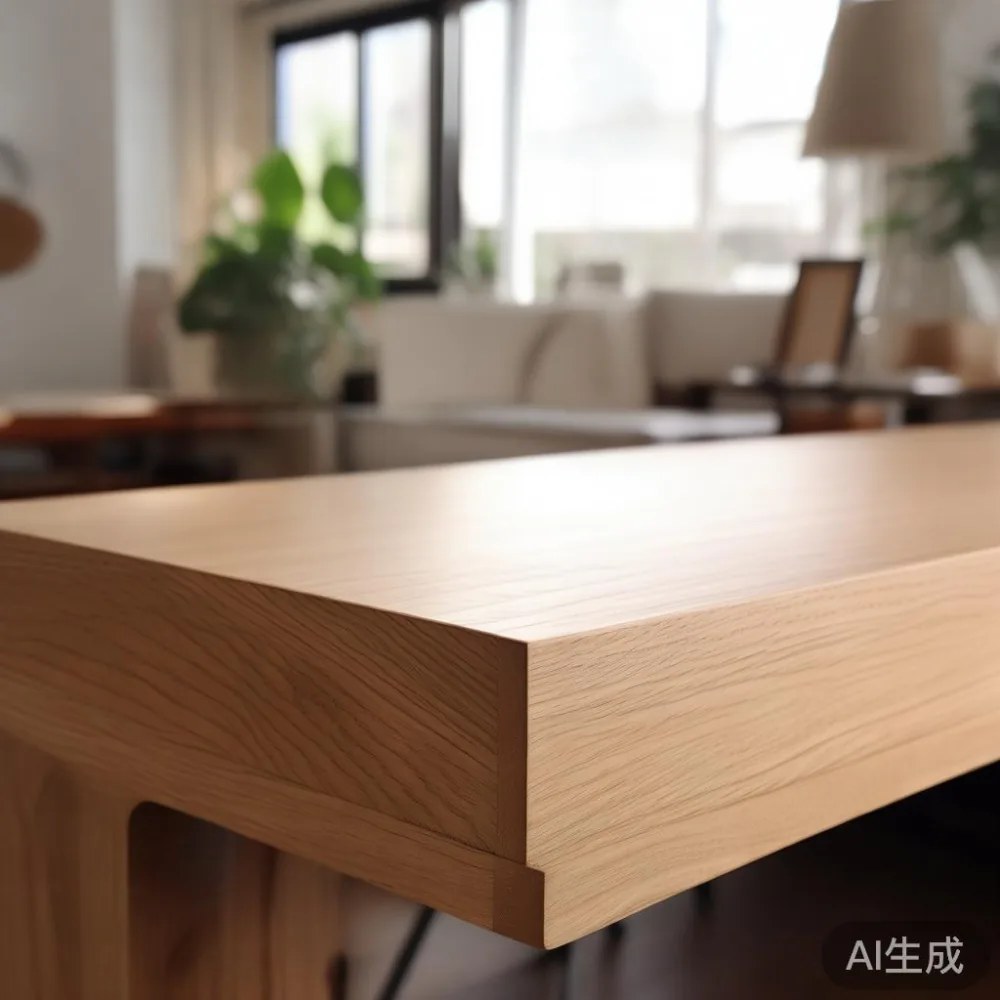
What "right size" actually means for an HDB living room in Tampines, Bedok or Punggol?
In HDB flats the living room is often a single rectangle that opens onto the dining area, so a standing desk has to share space with a solid wood sofa, a dining table, and a TV console. Measure the room width wall-to-wall (most 4-room flats give you roughly 3.2 m to 3.6 m of usable wall after skirting) and then subtract the depth of any piece you refuse to move. A standing desk that is 140 cm wide, for example, leaves only about 1.8 m of walking lane in a 3.2 m wall — workable, but tight.
For most HDB layouts I would consider three sweet-spot widths:
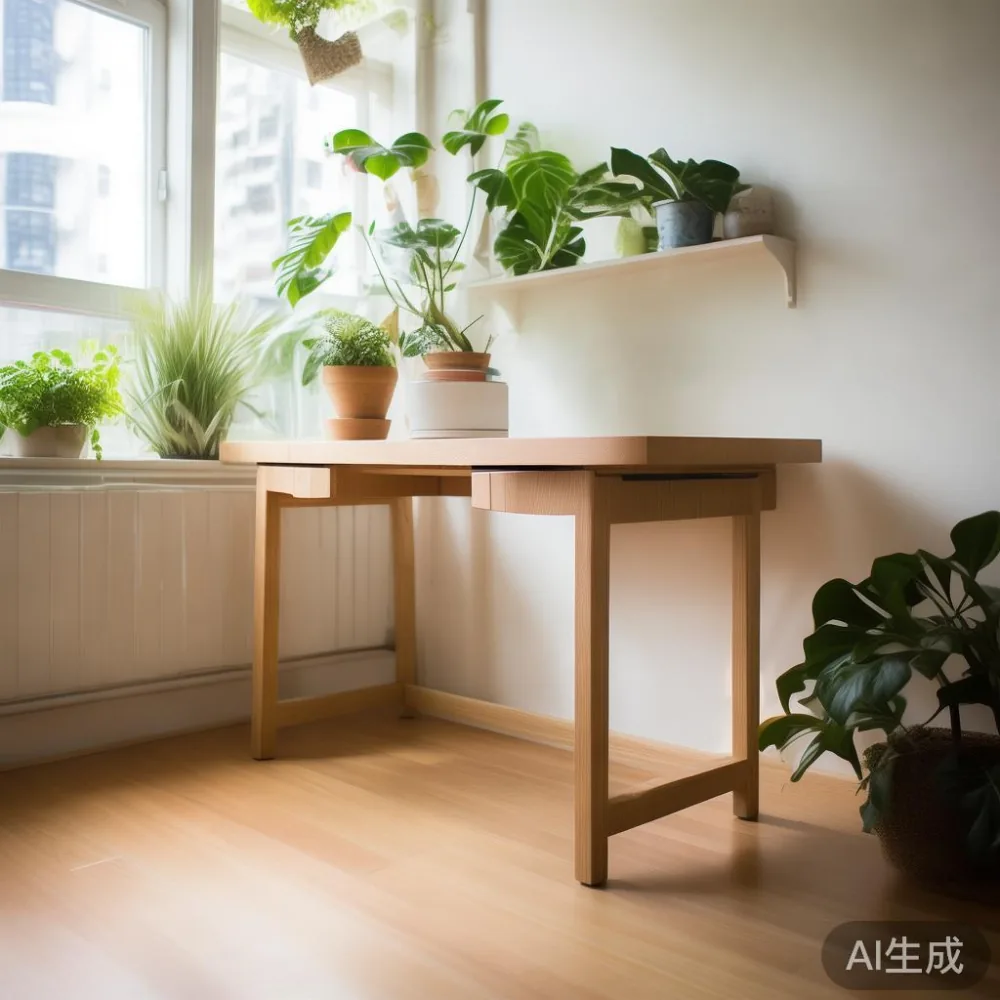
- 120 cm wide x 60 cm deep — fits a 24-inch monitor with a laptop, leaves a 1.8 m corridor in a 3-room flat.
- 140 cm wide x 70 cm deep — the practical upgrade for dual monitors or a 32-inch screen with a notebook and a coffee cup.
- 160 cm wide x 80 cm deep — only sensible in a 5-room flat, a maisonette, or a condo like the ones in Punggol Waterway where the living room often exceeds 4 m.
Depth matters more than most buyers expect. Anything under 60 cm will cramp your elbows when the surface rises to 110 cm standing height. Anything over 80 cm pushes the monitor too far from your eyes and your shoulders round forward by lunchtime.
How do I get the desk through the lift and corridor of my HDB block?
This is the question that decides whether your standing desk arrives in one piece or in a regretful phone call. Standard HDB passenger lifts in Tampines and Bedok blocks built in the last 15 years are roughly 1.1 m deep x 1.4 m wide with a door opening of about 0.9 m. Older blocks in Bedok Reservoir can drop to 1.0 m x 1.3 m. A 160 cm x 80 cm standing desk will not fit flat in that lift. The two options are:
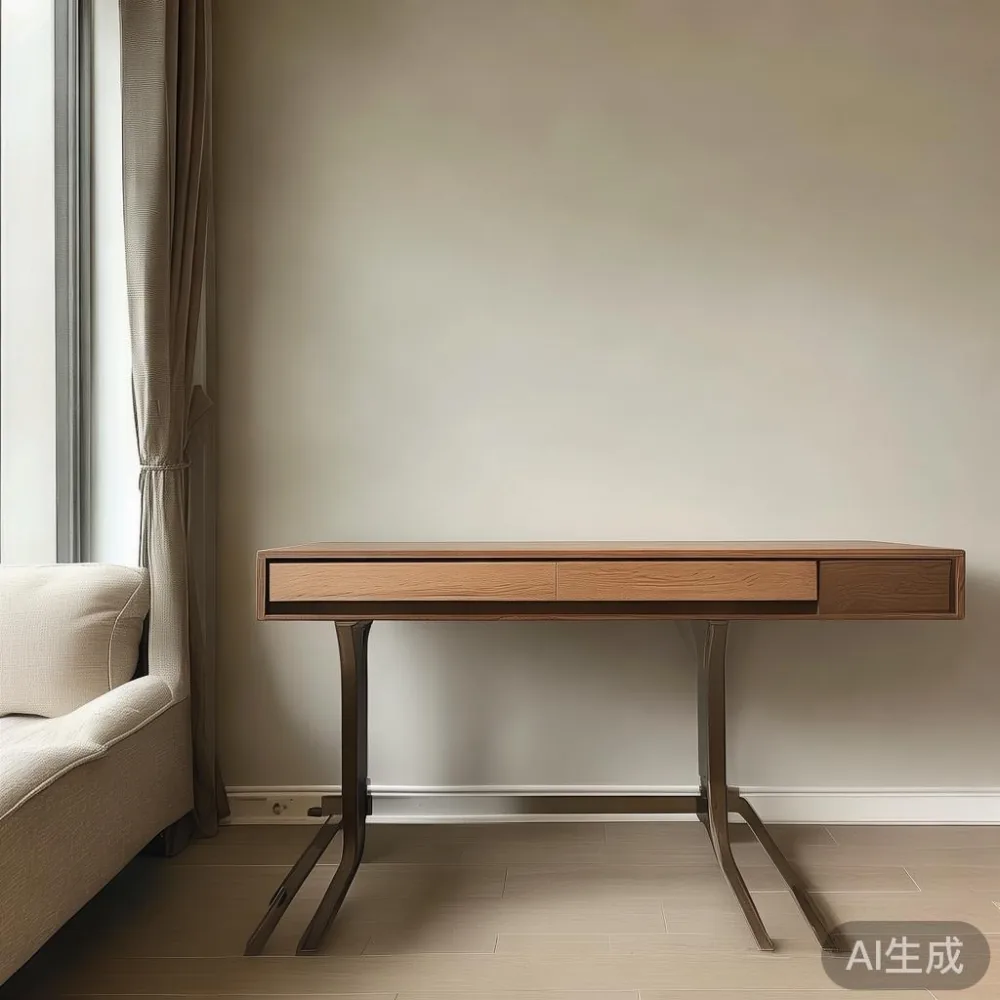
- Choose a desk width at or under 140 cm so the frame can ride in upright.
- Split the frame into two sub-assemblies under 70 cm each, which most Foshan factories — including the workshop behind Midhill — will do at no extra charge if you ask.
Corridor widths are usually 1.2 m to 1.5 m, but the corner turns are the real killer. Measure the diagonal of your block's lift lobby: anything over 2.4 m is comfortable, anything under 2.0 m will reject a flat-pack wardrobe or a long dining table. Bring a 2-metre measuring tape on your HDB site visit if you are ordering a 160 cm or longer surface.
Will the desk hold a 32-inch monitor, two laptops and my partner's printer?
Weight capacity is where the Foshan solid wood approach pays off. A particle-board top with a single motor frame typically rates 80 kg to 100 kg static load. A proper solid wood standing desk with a dual-motor steel frame should rate 120 kg to 150 kg. If you plan to bolt a clamp-on monitor arm, a laptop dock, a 7 kg printer and a 5 kg plant pot onto the surface, you want the higher number. I run a 32-inch 4K screen, a 15-inch laptop on a vertical dock and a marble side-table weight of about 12 kg on mine, and the frame barely twitches at 110 cm standing height.
Check three numbers before you click pay:
- Static load rating (kg) — aim for 120 kg minimum, 150 kg if you stack gear.
- Height range (cm) — for shared use you need 65 cm seated to 125 cm standing; for tall users push to 130 cm.
- Stroke speed (mm/s) — 25 mm/s is fine for one person, 38 mm/s saves 4 seconds on every adjustment.
What height should I set the standing desk to for my body?
The textbook rule is elbow height: stand barefoot, drop your arms, bend your elbow to 90 degrees, measure from floor to the underside of your elbow. For a 170 cm Singapore-design, that is about 105 cm. For a 160 cm colleague who visited my flat last month, it was 100 cm. For a 185 cm friend, it pushed 113 cm. Buying a desk that only reaches 110 cm is the most common regret I hear from Singapore buyers, because they forget their partner, their teenage kid, or their weekend work-from-home guest.
Programming four memory presets solves this in five seconds: M1 for your seated laptop mode, M2 for your solo standing mode, M3 for your partner's standing mode, M4 for the occasional 125 cm "tall-guest" mode. The handset on a dual-motor frame usually has exactly four slots, which is convenient.
How should the standing desk sit next to a solid wood sofa and dining table?
The visual rhythm matters as much as the centimetres. A heavy solid wood sofa reads as an anchor; a slim aluminium-and-wood standing desk reads as a sail next to it. To keep the room calm, match the wood tone within two shades, not exactly. Walnut sofa + oak desk works; walnut sofa + dark walnut desk reads as one giant blob in a 14-square-metre HDB living room.
If your dining table is post-modern light luxury — think a 1.6 m marble table with brushed brass legs and rounded edges — a standing desk in raw oak or light ash will echo the Post-modern for dining room language without copying it. In a smaller flat, go one shade lighter on the desk than on the dining table so the eye travels upward and the ceiling feels taller.
One more rule I now swear by: leave 90 cm of clearance between the front edge of the standing desk and the nearest seat on the solid wood sofa. Anything less and your knees bump the modesty panel every time you stand up. Anything more and you lose the conversation-with-partner-while-working feeling that makes a WFH setup in a 4-room HDB actually pleasant.
How much should I budget in SGD for a good standing desk delivered to Tampines?
In 2026 you will see three tiers on Singapore furniture sites, all inclusive of 9% GST:
- Entry tier S$450 to S$700 — single motor, MDF top, 80 kg rating, 1-year warranty. Fine for a guest room or a teenager's room.
- Mid tier S$800 to S$1,400 — dual motor, solid wood top (ash, oak or walnut veneer on engineered core), 120 kg rating, 3 to 5-year warranty. The honest sweet spot for most HDB buyers.
- Light-luxury tier S$1,500 to S$2,800 — dual motor, full solid wood top 25 mm thick, 150 kg rating, anti-collision sensor, child-lock, 10-year structural warranty. Brands in this bracket often ship from Foshan with free delivery above S$350 and lifetime refinishing on the wood surface.
Add S$60 to S$120 for professional assembly inside the home, which is worth it on the third floor of a walk-up in old Bedok blocks without a lift landing.
Which light-luxury style matches an HDB living room — French, American or post-modern?
French light luxury tends toward slim brass legs, bouclé-fabric monitor shrouds and pale oak — gorgeous, but it photographs better than it lives in a 14 m² HDB living room. American light luxury is heavier on the solid wood, with chunky walnut frames and leather-edge detailing on the desk top; it pairs well with a leather solid wood sofa and a darker palette, but it visually eats the room.
For most HDB buyers in Tampines, Bedok and Punggol, post-modern light luxury is the friendliest choice: rounded corners, mixed-material tops (oak with a single inlay of marble), matte-black frames, and a colour palette that forgives afternoon sun. It also matches the post-modern dining table trend that Singapore retailers pushed heavily in 2024 and 2025, so your desk and dining table can share a design vocabulary without matching exactly.
What about pairing decisions — sofa styles, bed frames, wardrobes and nightstands?
Once the desk is in, the room asks for a sofa. The Japanese sofa vs Japandi sofa question gets raised every week in Singapore furniture forums, and the answer for an HDB living room is the Japandi branch: lower seat height, oak frame, washable linen cushions, around 1.8 m to 2.2 m long. A Japanese sofa in solid hinoki would be lovely but it eats the room; a japandi sofa with a Mid-century modern bed frame echoing the same tapered legs in the guest bedroom continues the design language without doubling-spending.
The European sofa vs Italian light luxury sofa debate lands the same way: a full Italian light luxury sofa in 3.4 m of bouclé is theatre for a 40 m² condo, not for a 14 m² HDB living room. Go European sofa proportions (180 cm to 200 cm wide) with italian-grade top-grain leather and you keep the room calm.
For the guest bedroom, the Coastal for guest room look — whitewashed oak, woven rattan headboard panels, a slim-line nightstand — is the most forgiving. A Coastal wardrobe in the same palette hides the ironing board without shouting. And when you shop for the master bedroom, the question is Mid-century modern wardrobe worth it or not, and in a Punggol condo where storage is genuinely tight, the answer is usually yes if the wardrobe is at least 200 cm tall and 180 cm wide; a Mid-century wardrobe with slim brass handles and adjustable inner shelving earns its floor space over a decade.
For the master bed, most 2026 buyers guides point to the best Mid-century modern bed for 2026 being a 1.8 m x 2.0 m platform frame in solid ash with a low headboard, around S$1,400 to S$2,200 for a well-built import. Pair it with two solid wood nightstands in the same wood tone and the bedroom stops competing with the living room.
How long does delivery and installation take from Foshan to a Singapore HDB?
From order to doorstep, count on 28 to 45 days for a Foshan-made solid wood standing desk in 2026, broken down roughly as:
- Production: 12 to 20 days, depending on whether the workshop stocks your top finish.
- Sea freight Foshan to Singapore (PSA Terminal): 10 to 14 days.
- Customs clearance and GST 9% processing: 2 to 4 days.
- Last-mile delivery to HDB doorstep: 1 to 3 days, with a 2-hour pre-arrival SMS.
- On-site assembly (optional): 45 to 90 minutes for one technician.
Ask the seller to photograph the frame at three checkpoints: pre-pack, post-pack, and loaded into the container. Reputable Foshan exporters — the kind of workshop behind brands such as Midhill — share these photos over WhatsApp automatically. If your seller cannot, pick another seller.
What paperwork and warranties should I insist on for a Singapore delivery?
For a standing desk above S$800, insist on four documents in English:
- A commercial invoice showing the 9% GST line item and the HS code for wooden office furniture.
- A 10-year structural warranty on the frame and a separate 3 to 5-year warranty on the electronics. Lifetime refinishing on the solid wood top is a quiet perk several Foshan makers now include, and it matters after year five when daily WFH use shows.
- A 14-day return policy for unused pieces in original packaging, with the return courier arranged by the seller — keep this in writing, not just on the product page.
- An installation manual in English with the centimetre tolerances for lift and corridor access — useful for your own future moves between HDB and condo.
Is there a checklist I can use before I pay for the desk?
Run this eight-point checklist the night before payment:
- Width fits the wall (cm) — measured twice.
- Depth fits the lift diagonally (cm) — measured with a helper.
- Height range covers your tallest household member (cm).
- Static load covers your gear (kg) — add 20% headroom.
- Wood tone sits within two shades of your solid wood sofa.
- Memory presets match your household count (4 is enough for most).
- Delivery total in SGD includes 9% GST, lift access and assembly.
- Warranty, returns and refinishing terms are written, not implied.
If all eight are green, pay. If any one is red, ask the seller in writing for a written answer within 24 hours — the honest Foshan workshops reply inside a working day, the rest do not. That reply speed is, in my experience, the single best predictor of how the next five years of ownership will go.