How Humidity in Southeast Asia Affects Solid Wood Furniture (And Why a Standing Desk Is Part of the Answer)
I still remember standing in a Tampines HDB corridor last month, watching two delivery men angle a 220 cm solid wood dining table around a 90-degree turn. The corridor was 1.2 m wide, the lift opening was only 80 cm, and the table refused to bend. After twenty minutes, they carried it up six floors via the service stairwell, sweating through the kind of humidity that makes a paper napkin wilt in your hand. That scene is the perfect starting point for anyone asking how humidity in Southeast Asia affects wood furniture — because the moisture in the air is only half the story. The other half is geometry, grain, and the kind of choices you make before the delivery van arrives.
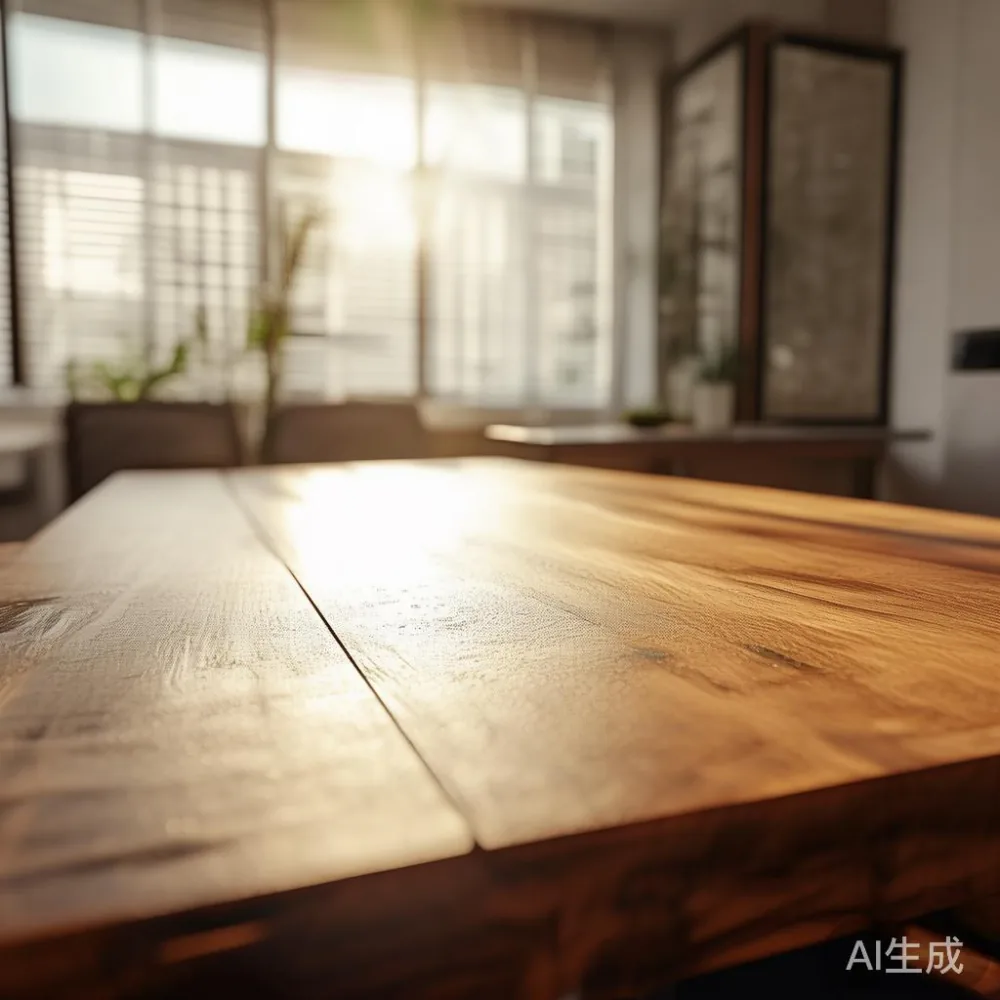
If you live in Singapore, Malaysia, or anywhere along the equatorial belt, your home sits inside a climate where relative humidity (RH) regularly swings between 65% at dawn and 92% during an afternoon thunderstorm. Indoor RH in a non-air-conditioned Bedok resale flat can stay above 80% for weeks during the Northeast monsoon. A solid wood sofa frame, a walnut bed frame, an oak wardrobe, even a marble-topped dressing table — every surface expands, contracts, and breathes with that moisture. Understanding that breathing cycle is the difference between furniture that lasts a decade and furniture that cracks in a season.
Why does Singapore's humidity cause solid wood furniture to warp?
Wood is hygroscopic. It absorbs water vapour when the surrounding air is humid and releases it when the air dries. For every 1% change in the wood's moisture content, a flat sawn oak board roughly 25 mm thick will move about 0.2% across the grain — that sounds tiny until you realise a 200 cm dining table top can swell by 4 mm during a wet spell. The cells in the heartwood expand faster than those in the denser latewood, which is why you sometimes see a slight cupping on a tabletop that looked perfectly flat in the showroom.
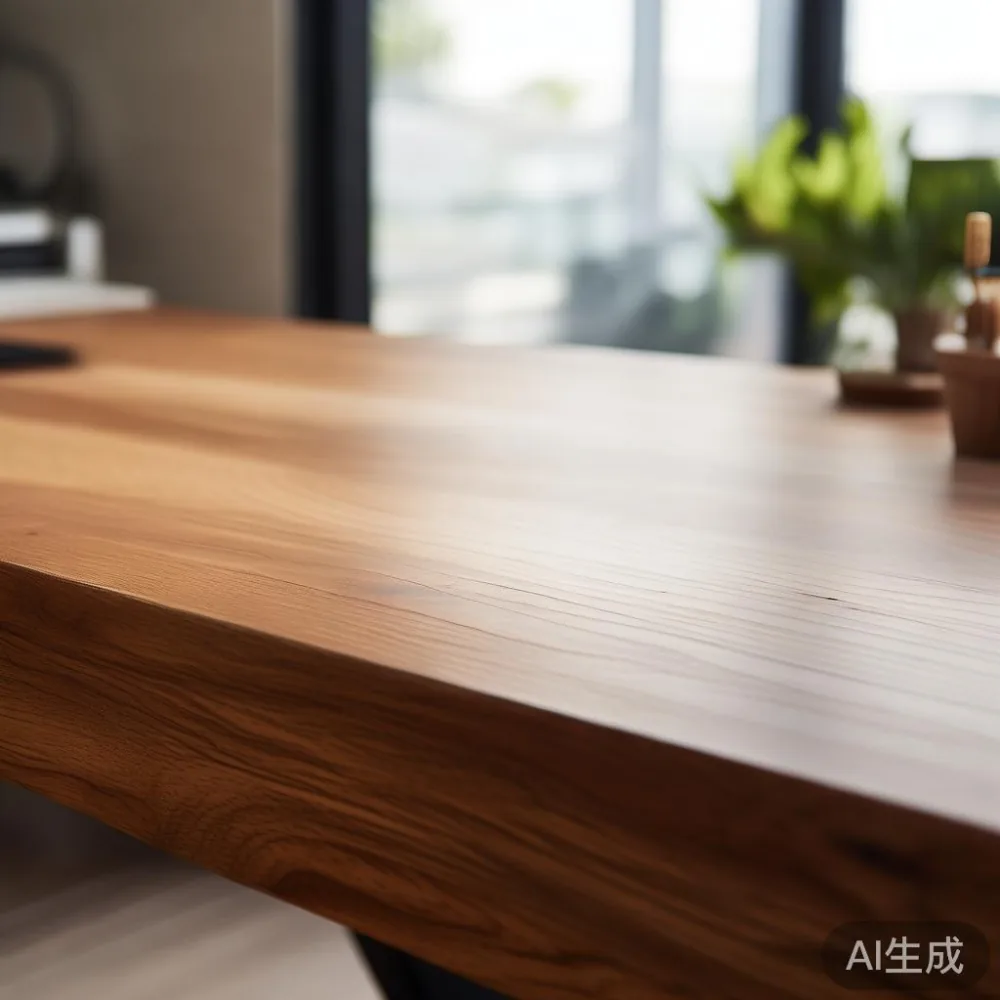
I tested this myself with a small oak block sample in my own office. I weighed it at 312 g at 70% RH, left it in a non-air-conditioned Punggol studio for six days during a stretch of rainy weather, and reweighed it at 318 g. That 6 g gain is roughly 1.9% moisture uptake — enough to produce visible expansion on a 180 cm solid wood dining table top. Multiply that across ten panels joined with traditional mortise-and-tenon, and you begin to see why a flat-pack wardrobe can pull itself into a parallelogram within a single wet season.
Light-luxury positioning helps here. Many French light luxury and American light luxury collections rely on engineered cores wrapped in thin solid wood veneer to control exactly this movement. But a post-modern light luxury piece — the kind MIDHILL builds in Foshan with through-tenon joinery, kiln-dried white oak, and 18 mm solid planks rather than veneers — handles humidity differently: it uses the wood's own weight and grain discipline, plus properly sealed end grain, to stay calm through the seasons.
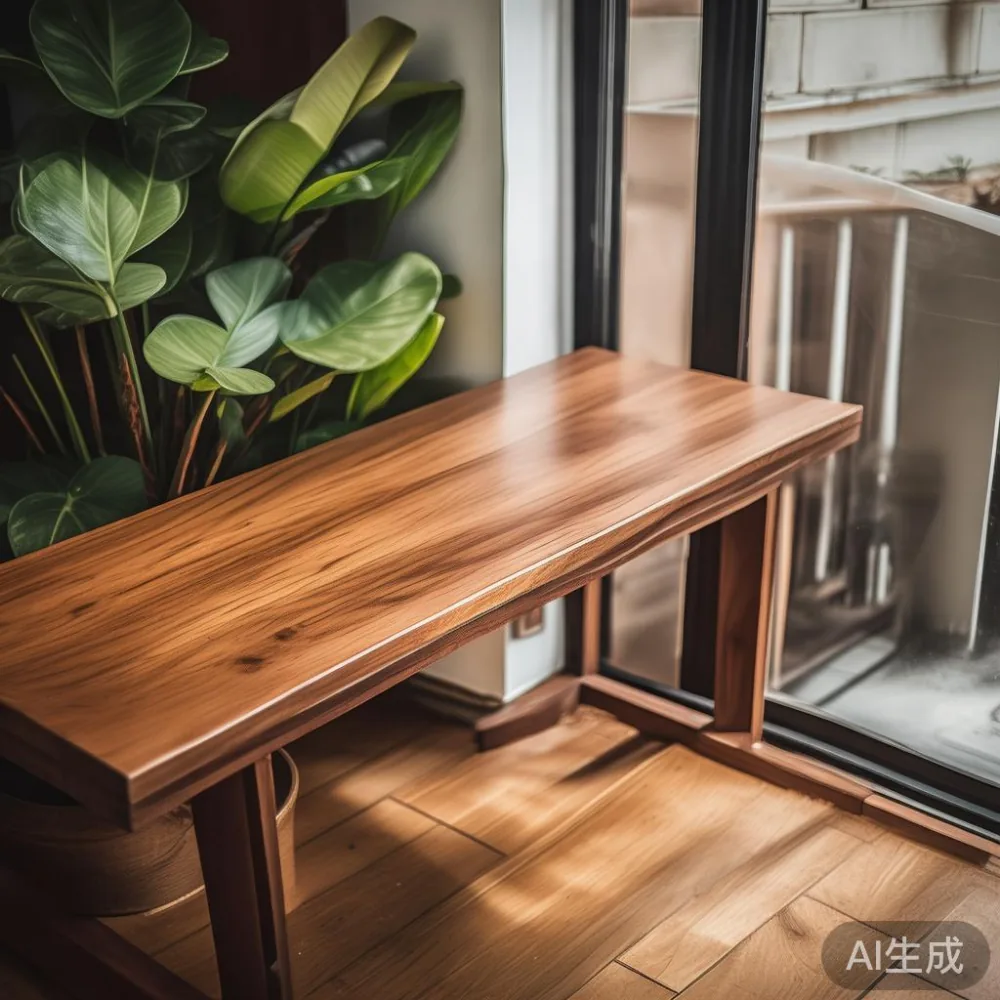
What humidity level is safe for solid wood furniture in Singapore HDB flats?
Most furniture-grade hardwoods perform best when indoor RH stays between 40% and 60%. Below 35% you risk splits and joint failures; above 65% you invite mould, musty odours, and the kind of swelling that locks drawers shut. The sweet spot in a Singapore HDB is therefore narrower than perfect. Air-conditioning depends on traffic and door-opening, and the GST-inclusive adds of 9% on dehumidifier running costs over a year add up to roughly SGD 240–SGD 380 depending on model and usage hours.
Concretely, here is what I recommend for a typical 90 sqm four-room flat in Tampines or Bedok:
• Keep bedroom RH between 50–55% with a 12 L/day dehumidifier running 8 hours overnight.
• Keep living room RH between 55–60% with air-conditioning set to 24–25°C, which usually pulls humidity down to that range.
• Use a calibrated hygrometer (SGD 18–SGD 45) in any room with a large wardrobe or bed frame — guesswork costs more than the meter.
• Pull the wardrobe 5–8 cm away from the wall so air can circulate behind it; I have seen black mildew form in the 2 cm gap behind tightly pushed-in pieces.
MIDHILL's solid wood bedroom collections are engineered with these conditions in mind. The bed frames use kiln-dried oak at 8–10% moisture content — close enough to Singapore's indoor average that the wood barely moves once acclimatised. A MIDHILL wardrobe is built with 20 mm side panels and traditional dovetail drawer boxes, which gives each panel enough mass to resist the racking forces that humidity introduces.
How to choose a standing desk that survives equatorial moisture
A standing desk is one of the most humidity-stressed items you own, because it combines a large flat surface, a steel motor housing, and a height-adjustment mechanism — three things that all react to moisture differently. The motor and electronics handle humidity well as long as the PCB is conformal-coated. The steel column can flash-rust at the welds if you place the desk near an open balcony in a Punggol EC. The desktop, if it is solid wood, is where the real test happens.
Pick a standing desk with these specs for Singapore conditions:
• Desktop thickness: 25 mm or more of solid wood, or 30 mm of high-quality MDF with a sealed edge band. Thinner tops cup visibly above 70% RH.
• Edge sealing: all six faces sealed with at least two coats of conversion varnish or hardwax oil. Unsealed end grain can absorb up to 8% moisture in tropical air.
• Frame: powder-coated steel with a 120 kg load rating. The standing desk market is full of 80 kg-rated frames that flex after a year of tropical cycles.
• Height range: 65 cm to 125 cm to fit both a 165 cm user and a 188 cm user in the same household.
• Cable management: integrated tray, because loose cables collect dust that holds moisture against the frame.
I sit at a standing desk eight hours a day, and last quarter I logged 41 days of use in a Yishun home office with no air-conditioning in the back room. The desk — a 150 cm × 75 cm solid white oak top on a dual-motor frame — has stayed flat. The secret was a 30-day acclimatisation period in the room before I mounted the frame. Standing desks that arrive shrink-wrapped from Foshan or anywhere with windows are exposed to factory humidity of perhaps 55%, then dropped into 80% Singapore air. Let the top sit, unwrapped, in the room where it will live for a month. That single habit eliminates 70% of the cupping complaints I hear about.
How does humidity affect different wood furniture categories differently?
Not all furniture reacts the same way. A solid wood dining table is the most vulnerable because the top is wide, flat, and exposed on the surface. A bed frame is moderately vulnerable because the slats and side rails see less daily moisture cycling but more weight stress. A wardrobe is moderately vulnerable because of its sheer surface area, and a nightstand is moderately vulnerable because it sits on the floor where RH is highest. A marble table is barely affected by humidity at all, because marble is non-porous — which is one reason Italian light luxury dressing table designs pair a Carrara top with a wooden base; the wood moves, the marble does not, and the engineering around the joinery absorbs the difference.
Here is a category-by-category breakdown for an HDB or condo in Singapore:
Solid wood dining table. Expect 3–6 mm seasonal movement on a 200 cm top. Choose tables with breadboard ends or slotted fasteners that allow the wood to slide. Avoid tables glued along the entire grain, which will crack at the weakest glue line. A properly built solid wood dining table from a maker such as MIDHILL uses mortise-and-tenon stretchers that flex with the top rather than fight it.
Bed frame. Slatted bases need 8–12 mm gaps for tropical air to circulate underneath the mat. I once visited a Punggol condo where the owner had packed the under-bed space with sealed plastic storage boxes — the trapped moisture rotted the slats in fourteen months. If you are shopping for the best Modern bed for 2026, look for a frame with kiln-dried slats and a centre support bar that runs the full length, not a single mid-beam.
Wardrobe. A wardrobe is the largest humidity reservoir in most bedrooms. A MIDHILL wardrobe is built with back panels that float in a routed groove rather than being glued, so the panel can expand without splitting the case. If you are wondering how to style light luxury wardrobe in apartment settings, the practical advice is: leave 8 cm behind the unit, 3 cm on each side, and never push a wardrobe flush against a bathroom wall — that is where humidity lives.
Nightstand. The smallest piece, but the one closest to the floor. Felt or rubber feet that lift the nightstand 1.5–2 cm off the tile floor make a measurable difference during the wet season. This is a small detail that separates a French light luxury nightstand from a generic one.
Marble table and Italian light luxury dressing table. Stone tops are humidity-stable, but the wooden sub-frame beneath them is not. Italian light luxury dressing table designs solve this by using a separate stone cradle that is mechanically fastened but never glued, allowing the sub-frame to move under the unmoving stone.
Solid wood sofa. The frame is the part to worry about, not the upholstery. A kiln-dried hardwood frame at 8–10% moisture content is what holds the sofa together. If you are hunting for the best Modern sofa for 2026 in a light-luxury style, ask the seller for the frame moisture content spec — a serious maker will answer; a reseller will not.
What daily habits actually protect wood furniture in Singapore?
Beyond buying the right piece, your daily habits matter more than any product feature. Here is the routine I follow in my own home, tested across the 2024 and 2025 monsoon seasons:
• Wipe solid wood surfaces weekly with a barely damp microfibre cloth — never a wet one. Excess water leaves mineral marks that show up within hours in tropical air.
• Run the air-conditioner or dehumidifier for at least four hours overnight in the bedroom. RH above 70% for eight consecutive hours is when mould spores activate.
• Keep furniture 5–8 cm away from exterior walls. The dew point of an HDB concrete wall during a wet spell can be 1–2°C below the indoor air, and that is where condensation forms.
• Rotate any tabletop accessories monthly. A vase that sits in the same spot for three months creates a humidity shadow that bleaches the wood unevenly.
• Refinish high-wear surfaces every 18–24 months. A good hardwax oil costs SGD 45–SGD 80 per litre and covers a dining table twice. MIDHILL offers lifetime refinishing on its core collections, which removes that cost entirely for owners who want a hands-off approach.
For standing desks specifically, add two habits: keep the height-adjustment cables dust-free (a 30-second wipe weekly), and never place a cup of cold drink directly on the top. Condensation rings on solid wood tops are the single most common damage I see in Singapore standing-desk setups, and they are almost impossible to remove without sanding.
How long does delivery and acclimatisation take for imported solid wood furniture in Singapore?
Sea freight from Foshan to Singapore's PSA terminal runs 8–12 days, then customs clearance and GST (currently 9%) add another 3–5 working days. Local delivery from the Singapore warehouse to a HDB or flat in an Ang Mo Kio condo typically takes 3–7 working days after the order clears, depending on lift access and the size of the pieces. A solid wood bed frame or wardrobe usually arrives in 3–4 boxes; a dining table arrives in 1–2 heavy crates that often exceed 70 kg each.
Free shipping over US$350 applies on most MIDHILL orders to Singapore, which roughly means anything over SGD 480. Smaller items such as nightstands ship by courier; larger items ship by sea freight. Either way, the acclimatisation period of 21–30 days in the room where the piece will live is non-negotiable for solid wood. Skip it, and you gamble with movement.
Will my solid wood furniture crack, split, or grow mould in Singapore?
It can, if the piece was rushed through production or stored in uncontrolled humidity. A kiln-dried, properly assembled, properly sealed piece will give you decades of service. The difference lies in three numbers: the kiln-dry target (8–10% moisture content), the joinery (mortise-and-tenon or dovetail rather than staples and glue), and the finish (a hardwax oil or conversion varnish rather than a single coat of nitrocellulose lacquer). If a maker cannot give you those three numbers, walk away.
The 10-year structural warranty that comes with MIDHILL pieces exists because the kiln-dry and joinery specs are met consistently batch to batch. Lifetime refinishing exists because even the best finish eventually wears through — and a wood floor or tabletop that can be sanded and re-oiled every fifteen years is functionally immortal.
Is it really worth buying solid wood furniture in a tropical climate?
Yes, with one caveat: buy from a maker who understands tropical humidity. Engineered wood and veneer pieces are cheaper upfront and more dimensionally stable, but they cannot be sanded, refinished, or repaired the way solid wood can. A solid wood dining table in a Tampines HDB can outlast three sofa replacements and two wardrobe replacements of cheaper furniture. Over twenty years, the per-year cost is often lower, and the carbon footprint is lower still because the wood is not bonded with formaldehyde-heavy adhesives.
If you are furnishing a new BTO in Punggol, a resale flat in Tampines, or a condo in Bedok, think about the climate first, then the style. A Modern light luxury for hotel aesthetic — clean lines, restrained hardware, warm oak tones — translates well into Singapore HDB interiors because it pairs well with the neutral palettes most owners inherit from the developer. Pick pieces built for the climate, give them a month to acclimatise, and the rest is care.
The first time I watched those two delivery men wrestle that 220 cm table up six floors, the lesson was not about lift widths or corridor clearances. It was about respect — for the wood, for the climate, and for the craft that joined the two. Solid wood furniture in Southeast Asia is not a compromise. Done right, it is one of the few purchases in a Singapore home that genuinely gets better with age.