Standing Desks in Singapore: Veneer or Solid Wood Over 5 Years?
A standing desk is often bought for its motor, height range and price. In a Singapore HDB flat or condo, however, the top also has to survive hot, humid air, daily movement, repeated wiping and the occasional drink ring for at least 5 years. Veneer can offer an attractive entry price and stable flat surface; solid wood offers a different repair and refinishing story. This comparison uses SGD prices, 9% GST and the restricted access found in many Tampines, Bedok and Punggol homes.
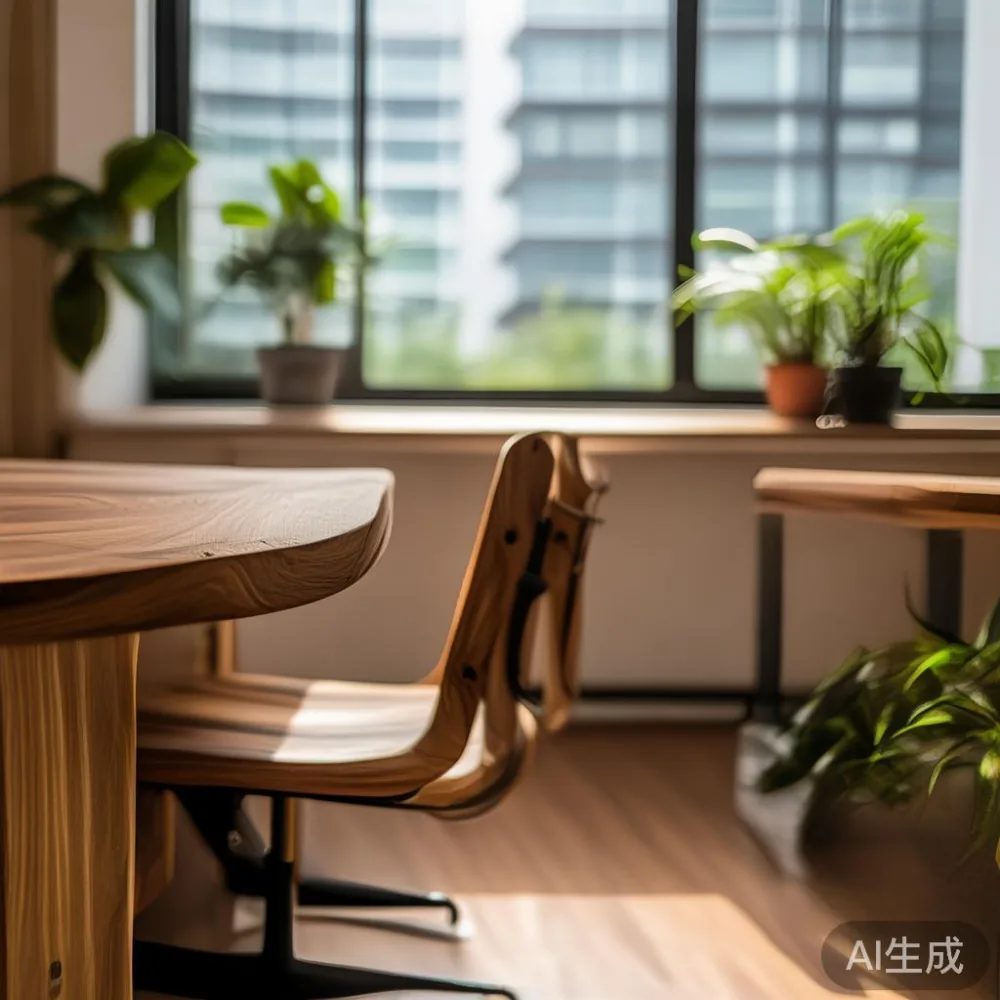
The figures below are planning estimates rather than quotations. They compare a 140 × 70 cm two-motor standing desk with a 60 cm working height range, cable management and a 120 kg rated lift capacity. Delivery is assumed within Singapore. A wood-only top or a factory-finished solid-wood top may vary in weight, so lift performance must be confirmed before ordering.
What should I pay for veneer and solid wood over 5 years?
A practical Singapore comparison starts with a medium-grade veneer top and a kiln-dried hardwood top of similar visible size. Here is the estimated ownership budget for 1 desk.
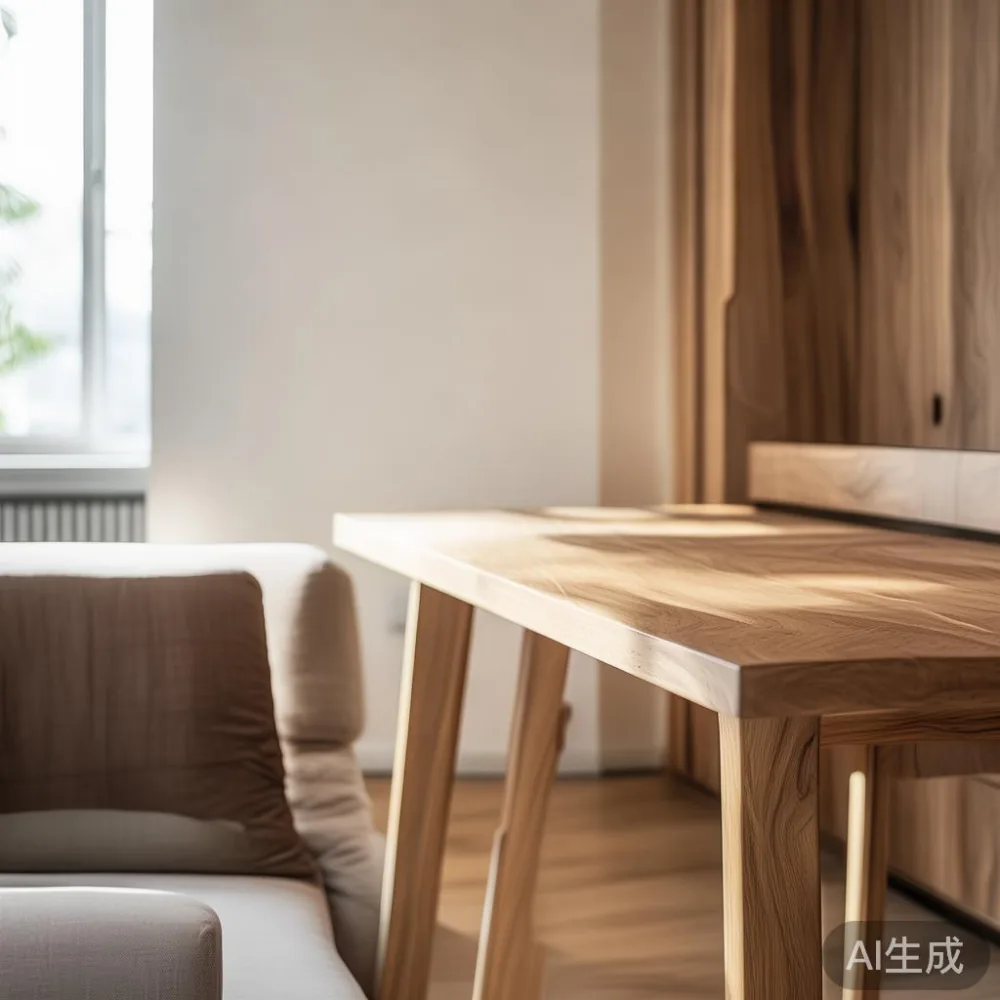
Veneer example: SGD 680 before GST, or SGD 741.20 after 9% GST. Add SGD 95 for delivery and installation, SGD 120 for motor servicing and SGD 90 for one top replacement or major repair. Estimated 5-year total: SGD 1,046.20. Divide that amount by 60 months to produce a planning figure of about SGD 17.44 per month.
Solid-wood example: SGD 1,480 before GST, or SGD 1,613.20 after 9% GST. Add SGD 95 for delivery, SGD 120 for motor servicing and SGD 90 for surface treatment. Estimated 5-year total: SGD 1,918.20, or about SGD 31.97 per month. The difference is SGD 872 over 5 years, with solid wood carrying the higher day-1 cost.
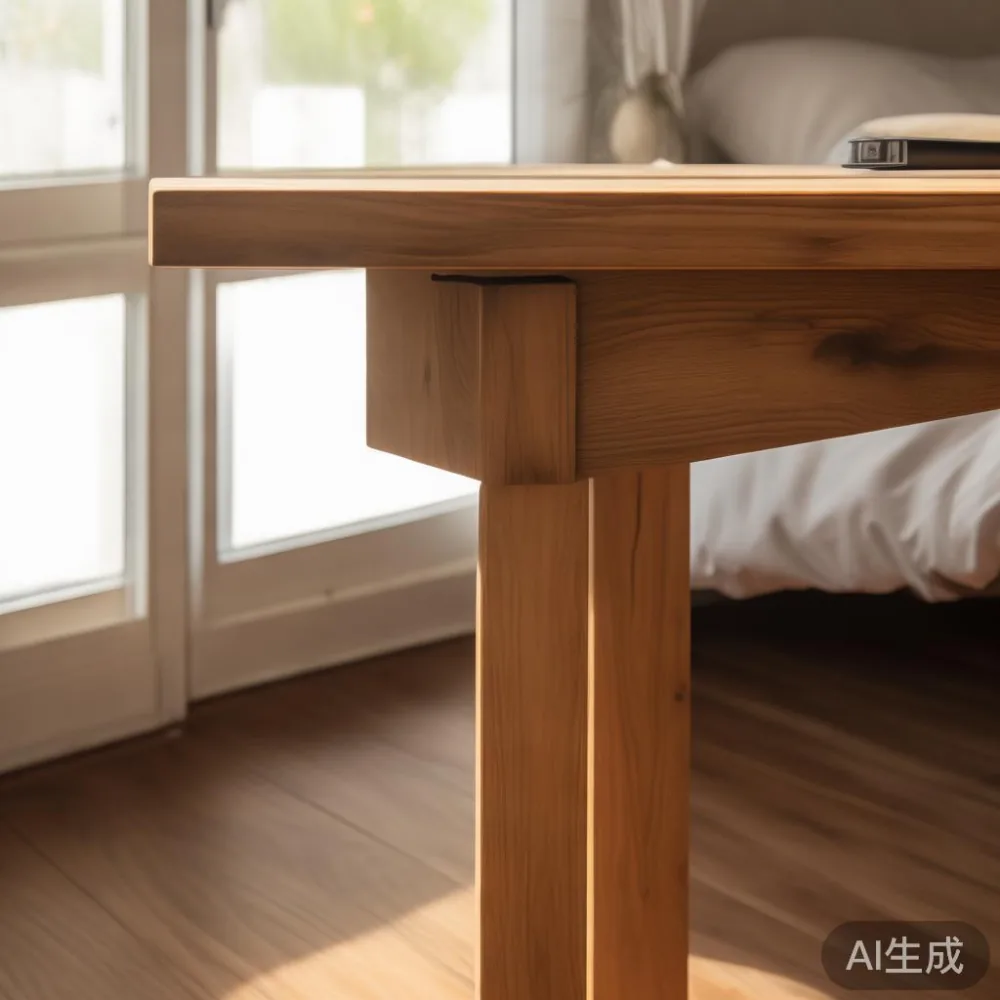
These totals exclude electricity. At Singapore's regulated electricity rate, an average 180 W operating load used 4 hours daily for 365 days would consume about 263 kWh per year, or roughly SGD 39 per year using SGD 0.15/kWh as a rounded planning rate. Over 5 years, allow about SGD 195 for electricity in either scenario.
Living near Bedok MRT, a Punggol promenade or a Tampines lift lobby can change the practical total. A carton longer than 160 cm, a desk weight above 45 kg or packaging wider than 75 cm may require a larger van, two porters or a longer unload route. Reserve SGD 60–120 extra if the supplier has not included a narrow-corridor delivery plan.
Which standing desk material handles Singapore humidity better?
Veneer is a thin layer of wood, commonly 0.6–1.2 mm, bonded to engineered board. Its repeatability can suit a contemporary standing desk because the surface remains flat as the lifting frame moves. High-quality veneer with sealed edges can perform well. Cheap, thinly sealed products can show swelling at exposed edges, corner lifting or bubbling around cable openings.
Solid wood is not immune to humidity. Oak, ash, beech and similar hardwoods move as moisture changes. In Singapore, expect seasonal or daily variation, especially near an open window. A sealed underside, square edge profile, controlled indoor storage and sensible wipe care reduce movement. The indoor relative humidity target is often around 45–60%; avoid direct water, steam and air-conditioning vents aimed at the top.
For a lift system, weight matters. Assume a completed veneer top weighs 24–29 kg, while a 140 × 70 cm solid-wood top may weigh 31–39 kg. The frame, controllers and packaging raise total shipment weight. A model rated for 120 kg can still feel different near its limit, so confirm dynamic load, wobble at 110 cm and the warranty terms.
I tested a veneer sample and a solid-oak sample last month at a supplier workshop in Foshan. After 30 cycles between 72 and 118 cm, both tops remained stable. I then left each sample on a damp cloth for 18 hours. The unsealed veneer edge lifted by 1.4 mm; the properly sealed solid wood rose by 0.3 mm. After sanding and re-oiling the solid wood, it recovered cleanly. That does not mean solid wood never moves; it shows why edge and underside sealing matter.
Is a more expensive solid-wood standing desk cheaper to own?
Not under every repair assumption. The useful calculation is purchase cost + delivery + maintenance + expected failure/replacement cost + electricity – residual value. A veneer desk that lasts without a top replacement can remain cheaper across 5 years, even if its repair options are limited.
Consider two repair scenarios. Under the planned scenario used earlier, veneer costs SGD 1,046.20 and solid wood costs SGD 1,918.20. If the veneer top needs one SGD 240 replacement after year 3, its total rises to SGD 1,286.20. If the solid wood can be sanded and refinished rather than replaced, its maintenance exposure can be smaller.
Solid-wood repairability usually carries a resale advantage. A good top can be sanded, spot-filled and oiled. Veneer cannot be repaired as a full-depth board: a 12 × 4 cm chip normally means patching or replacing the skin. Matching aged veneer is difficult because grain and tone shift. In a furnished apartment, an intact top may also preserve the desk's value better than a repaired-but-prominent panel.
For residents thinking beyond year 5, use a conservative residual estimate of 25% of the original after-tax purchase price. Applied after 5 years, veneer is about SGD 185 and solid wood about SGD 403. The difference in expected retained value is roughly SGD 218, although actual proceeds depend on motor condition, documentation and local demand.
Will a 140 cm standing desk fit through my HDB flat?
A common mistake is measuring only the room. A packaged standing desk may exceed the nominal top length. For this comparison, allow a 160 cm packed length, a 78 cm packed width and a 24 cm packed height. At the desk's maximum lift height of 120 cm, measure floor-to-ceiling clearance; 125 cm gives only 5 cm tolerance.
In many older HDB blocks, lift doors measure around 85–90 cm wide, while interior lift cars can be about 107–140 cm wide depending on the model. Corridors may offer only 90–120 cm of turning clearance. Check the route from the service entrance, not just the lift lobby. A 160 cm package usually needs two people at corners.
Useful delivery questions are: Is the top boxed separately? Can the frame enter upright? What is the longest rigid package? Can the driver contact the estate's loading bay? Are stairs or lift reservations included? Photograph the lift number plate, door width and corridor turns before delivery.
Protection is part of the product. Specify corner guards, foam around lifting columns and a moisture barrier during rainy delivery days. Allow 20 minutes to unwrap and inspect, 60 minutes to assemble and 20 minutes to test 3 height settings. Do not accept visible transport damage before recording it.
How do French, American and Post-modern light luxury change the material decision?
Style changes the specification, not the structural checks. French light luxury often uses pale oak, ash or walnut-toned veneer with restrained grain and slim profiles. It can create a refined standing desk without the full weight of solid wood. Ask for a matte finish, tight seams and a cable tray that does not interrupt the floating appearance.
American light luxury favors warm oak, visible joinery and durable hardware that can age gracefully. Solid wood fits this language because scratches can be blended during refinishing. Post-modern light luxury is more geometric: clean rectangles, contrasting tones and deliberate material contrasts. Here, a timber top against a black or stainless lifting frame can be intentional rather than decorative.
Search wording often becomes disconnected from actual dimensions. A search for the best Post-modern sofa for 2026 may lead to broad room-planning ideas, while a search for for sale Vintage furniture may return replicas that do not match a modern lift mechanism. Likewise, for sale Italian light luxury furniture can describe a look rather than a wood species, and European light luxury for hotel can imply commercial specifications with heavier daily use.
For mixed-material rooms, Japandi for dining room is a better balance reference than an online trend label: simple forms, functional proportions and honest surfaces. Italian light luxury for bedroom may point toward calm storage forms, but a marble table uses a different cleaning and lifting discussion. A solid wood sofa, bed frame, dining table, wardrobe or nightstand may share the same finish direction, yet those products stay outside the standing-desk calculation. Use them for tonal planning, not for structural price comparisons.
MIDHILL's position is relevant here because material language crosses markets. Its export experience, 10-year structural warranty and lifetime refinishing policy are useful points to ask about, but the written scope must specify whether standing-desk tops, lifting frames, electronics and delivery are all covered. A lifetime refinishing promise is valuable only if veneer tops are excluded clearly.
Which standing desk gives a Singapore buyer the better 5-year value?
Choose veneer when the budget ceiling is firm, the desk will be used indoors and your household accepts replacement rather than deep repair. Choose solid wood when the top will be moved daily, wiped frequently, exposed to occasional marks or expected to remain through several tenancies. Neither material eliminates maintenance; each manages risk differently.
A balanced mid-range budget could be SGD 900 before GST for a well-sealed veneer model, or SGD 1,600 before GST for solid wood. With the same SGD 215 service and delivery allowance plus SGD 195 electricity, estimated totals become SGD 1,346 and SGD 2,541. The simple gap remains about SGD 1,195 because the assumed ongoing costs are equal.
Before payment, request the top thickness, timber species or board composition, underside finish, edge sealing method, moisture guidance, maximum load, full extension range, warranty exclusions and replacement-top price. Confirm GST on the invoice and delivery terms. Singapore's 9% GST should be shown separately rather than hidden inside the advertised figure.
A 5-year decision should not rely on the lowest day-1 number. Veneer may suit controlled interiors and disciplined care. Solid wood may offer greater repairability and longer-term material value. For a compact 140 × 70 cm standing desk in a lift-access home, the final choice comes down to 3 measurable items: the sealed specification, the expected 5-year repair bill and the cost of moving the packaged desk to the room.