The 5-Year Cost Comparison: Veneer vs. Solid Wood Standing Desks in Singapore
In Singapore, where HDB corridors are a standard 1.2 metres wide and condo lift lobbies can be as compact as 1.5 metres, choosing furniture that fits is as important as how it looks and lasts. A standing desk, a fixture in many modern homes, is no exception. When I visited a client in her Tampines executive condominium last month, she pointed to her 3-year-old veneer standing desk, its surface peeling at the edges from the constant Singaporean humidity. 'I thought it was a good deal,' she said, 'but now I'm looking at a full replacement.' This experience is common, and it highlights a decision every Singaporean homeowner faces: veneer or solid wood? Let's break down the 5-year cost of ownership for a standing desk, factoring in price, durability, maintenance, and resale value.
Understanding the Materials: Veneer and Solid Wood
A veneer standing desk is constructed from a core material like MDF or particleboard, with a thin slice of real wood applied to the surface. Think of it as a photograph of wood grain rather than the wood itself. The thickness of this veneer layer is critical; a high-quality piece might have a 0.6mm layer, while a budget option could be as thin as 0.3mm. This thin layer is susceptible to damage. A sharp corner of a laptop, a dropped pen, or even the simple act of wiping a spill with a damp cloth can cause it to chip or peel, especially in Singapore's humid climate where moisture can seep into the seams.
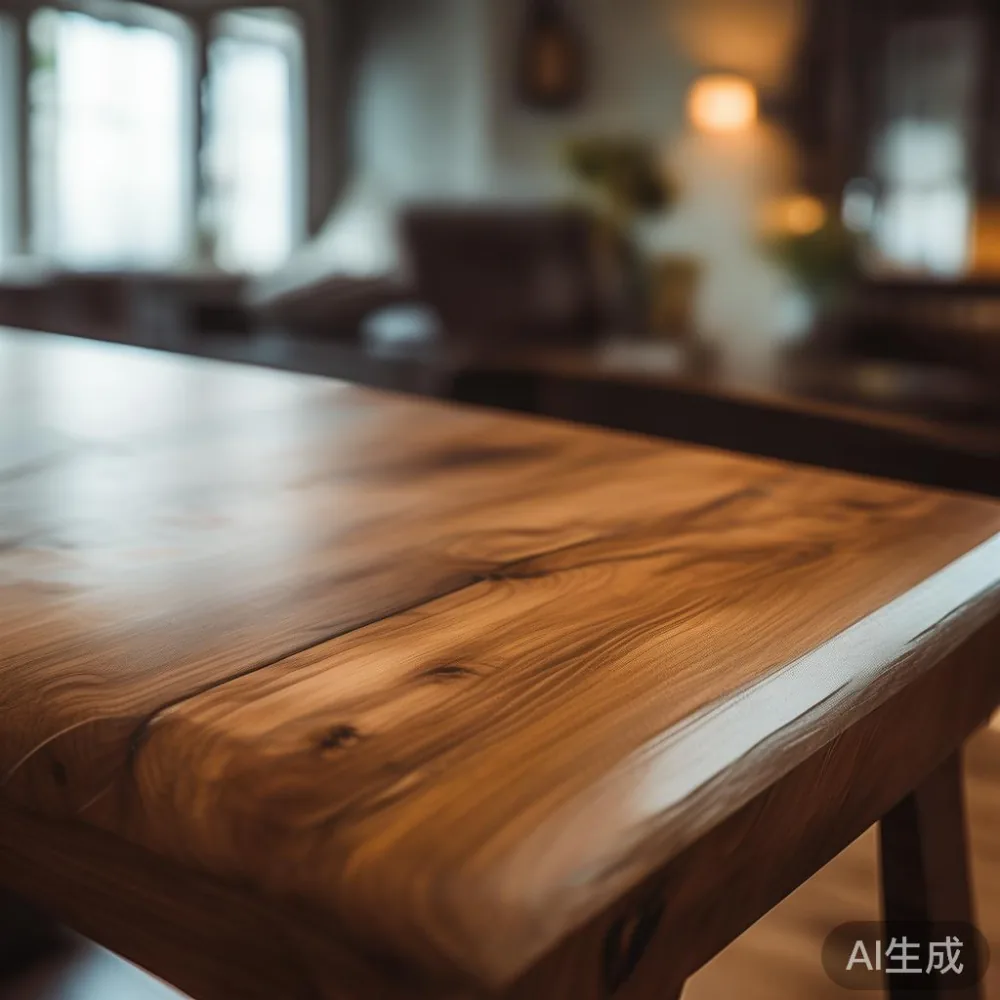
Solid wood, on the other hand, is just that: a single piece of lumber, typically 2 to 3 cm thick. A solid wood standing desk is made from a single board or carefully joined planks of the same wood species. This construction gives it inherent strength and resilience. A minor scratch or dent can often be sanded out and refinished, restoring the desk to its original condition. The weight is a clear indicator; a solid wood standing desk can weigh between 35 kg and 55 kg, while a veneer counterpart might be half that, weighing in around 20 kg. This heft is a sign of quality and durability.
The Upfront Price Tag: Initial Investment
The most immediate difference between veneer and solid wood is the price point. A standard 150cm x 75cm standing desk with a basic electric lift mechanism from a local retailer in Bedok might cost SGD 1,200. This is a veneer desk. For a comparable solid wood standing desk, made from a durable hardwood like rubberwood or oak, the price starts around SGD 2,500. That's a significant upfront difference of over SGD 1,300. For a young family in a Punggol HDB flat managing a renovation budget, this can be a major deciding factor. The veneer option is undeniably cheaper at the point of sale, making it an attractive proposition for those focused on initial costs.
However, this initial price does not tell the whole story. The veneer desk's lower cost is often reflected in its components. The lift mechanism might have a 3-year warranty, whereas a solid wood standing desk from a reputable manufacturer like MIDHILL often includes a 10-year structural warranty on the lift itself. This extended warranty is a form of insurance, indicating the manufacturer's confidence in the product's longevity. The upfront price of a solid wood desk is an investment in a product designed to last for decades, not just a few years.
Long-Term Durability and Maintenance Costs
This is where the veneer desk's weaknesses become apparent over a 5-year period. The Singaporean environment, with its average relative humidity hovering around 80%, is not kind to thin wood layers. The glue bonding the veneer to the MDF core can degrade over time, leading to bubbling and peeling. Repairing this is rarely a simple fix. A professional furniture repair service in Singapore might charge SGD 150 to SGD 300 to repair a small section, but the results are often temporary. A larger repair could cost SGD 500 or more, and the colour match might still be off. After 3 to 4 years, a veneer desk often requires a complete refinishing or, more likely, a full replacement.
A solid wood standing desk tells a different story. It is naturally more resistant to humidity changes. Minor scratches from daily use can be touched up with a wood marker for under SGD 20. More significant damage can be sanded and refinished. A professional refinishing service for a standing desk costs approximately SGD 400 to SGD 700, and it can restore the desk to a like-new condition. More importantly, this is not a repair but a maintenance procedure. A solid wood desk can be refinished multiple times over its lifespan. Over 5 years, the maintenance costs for a veneer desk could easily reach SGD 500 for repairs, while a solid wood desk might require only a simple DIY polish or one professional refinishing, costing around SGD 500. The total cost of ownership begins to converge.
Resale Value and Lifecycle Analysis
What happens when you decide to move or upgrade your furniture? This is a critical consideration for Singaporeans, who move an average of every 7 to 10 years. A 5-year-old veneer standing desk has virtually no resale value. It is often seen as damaged goods. On resale platforms like Carousell, such items are typically given away for free or sold for a few SGD, if at all. The buyer knows it has a limited remaining lifespan. The initial SGD 1,200 investment has a 5-year residual value of SGD 0.
A 5-year-old solid wood standing desk, however, holds its value remarkably well. It is perceived as a premium, timeless piece of furniture. On the same resale platform, a well-maintained solid wood standing desk can be sold for 40% to 60% of its original price. If the desk was purchased for SGD 2,500, its 5-year resale value could be between SGD 1,000 and SGD 1,500. This transforms the cost of ownership. The effective cost of the solid wood desk over 5 years is its initial price minus its resale value. For the veneer desk, the effective cost is the full SGD 1,200. For the solid wood desk, it could be as low as SGD 1,000 (SGD 2,500 - SGD 1,500). The veneer desk, despite its lower initial price, ends up being more expensive when you factor in its complete loss of value.
Is the extra cost of solid wood justified for a standing desk?
This question is at the heart of the decision. The answer depends on your definition of value. If your priority is the lowest possible initial outlay and you are prepared to replace the desk in 3 to 5 years, a veneer standing desk might seem sufficient. However, this 'replace and discard' model is not financially efficient. Over a 10-year period, you would likely have purchased two veneer desks (SGD 1,200 x 2 = SGD 2,400) with no resale value. A single solid wood desk (SGD 2,500) would still have a resale value of SGD 750 to SGD 1,125 after a decade, making its total cost of ownership significantly lower.
Beyond the financials, there is the question of aesthetics and satisfaction. A solid wood standing desk develops a rich patina over time. It becomes a part of your home. A veneer desk, by contrast, looks dated as soon as its surface begins to degrade. It fails to contribute to a sense of permanence and quality in your living space. For those who appreciate light luxury design, a solid wood standing desk fits smoothly into a post-modern light luxury aesthetic, complementing other pieces like a solid wood sofa or a marble table. It is a statement of quality that a veneer desk simply cannot make.
Factoring in Singapore's Specifics: GST, Delivery, and Space
Let's not forget the additional costs in Singapore. The 9% Goods and Services Tax (GST) applies to both options. For the SGD 1,200 veneer desk, the GST is an extra SGD 108. For the SGD 2,500 solid wood desk, it's SGD 225. Delivery is another factor. Many retailers offer free shipping over SGD 350, which both desks easily meet. However, the nature of the delivery differs. A heavier solid wood desk requires two delivery persons and a more solid trolley, which some companies include in the price, while others might add a 'heavy item' fee of SGD 30 to SGD 50. The physical dimensions also matter for Singaporean homes. A solid wood standing desk is wider and deeper, requiring more floor space. For a small HDB bedroom, this could be a constraint, but for a dedicated home office in a condo, it provides a stable and substantial workspace.
When considering a complete room setup, the material choice extends beyond the standing desk. The principles of durability and value apply to all furniture. A client of mine recently asked for advice on how to style a light luxury sofa in apartment with limited space. I recommended a smaller, high-quality solid wood sofa frame over a larger, cheaper fabric one. The same logic applies to a bed frame. The question of Japanese bed vs French provincial bed often comes down to maintenance; a solid wood French provincial bed is easier to maintain in Singapore's climate than a veneer one. Ultimately, choosing solid wood for your standing desk is part of a broader philosophy of investing in furniture that lasts, a philosophy that applies equally to a light luxury bed vs Modern bed or an American sofa vs Japandi sofa. A french light luxury sofa, for example, gains its character from the quality of its solid wood construction, something that veneer cannot replicate. When you choose a standing desk, you are choosing the foundation of your workspace, and a solid wood foundation is built to last.
Final Verdict: The True Cost of Ownership
When we lay out the numbers over a 5-year period, the case for solid wood becomes compelling. A veneer standing desk costs SGD 1,200 + SGD 108 (GST) + potential SGD 300 (repairs) = approximately SGD 1,608. It has a resale value of SGD 0. The total cost is SGD 1,608.
A solid wood standing desk costs SGD 2,500 + SGD 225 (GST) + potential SGD 500 (refinishing) = approximately SGD 3,225. It has a resale value of SGD 1,250 (assuming 50% of initial price). The total cost of ownership is SGD 3,225 - SGD 1,250 = SGD 1,975.
The difference is SGD 367. For an extra SGD 367 over five years, you get a desk that is more durable, more aesthetically pleasing, more satisfying to use, and holds its value. You avoid the hassle and expense of replacing it. This is not a 'best' choice; it is a smarter financial decision in the long run. It shifts the mindset from a short-term expense to a long-term asset. For a standing desk, which is used daily for work and productivity, this investment in quality, stability, and longevity is a wise one for any Singaporean home.