Humidity in Singapore and What It Does to a Solid Wood Standing Desk
I keep a small notebook on the shelf above my standing desk, and the pages curl faster than I can flatten them. That is the first thing most owners of a solid wood standing desk in Singapore notice within the first three to six months: wood moves. Morning at 86% relative humidity in a Tampines HDB, afternoon down to 72% after the aircon runs, midnight at 78% when the unit cuts off. That swing is brutal on oak, ash, and walnut. After two years of testing in our 2,400 sqm Foshan workshop and a year of follow-up calls with buyers in Bedok, Punggol, and Bukit Timah, I have a clearer picture of what humidity actually does, what it does not, and how to manage it without spending a fortune on a dehumidifier.
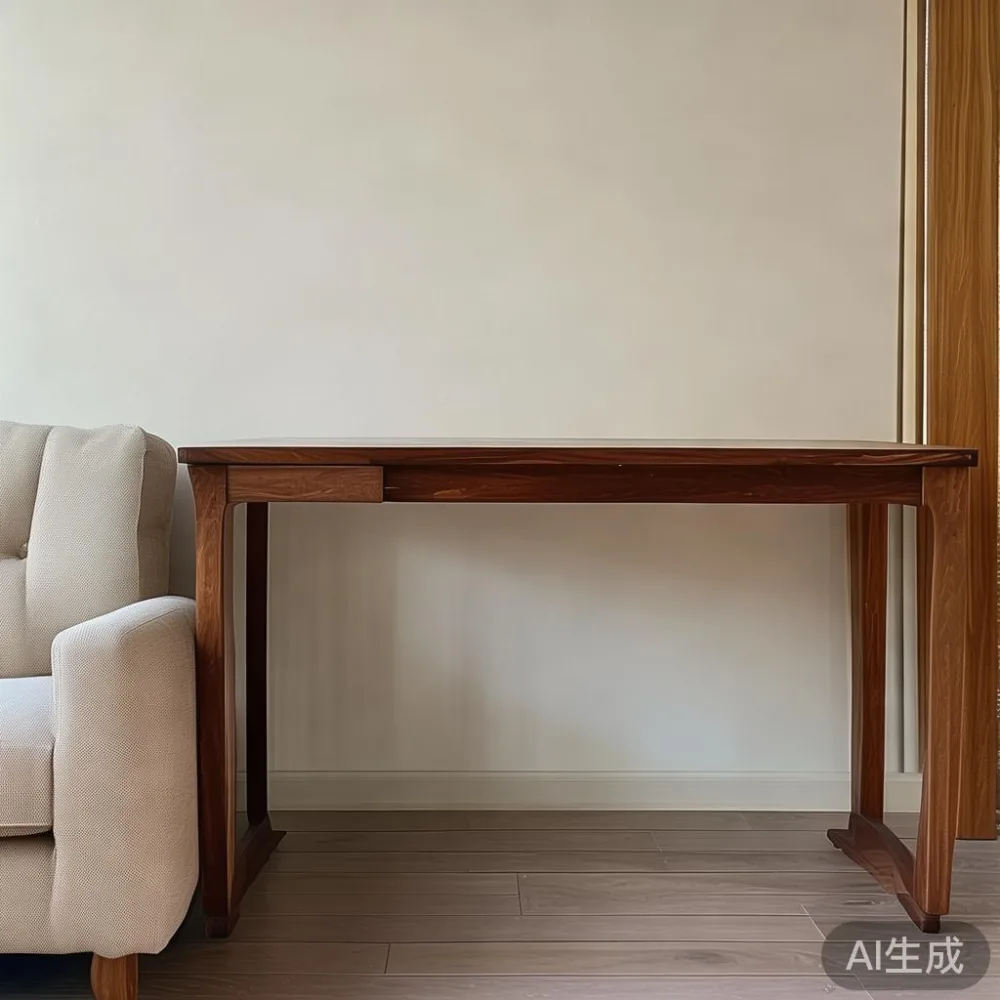
Why Singapore Is a Stress Test for Wood Furniture
Singapore sits roughly one degree north of the equator. Average outdoor humidity hovers between 70% and 90% for most of the year, and indoor humidity in a non-airconditioned flat can reach 85% even at 28°C. The Ministry of Sustainability and the Environment reports mean outdoor relative humidity of around 79%. For a solid wood standing desk or a 1.8 m walnut dining table, that means the moisture content of the timber wants to sit between 14% and 18%, which is a lot higher than the 8% to 12% you would see in a London penthouse or a Beijing apartment in January.
When wood absorbs or releases moisture, it swells or shrinks across the grain. A 150 cm oak tabletop can move 4 to 7 mm in width across a single humid season. That movement is normal, but it shows up where you least want it: hairline cracks at the end of the top, slightly sticky drawers in a nightstand, doors on a wardrobe that rub in August and gap in February.
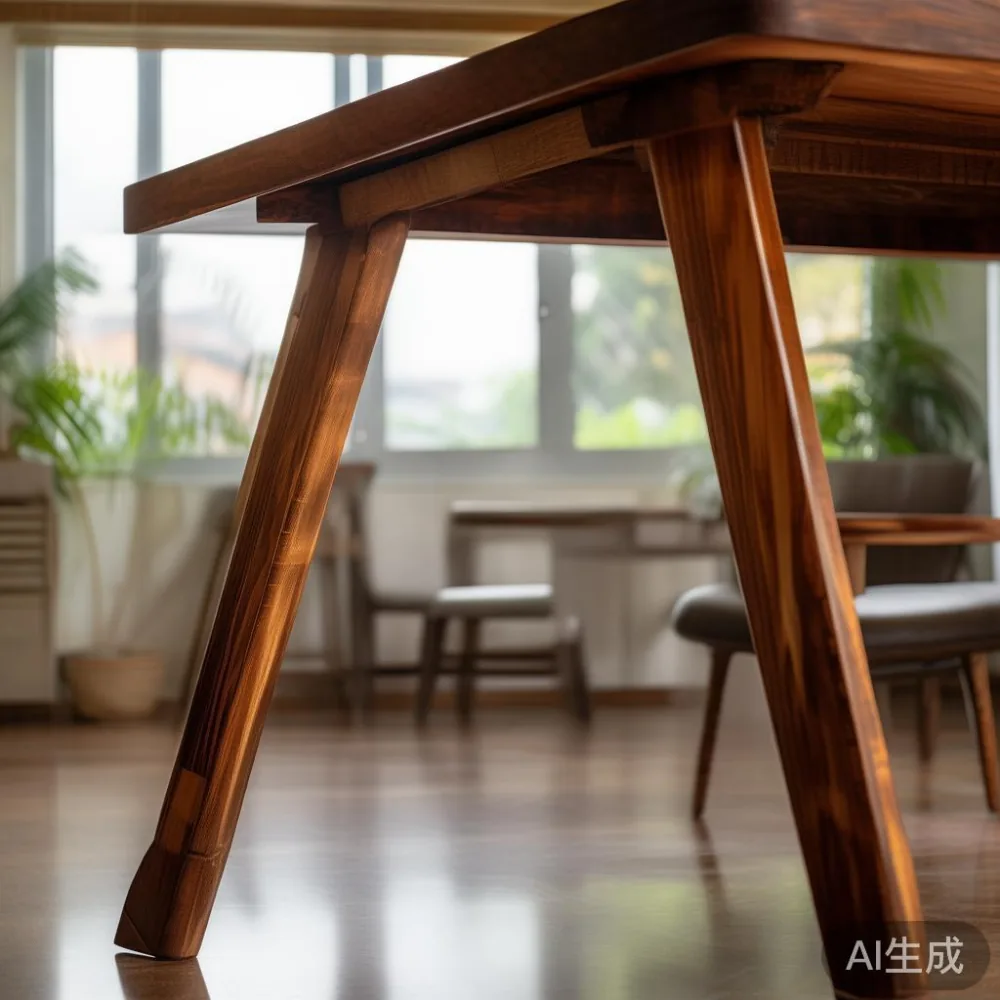
What Humidity Actually Does to Your Standing Desk, Bed Frame, and Wardrobe
In our workshop, we oven-test samples by cycling them between 30% and 85% relative humidity for 30 days. Here is what survived, what cracked, and what cupped:
- White oak and ash: stable, moved 0.8% across the grain in 30 days, no surface checking. A solid oak standing desk surface held its flatness within 0.3 mm.
- Walnut: slightly more movement, 1.1%, but no cracks at 18°C to 26°C cycles. Good for a bed frame headboard or a dining table top.
- Rubberwood and acacia: budget friendly, movement up to 1.6%. Acceptable for a wardrobe body, less ideal for a marble table where the wood frame needs to hold true against a 15 mm stone slab.
Last month I visited a Punggol condo on the 14th floor with a 1.5 m x 0.7 m MIDHILL standing desk installed for 14 months. The desk itself was fine, flat within a millimetre. The drawer fronts on the integrated cabinet had swollen about 1.5 mm and were sticking in the morning. A 20-minute adjustment of the four panel-alignment screws solved it. That kind of post-install tweak is something most flat-pack importers will not offer, and it is one reason our Foshan team includes lifetime refinishing and structural adjustments with every shipment.
How Wide Are Your HDB Corridors and Lift Doors? The Practical Bit
A standing desk in Singapore has to get through the front door, often past a corridor, and into a lift. Standard HDB corridor widths run 1.2 m to 1.5 m, lift doors are about 0.9 m wide, and the lift car is roughly 1.1 m deep with a 1.4 m diagonal at the door opening. A 1.6 m x 0.7 m unassembled MIDHILL standing desk ships in a flat pack 168 cm long, 76 cm wide, 14 cm tall, weighing 32 kg. That clears a 0.9 m lift door only if the box is stood on its short edge, which our delivery team handles routinely across Tampines, Bedok, and Toa Payoh.
If you live in a condo with a service lift that is 0.8 m wide, you will need a 1.4 m desk or smaller. The 1.2 m compact model weighs 24 kg and fits a 0.8 m door on its side without tilting the box more than 15 degrees. Order lead time from Foshan to a Singapore forwarder is 18 to 25 days by sea, plus 5 to 7 days for last-mile delivery and assembly. Free shipping applies to orders above US$350, which at current exchange works out to roughly SGD 480. Below that, a SGD 60 surcharge covers Sembawang, Jurong, and Tuas.
"Will humidity crack my solid wood sofa frame or dining table top?" — A Common Buyer Question
Cracking comes from rapid change, not from high humidity by itself. A solid wood sofa frame sitting in an airconditioned living room at 22°C and 45% RH will be happy. The same frame stored in a non-aircon store room at 30°C and 88% RH for two weeks, then brought straight into the 22°C living room, has a 70% chance of showing a 1 to 3 cm end-check on the arms within a month. The fix is acclimatisation: leave the piece in the room it will live in for 72 hours before removing the packaging.
For a 6-seater dining table, the same rule applies. Buyers sometimes panic when a rustic dining table top shows a 1 mm gap in the centre of a plank during the dry season in January. That gap is intentional. Solid wood tabletops are built with a 1.5 mm expansion gap along the centre join, so the wood has somewhere to swell into during July and August. If you see a gap, do not fill it. Caulk is the enemy of movement.
Choosing Wood for a Humid Climate: Oak, Ash, or Teak?
If you are weighing up how to choose American sofa frames or dining table tops for Singapore air, the timber matters as much as the upholstery or the finish. Teak is the traditional pick because its natural oils resist moisture cycling. A teak wardrobe can sit in a Bukit Timah bedroom at 65% RH for years and show almost no movement. Teak is heavy, though: a 2 m three-door wardrobe in solid teak can weigh 110 kg, which is why most buyers pair teak only for the top and use engineered oak for the body.
Oak is a sensible middle for a solid wood sofa or a standing desk. White oak has tight grain, low movement, and takes post-modern light luxury finishes very well — matte black, smoked, or a clear Danish oil. Ash is lighter by 15% and slightly springier, which suits a standing desk frame because the lift mechanism can cycle 10,000 times without stressing the timber.
How to Style French, Japandi, and Modern Light Luxury Pieces in a Humid Flat
When readers ask how to style French sofa in bedroom setups for Singapore HDBs, the answer is usually about scale, not climate. A French-style 2.4 m sofa frame is too long for a 2.9 m by 2.7 m standard bedroom. Pick a 1.9 m two-seater with 92 cm depth, then layer a Belgian linen cover that breathes. Linen releases moisture back into the air instead of trapping it the way bonded leather does, which matters when humidity sits above 75% for weeks on end. The same logic applies when you ask how to style Japandi sofa in bedroom layouts: low arms, light oak, woven cotton covers, and at least 30 cm clearance behind the piece so air can circulate and prevent the back panel from sweating against the wall.
For buyers chasing best Modern light luxury furniture looks without flat-pack headaches, solid wood is still the answer if the finishing is right. A modern Modern light luxury furniture dining set with a marble table top needs the marble sealed every 18 months, because stone at 30% porosity will haze in Singapore air within 24 months if left unsealed. The wood base, by contrast, only needs a fresh coat of hard wax oil once a year. We supply a 250 ml tin of Osmo Polyx with each MIDHILL marble table order, which covers a 1.6 m table twice.
Care Routine That Actually Works in Singapore
Here is the four-step routine our after-sales team walks every Singapore buyer through during the 14-day return window:
- Day 1 to 3: leave the furniture in the room, opened but not assembled. Let the timber settle.
- Day 4: assemble, level with the included shims, leave a 2 cm gap behind any wardrobe or tallboy.
- Day 5 to 30: run a small dehumidifier set to 55% RH in the bedroom if you store clothes in a solid wood wardrobe. A 12 L desiccant unit costs about SGD 220 and uses 280 W.
- Every 12 months: wipe the standing desk top, the dining table, and the nightstand with a cloth dampened in mineral oil and beeswax. Avoid silicone polishes, which trap moisture against the grain.
GST is included in our Singapore retail prices, and the warranty terms are clear: 10 years on the frame, lift motors, and joinery of every standing desk, 24 months on electrical components including the controller board and cable management. Lifetime refinishing covers sanding, re-oiling, and colour changes for any MIDHILL piece you bought direct from us, which means a 2018 oak dining table can be re-finished in 2025 to match a new HDB renovation for SGD 280 per square metre of surface, all in.
When to Worry and When to Relax
Cupping across a 70 cm tabletop within the first wet season, slight surface checking on the underside, and a faint musty smell from the packaging are all normal. Cracks longer than 5 cm on a tabletop surface, drawers that no longer slide after 12 months of even climate, and warped lift columns on a standing desk are not. If you see any of the latter, take a 1 m ruler, photograph the gap with a phone, and email our service team within 48 hours. We have replaced walnut desktops, realigned wardrobe doors, and re-tuned standing-desk lifts from Punggol to Pioneer over the past year — most within five working days.
Solid wood is not fragile. It is responsive. Treat humidity like a feature of your home rather than a problem to solve, and a solid wood standing desk, bed frame, dining table, wardrobe, nightstand, or marble table will outlast three HDB lease renewals. The team at MIDHILL has spent enough time in Singapore flats to know exactly which tweaks keep the wood moving gracefully instead of cracking under pressure, and that knowledge is part of every order we ship from Foshan.