Solid Wood Furniture Pricing: Timber, Construction, Size, and Finish Explained
Solid wood furniture is often priced as one broad category, yet two pieces carrying the same label can differ by several hundred or even several thousand Singapore dollars. The difference usually lies in the timber species, the dimensions, the joinery, the surface treatment, the hardware, and the amount of labour required to make each piece fit for long-term use. For shoppers in Tampines, Bedok, Punggol, and other Singapore homes, delivery constraints and GST can also change the final figure.
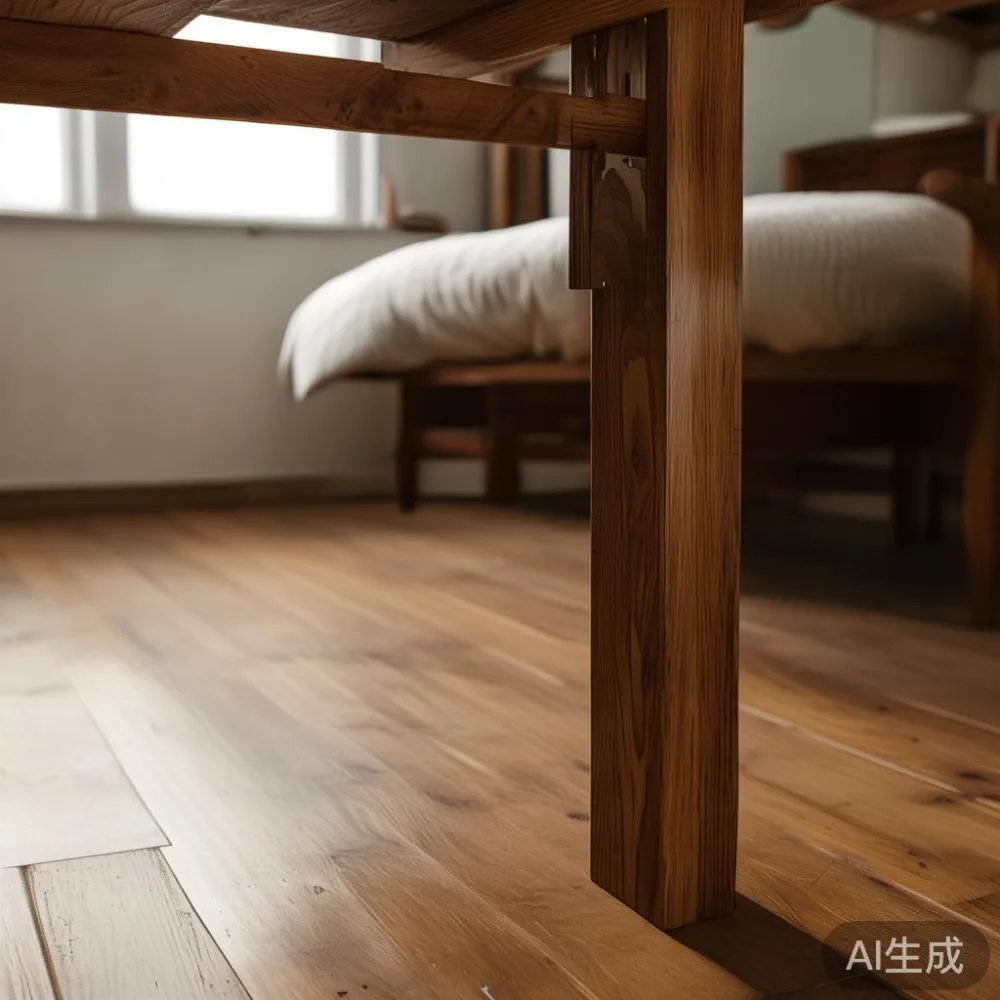
Understanding these variables is especially useful when comparing a solid wood sofa, bed frame, dining table, wardrobe, nightstand, or marble table. The same principles apply to a standing desk, where the frame, lifting mechanism, top, controls, and footprint affect both price and practicality. Rather than treating a low number as the only buying criterion, it is better to see where every dollar is allocated.
Is solid wood automatically expensive?
No. “Solid wood” describes the material in the visible main components, not one uniform level of craftsmanship. A straightforward bedside table made from rubberwood may cost SGD 180, while a larger nightstand made from white oak with a shaped drawer, solid-wood runners, and a hand-rubbed finish may cost SGD 420. A 180 cm solid wood dining table might be quoted at SGD 1,280, while a 240 cm table in a denser timber with a breadboard top and more involved joinery might reach SGD 2,650.

The timber itself is only part of the calculation. A board’s grade, thickness, length, and defect profile determine how much usable material remains after cutting. For example, a dining table top requiring 6 boards at least 22 cm wide is less wasteful than one needing 11 narrow strips. The offcuts still matter: timber has a value beyond the finished piece.
Local housing conditions also affect sensible sizing. Many HDB dining rooms support a 140 cm or 160 cm table with 6 chairs, while a 200 cm table can restrict circulation in a compact Tampines flat. A standing desk should be checked against the actual desk position, not merely the room width. A typical model occupies 120 cm by 60 cm, with a lifting range of about 65 cm to 125 cm. The chair needs roughly 70 cm of pull-back space, and a person using it needs about 60 cm of leg clearance beneath the top.
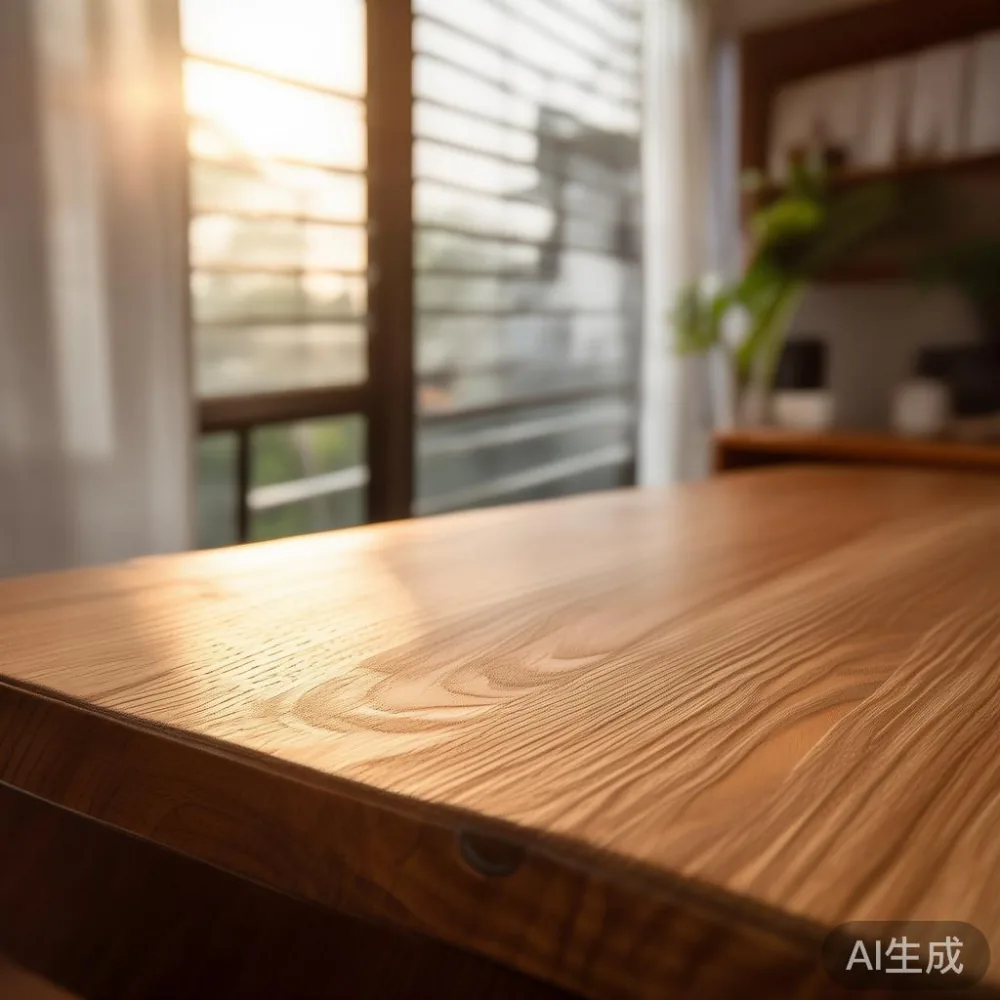
These measurements are more than decorative details. Choosing an oversized dining table or standing desk for a small apartment may add delivery coordination, dismantling, and installation charges even when the item itself is well made.
What kind of timber makes furniture cost more?
<Species fall into several broad groups, although prices vary by grade and supply. Rubberwood, pine, and poplar are common lower-cost choices. Malaysian hardwood, acacia, ash, and beech occupy the middle range. White oak, walnut, teak, and other carefully selected timbers generally command higher prices because of appearance, density, availability, and processing demands.
One cubic metre of oak is not directly interchangeable with one cubic metre of pine in finished performance. Oak is heavier, harder to machine consistently, and often selected for stronger figure. A 45 kg solid wood dining table in oak feels materially different from a 32 kg version in rubberwood. The price difference may include seasoning time, wider waste allowances, slower cutting, and more demanding finishing work.
Wood movement is another factor. Solid timber expands and contracts as humidity changes, so makers must use stable joinery rather than simply gluing every component into a rigid shell. A well-built solid wood bed frame may use mortise-and-tenon joints, dowels, or another mechanical connection that allows limited seasonal movement. A wardrobe may use adjustable hanging hardware and carefully aligned doors. These construction choices add time, but they influence service life.
It is also important to distinguish solid wood from veneer, MDF, or laminated board. Veneer can be appropriate for curved or stable panels, while engineered board can work in concealed parts. The real issue is whether the product description identifies the materials accurately. For a solid wood sofa, the frame should be named, the seat construction disclosed, and the density of the filling stated where possible. Transparency prevents a customer from paying for a misleading material claim.
How much do dimensions and solid-wood construction affect the price?
Weight and volume provide a practical, although imperfect, guide. A dining table with a 200 cm by 90 cm top and four 7 cm legs may weigh 48 kg. Doubling the top area does not double the labour, but it does increase timber volume, finishing surface area, handling, and freight weight. A 220 cm wardrobe may contain more than twice the board area of a 100 cm bedside unit.
Joinery is where solid-wood construction becomes easier to assess. A drawer assembled with dovetail joints has more cutting and fitting work than one with simple screws and dowels. A bed frame with a slatted base may cost more than a visually similar frame with a thin panel because each slat must be sized, spaced, and secured. For example, a queen bed frame may use 12 to 14 support slats at intervals of 4 cm to 6 cm.
The standing desk category provides another useful example. A fixed-height desk with solid wood legs and a 120 cm top may be priced around SGD 420. A dual-motor standing desk with a 140 cm top, 80 kg lifting capacity, four memory controls, and a 65 cm to 125 cm range may be SGD 780 to SGD 1,180, depending on the wood, control system, and frame construction. If the top is replaced with marble, the added weight can narrow motor choices and require reinforced mounting. That is why a marble table price cannot be judged from its material name alone.
In last month’s visit to a Singapore woodworking supplier in Woodlands, I tested several sample joints while the workshop explained its process. I found that the apparent premium came from setup time rather than dramatic material cost. Cutting 16 dovetail joints for 2 drawer sides took about 35 minutes after careful marking; assembling the same 2 sides with dowels took 9 minutes. That 26-minute difference does not appear on a price tag, but it represents skilled labour, accurate alignment, and fewer assembly errors.
Do French, American, or post-modern light luxury styles cost more?
Style affects cost through complexity, not because one label is automatically superior. French light luxury often uses curved profiles, carved details, tapered legs, upholstered surfaces, and pale or warm finishes. American light luxury tends toward generous proportions, clean lines, substantial frames, and performance upholstery. Post-modern light luxury may combine simplified classic forms with sharper geometry and mixed materials.
A French-style solid wood sofa may require shaped arms and a timber frame for the upholstered sections. If the wood is concealed, its cost can matter less than the frame’s engineering, cover, cushion density, and seam accuracy. Comparing European light luxury sofa vs French provincial sofa purchases involves more than ornament: check the frame species, joint construction, suspension, and removable covers. One may use a compact, straight-armed profile suited to a condo, while the other uses more visual detail.
Similarly, a European light luxury dressing table may be relatively restrained, with 2 drawers, slender supports, and a 100 cm top. A more decorative model may include a shaped mirror, multiple drawers, concealed compartments, and brass-toned hardware. A dressing table with 3 drawers, a 70 cm mirror, and 4 coordinating legs can cost SGD 560; a simplified 2-drawer unit may cost SGD 340.
For compact homes, Nordic for small living room principles often reduce cost by keeping furniture light in appearance. Slim legs, pale finishes, and restrained storage can make a 32 kg nightstand feel visually lighter. The phrase modern Modern light luxury furniture appears naturally in current design discussions, but the practical brief remains the same: coherent proportions, usable dimensions, and materials that suit the space.
At MIDHILL, light-luxury execution is connected to manufacturing discipline rather than decorative excess. That can still mean extensive detailing. It can also mean clean lines, accurate joints, and finishes that are appropriate to the room.
Why do finishes, hardware, and upholstery shift the final price?
Finishing is often the least understood part of a furniture quotation. The visible finish may look similar across 2 products, but the preparation can differ. A 200 cm dining table has about 3.2 square metres of surface area across the top and edges. Applying 3 coats of water-based lacquer, sanding between coats, and preparing the surface can require several hours.
Oiling leaves more of the timber’s texture visible and generally needs regular attention. Lacquer creates a more uniform protective layer. Staining adds colour work, while fuming or liming can require additional preparation. A dark stain over pale wood may also conceal grain variations, so buyers should see a physical sample rather than judging a screen image.
Hardware can add SGD 15 for ordinary concealed hinges or more than SGD 100 for premium soft-close drawer hardware. A wardrobe may use 4 to 6 hinges, while a wide chest may use 8. A nightstand with full-extension runners may cost more than one with conventional slides. Brass, bronze, black, or nickel handles may look small but require accurate drilling and finishing around each fixing point.
Upholstery brings its own material and labour costs. In a solid wood sofa, foam density, feather or fibre wrapping, seat suspension, cover pattern, and piping can affect both price and longevity. A 220 cm three-seat sofa may be quoted between SGD 1,690 and SGD 3,200 depending on those decisions. The frame should remain solid wood where specified, with joints and corner blocking checked during inspection.
Material choices in bedrooms follow similar logic. If you are comparing how to style light luxury bed in apartment layouts, consider the mattress clearance and corridor route before focusing on the headboard. A queen bed frame may weigh 38 kg and measure 160 cm by 205 cm, while the mattress can add another 30 kg to 45 kg. Lift access in a condo should be confirmed with the building manager because a 205 cm mattress may need to turn through a narrower corridor.
How much do delivery, GST, and Singapore building access affect the total?
In Singapore, displayed prices should be clear about whether 9% GST is included. A dining table listed at SGD 1,280 before GST becomes SGD 1,395.20 after GST. On a larger order, the difference can be substantial: a SGD 3,000 package becomes SGD 3,270 including GST.
Delivery is affected by packing size, weight, distance, and stairs or lift restrictions. A flat-packed nightstand may arrive in 2 cartons, while a wardrobe may require 4 protective panels and more careful handling. A standard Singapore island delivery may take 3 to 7 business days after dispatch. Production can add 20 to 45 days for a made-to-order dining table, so a useful planning range is 4 to 8 weeks for some custom pieces.
For example, a 48 kg dining table packaged into 2 cartons may be delivered as a kerbside service for SGD 45 to SGD 80, while in-room placement may cost SGD 120 to SGD 180. A standing desk shipped as 2 cartons can fit a standard lift more easily than a large assembled wardrobe, although the carton dimensions still need checking. Measure the lift door, turning space, corridor width, and stair turns before ordering.
Many HDB corridors are around 90 cm to 120 cm wide, with individual lift-car measurements varying by block. A box wider than the lift doorway may not enter even if the item would fit inside the flat. Narrow legs on a solid wood dining table are helpful during delivery, but the tabletop must be protected from moisture and impact.
Services also matter over the product life. MIDHILL provides a 10-year structural warranty, lifetime refinishing, free shipping over US$350, and a 14-day return window, but the customer should still understand what each service covers. Lifetime refinishing usually refers to restoring the original product, not replacing damage caused by misuse, movement, or environmental exposure. That clarity is part of the value of an established manufacturer established in 2008 and exporting to more than 15 countries.
Which production choices have the greatest impact on the final price?
The largest price drivers are usually easy to rank. The first is material area and species, followed by construction complexity, dimensions, finish, hardware, and upholstery. Freight and access add the final local charges. Marketing language plays a smaller role than the physical work involved.
Consider 3 furniture examples. A 120 cm rubberwood dining table with a simple apron and 4 legs may cost SGD 680. A 180 cm white oak table with breadboard ends, tapered legs, and 2 coats of lacquer may cost SGD 1,980. A 220 cm walnut table with shaped edges and a hand-rubbed oil finish may reach SGD 3,450. The jump is not simply for the word “walnut”; it reflects material selection, machining, surface preparation, and labour.
For storage, a 100 cm solid wood nightstand may be SGD 220 to SGD 480, a 180 cm wardrobe may be SGD 1,360 to SGD 3,200, and a custom wardrobe with 3 internal zones and 5 doors may be higher. The top 10 Rustic furniture lists can be visually dramatic, but price comparisons work better when the timber grade, drawer count, dimensions, and finish are matched.
Performance should guide the final decision. A standing desk should lift smoothly, stop securely, and provide adequate legroom. A dining table should sit without excessive movement and offer practical clearance for 6 chairs. A wardrobe should open without binding, and a solid wood sofa should have a frame and suspension that can be inspected. A marble table should have properly supported edges and a stable base; thickness alone does not compensate for weak design.
The fairest way to evaluate any quotation is to ask for 6 numbers: dimensions, timber species, weight, construction method, finish, and delivery scope. Then add GST and access requirements. This approach reveals whether 2 products are genuinely comparable and whether a higher price is justified by something you can use, touch, and maintain.